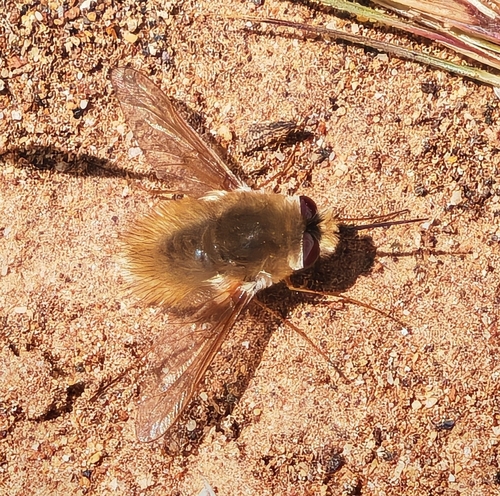


Anastoechus Latifrons
anastoechus latifrons
Anastoechus latifrons es una especie fascinante de mosca abeja perteneciente a la familia Bombyliidae. Reconocidos por su notable parecido con las abejas, estos insectos son un ejemplo clásico de mimetismo batesiano. Lucen un pelaje denso y velludo que disuade eficazmente a los depredadores potenciales que los confunden con insectos que pican. Mientras que los adultos son polinizadores pacíficos y amantes del néctar que pasan sus días revoloteando sobre las flores del desierto en flor, sus larvas llevan un estilo de vida mucho más oscuro y secreto. Las larvas de Anastoechus latifrons son depredadores especializados o parasitoides de las cápsulas de huevos de saltamontes, lo que los convierte en un importante agente de control ecológico en sus hábitats áridos nativos. Ágiles en el aire, los adultos pueden lanzarse y revolotear con una precisión increíble, actuando como polinizadores vitales mientras añaden una presencia dinámica y zumbante a los pastizales secos, matorrales y desiertos que habitan.
Hábitat: Se encuentra principalmente en matorrales áridos, pastizales secos y desiertos arenosos donde abundan los saltamontes hospedadores y las plantas con flores nectaríferas.
Esta especie se caracteriza por un cuerpo robusto y altamente piloso (peludo), lo que le confiere una apariencia distintivamente esponjosa, similar a una abeja. Su coloración suele presentar tonos apagados de beige, tostado amarillento y marrón, perfectamente adaptados para camuflarse en entornos arenosos y áridos. Una probóscide prominente y rígida se proyecta hacia adelante desde su cabeza, utilizada para extraer néctar de flores con gargantas profundas. Las alas son en gran parte transparentes, pero pueden tener un ligero tinte ahumado cerca del borde anterior. Cuando está en reposo, las alas se mantienen extendidas en una postura de ala en flecha, similar a un ala delta.
Categoría
InsectosRareza
Común
Peligro
1/5 · Muy bajo
Snaps
¡Sé la primera persona en hacer un snap!
A pesar de su intimidante apariencia peluda y similar a una abeja, las moscas abeja no poseen aguijones ni veneno y son completamente inofensivas para los humanos.
Sus alas baten a una frecuencia increíblemente alta, creando un sonido de zumbido distintivo que refuerza la ilusión de que son abejas que pican.
Cuando una hembra está lista para poner sus huevos, revolotea justo por encima del suelo y lanza con fuerza sus huevos cubiertos de arena en las grietas del suelo cerca de las madrigueras de los saltamontes.
Imita en gran medida la apariencia visual y el sonido zumbante de un abejorro para disuadir a los depredadores, a pesar de no tener aguijón ni veneno.
Mecánicas de vuelo altamente evolucionadas permiten a esta mosca flotar completamente inmóvil en el aire y salir disparada instantáneamente cuando se siente amenazada.
Las hembras recolectan arena en una cámara abdominal especializada para cubrir sus huevos antes de ponerlos, lo que los hace más pesados y los oculta de los depredadores.
Los adultos se alimentan exclusivamente de néctar floral y polen, mientras que la etapa larval es estrictamente carnívora, consumiendo cápsulas de huevos de saltamontes.
Diferencias por edad: Experimenta un cambio dietético radical: las larvas son depredadores carnívoros de huevos de saltamontes, mientras que los adultos son exclusivamente herbívoros nectarívoros.

Melanoplus sanguinipes
Las larvas consumen las cápsulas de huevos enterradas de los saltamontes, actuando como un control natural de la población.
Ericameria nauseosa
Las moscas adultas son visitantes frecuentes e importantes polinizadores para arbustos desérticos de floración tardía.
Efferia aestuans
Los adultos son frecuentemente cazados en el aire por moscas depredadoras más grandes.
Aún no hay insignias de rasgos asignadas a este objeto.
Todavía no hay alias listados.
Las colecciones para este objeto aparecerán aquí a medida que se añadan más temas.
Peligro
1/5 · Muy bajo
Todavía no hay notas especiales de seguridad.
Busca seis patas, antenas, tres secciones en el cuerpo y la forma de las alas. Los escarabajos tienen las alas delanteras endurecidas; las moscas solo tienen un par que funciona. Los insectos diminutos pueden necesitar un primer plano antes de que se vea su grupo. Identificador de insectos: sube una foto y compara los detalles visibles.
1-2 cm
1-3 cm
0.0001-0.0003 kg
hasta 1 años
15 km/h
Los adultos se alimentan exclusivamente de néctar floral y polen, mientras que la etapa larval es estrictamente carnívora, consumiendo cápsulas de huevos de saltamontes.
Se encuentra principalmente en matorrales áridos, pastizales secos y desiertos arenosos donde abundan los saltamontes hospedadores y las plantas con flores nectaríferas.
Acércate para separar los grupos y explorar dónde se ha fotografiado este objeto.
Los snaps recientes aparecerán aquí a medida que se añadan nuevas observaciones.
Llévate el descubrimiento
Haz una foto con Snappit, identifica la especie y guarda el hallazgo en tu colección.