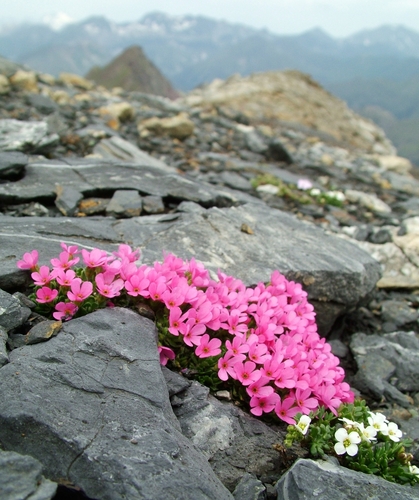


Androsace Ciliata
androsace ciliata
Androsace ciliata, comúnmente conocida como Jazmín de Roca Ciliado, es una perenne alpina resistente y encantadora endémica de los paisajes rocosos de alta altitud de los Pirineos. Esta notable planta prospera en los entornos más desafiantes, aferrándose a acantilados escarpados, laderas inestables de canchales y grietas barridas por el viento donde pocas otras especies pueden sobrevivir. Al formar cojines compactos y de crecimiento bajo, crea su propio microclima para resistir temperaturas gélidas, radiación ultravioleta intensa y vientos alpinos secos.
Hábitat: Se encuentra en grietas rocosas de gran altitud, canchales calcáreos y crestas alpinas de la cordillera de los Pirineos.
Esta planta forma densos cojines en forma de cúpula o alfombras sueltas de pequeñas rosetas de hojas de color verde brillante, que suelen alcanzar solo entre 2 y 10 centímetros de altura. Sus hojas pequeñas y lanceoladas son muy distintivas por sus márgenes 'ciliados', que están bordeados con finos pelos blancos parecidos a pestañas. Durante su breve período de floración en primavera y verano, el cojín verde está bellamente salpicado de flores solitarias de cinco pétalos que se abren en tonos de rosa suave a rosa púrpura intenso, cada una con un pequeño ojo contrastante de color amarillo a naranja en el centro.
Categoría
PlantasRareza
Common
Peligro
1/5 · Muy bajo
Snaps
¡Sé la primera persona en hacer un snap!
Debido a la temporada de crecimiento extremadamente corta en los altos Pirineos, un cojín del tamaño de una taza de té puede tener fácilmente varias décadas de antigüedad.
Es un endemismo estricto pirenaico, lo que significa que esta delicada flor silvestre rosa no se puede encontrar creciendo de forma natural en ningún otro lugar de la Tierra.
Su nombre de especie 'ciliata' proviene de la palabra latina para pestañas, describiendo el fleco de pelos en sus diminutas hojas.
Forma cúpulas compactas y densamente empaquetadas que atrapan el aire cálido y retienen la preciada humedad, protegiendo la planta de las temperaturas alpinas gélidas y los fuertes vientos.
Posee pelos finos y especializados a lo largo de los márgenes de sus hojas que rompen los vientos desecantes, atrapan la humedad y reducen la pérdida de agua.
Produce pigmentos protectores especializados para prevenir el daño celular por la intensa radiación solar sin filtrar en grandes alturas.
Como fotoautótrofo, esta planta alpina produce su propia energía realizando la fotosíntesis, utilizando luz solar, dióxido de carbono y una mínima cantidad de agua y nutrientes absorbidos de las estériles fisuras rocosas.
Bombus pyrenaeus
Polinizada por insectos alpinos que buscan néctar en el duro entorno montañoso.
Saxifraga oppositifolia
Compite por bolsas de tierra y humedad limitadas en paredes rocosas escarpadas.
Rupicapra pyrenaica
Pastoreo ocasional del follaje por herbívoros de gran altitud.
Aún no hay insignias de rasgos asignadas a este objeto.
Todavía no hay alias listados.
Las colecciones para este objeto aparecerán aquí a medida que se añadan más temas.
Peligro
1/5 · Muy bajo
Todavía no hay notas especiales de seguridad.
La forma más fácil de identificar a Androsace Ciliata es usar la aplicación de identificación de naturaleza Snappit.
2+ cm
0.01+ kg
Como fotoautótrofo, esta planta alpina produce su propia energía realizando la fotosíntesis, utilizando luz solar, dióxido de carbono y una mínima cantidad de agua y nutrientes absorbidos de las estériles fisuras rocosas.
Se encuentra en grietas rocosas de gran altitud, canchales calcáreos y crestas alpinas de la cordillera de los Pirineos.
Fotosíntesis
Acércate para separar los grupos y explorar dónde se ha fotografiado este objeto.
Los snaps recientes aparecerán aquí a medida que se añadan nuevas observaciones.
Llévate el descubrimiento
Haz una foto con Snappit, identifica la especie y guarda el hallazgo en tu colección.









.jpg&width=800)



_001.jpg&width=800)




