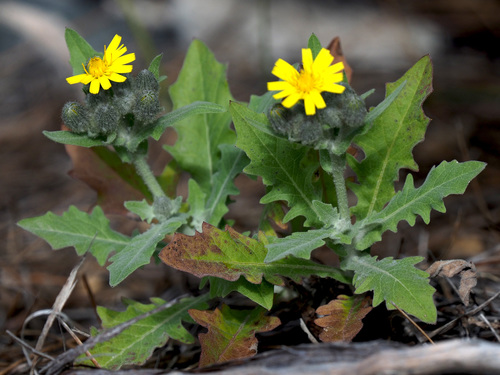


Andryala Pinnatifida
andryala pinnatifida
La Andryala pinnatifida es un subarbusto perenne llamativo endémico de las Islas Canarias. Perteneciente a la familia del girasol (Asteraceae), esta planta resistente se ha adaptado maravillosamente a los terrenos volcánicos y a los microclimas variados del archipiélago. Conocida localmente por su textura suave y aterciopelada, prospera en laderas rocosas, pinares abiertos y matorrales, añadiendo un toque plateado-grisáceo a los paisajes accidentados. Sus vibrantes flores compuestas amarillas contrastan marcadamente con su follaje pálido, lo que la convierte en una de las favoritas entre los polinizadores nativos como las abejas silvestres y las mariposas. Esta especie desempeña un papel importante en la ecología local, colonizando suelos volcánicos y ayudando a prevenir la erosión en los delicados ecosistemas insulares.
Hábitat: Se encuentra principalmente en laderas volcánicas rocosas, arcenes y pinares abiertos de las Islas Canarias.
Esta planta se identifica fácilmente por sus hojas profundamente lobuladas, divididas pinnadamente, que están cubiertas por un denso manto de pelos glandulares estrellados, blanquecinos a amarillentos, lo que le da a toda la planta una apariencia aterciopelada, verde grisácea o plateada distintiva. Normalmente crece como una hierba erecta o un pequeño subarbusto, alcanzando alturas de 30 a 80 cm. Durante su estación de floración, produce racimos terminales de cabezas florales de color amarillo brillante (capítulos) parecidas a dientes de león, cada una de unos 2 a 3 cm de diámetro, asentadas sobre tallos peludos y ramificados.
Categoría
PlantasRareza
Common
Peligro
1/5 · Muy bajo
Snaps
¡Sé la primera persona en hacer un snap!
Es una planta pionera muy resistente, a menudo una de las primeras especies en brotar sobre ceniza volcánica fresca después de las erupciones.
Su cubierta gruesa y velluda le confiere una textura notablemente suave, parecida al fieltro, que los lugareños a veces llaman 'lana vegetal'.
El nombre de la especie 'pinnatifida' se refiere a sus hojas profundamente lobuladas, en forma de pluma.
Como planta fotoautótrofa, produce su propia energía convirtiendo la luz solar, el dióxido de carbono, el agua y los minerales del suelo en azúcares mediante la fotosíntesis.
Bombus canariensis
Proporciona néctar y polen a este abejorro canario endémico.
Gallotia galloti
Ocasionalmente pastoreado por lagartos endémicos que buscan hidratación y nutrientes en zonas áridas.
Aún no hay insignias de rasgos asignadas a este objeto.
Todavía no hay alias listados.
Las colecciones para este objeto aparecerán aquí a medida que se añadan más temas.
Peligro
1/5 · Muy bajo
Todavía no hay notas especiales de seguridad.
La forma más fácil de identificar a Andryala Pinnatifida es usar la aplicación de identificación de naturaleza Snappit.
30-80 cm
2-5 años
Como planta fotoautótrofa, produce su propia energía convirtiendo la luz solar, el dióxido de carbono, el agua y los minerales del suelo en azúcares mediante la fotosíntesis.
Se encuentra principalmente en laderas volcánicas rocosas, arcenes y pinares abiertos de las Islas Canarias.
Acércate para separar los grupos y explorar dónde se ha fotografiado este objeto.
Los snaps recientes aparecerán aquí a medida que se añadan nuevas observaciones.
Llévate el descubrimiento
Haz una foto con Snappit, identifica la especie y guarda el hallazgo en tu colección.








.jpg&width=800)



_001.jpg&width=800)




