Angle-Winged Katydids
microcentrum
Angle-Winged Katydids are fascinating insects that can be found in gardens and forests. They are known for their unique wing shapes that resemble leaves, helping them blend into their surroundings!
Hábitat: Forests, gardens, and grassy areas.
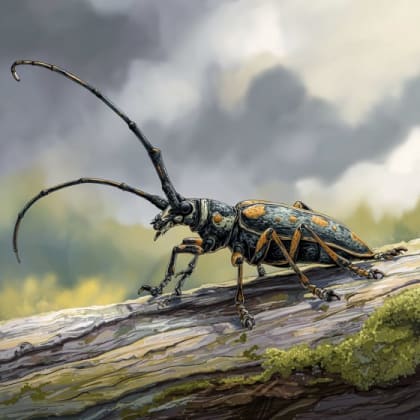
The Angle-Winged Katydids has a flattened, leaf-like body and broad, angled forewings, usually vibrant green or brown. Its wings have intricate veins, making it almost invisible among foliage, and long, thin antennae extend from its head.
Categoría
InsectosRareza
Common
Peligro
0/5 · Sin peligro conocido
Snaps
¡Sé la primera persona en hacer un snap!
Female katydids lay their eggs in neat, shingle-like rows on plant stems!
Some katydid calls are so high-pitched, humans can't even hear them!
Their super-long antennae can be much longer than their whole body!
They are masters of 'crypsis,' meaning they blend in perfectly with surroundings!
Angle-Winged Katydids has a flattened, green body and wings that perfectly mimic leaves, helping them hide from hungry predators.
Male Angle-Winged Katydids can sing by rubbing their specialized wings together, producing calls to attract a mate.
Angle-Winged Katydids can hear with special organs on their front legs, helping them detect danger or other katydids.
These leafy insects munch on leaves and sometimes flowers from a variety of plants.
Cyanocitta cristata
Birds hunt katydids.
Myotis lucifugus
Bats are nocturnal predators.
Argiope aurantia
Spiders capture katydids.
Quercus alba
They feed on oak leaves.
Malus domestica
They consume apple foliage.
Los animales sociales viven en grupos organizados, cooperando para obtener beneficios de supervivencia como la búsqueda de alimento, la defensa y la cría de descendencia.
Los animales arborícolas viven principalmente en los árboles, utilizándolos como refugio, alimento y protección contra los depredadores.
El camuflaje describe a los organismos que poseen colores o patrones que les permiten mezclarse con su entorno.
Este rasgo caracteriza a los organismos cuya dieta consiste total o principalmente en material vegetal.

Los animales nocturnos están principalmente activos durante la noche, y suelen descansar o dormir durante el día.
Peligro
0/5 · Sin peligro conocido
Todavía no hay notas especiales de seguridad.
60-140 mm
30-70 mm
90-150 días
These leafy insects munch on leaves and sometimes flowers from a variety of plants.
Forests, gardens, and grassy areas.
Foraging
6
Acércate para separar los grupos y explorar dónde se ha fotografiado este objeto.
Los snaps recientes aparecerán aquí a medida que se añadan nuevas observaciones.