

Antirrhinum Hispanicum
antirrhinum hispanicum
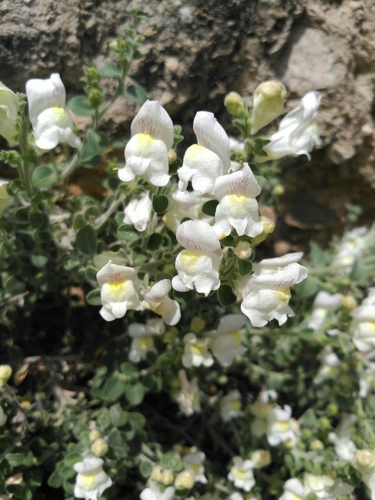
Antirrhinum hispanicum, commonly known as the Spanish snapdragon, is a captivating perennial herb endemic to the rocky, sun-drenched landscapes of southeastern Spain. This resilient chasmophyte excels at clinging to sheer limestone cliffs, old stone walls, and rocky crevices. It produces sprawling, woody-based stems covered in soft, velvety hairs, which are topped by beautiful terminal clusters of classic snapdragon-shaped flowers. Its ability to thrive in extremely arid, nutrient-poor conditions makes it a fascinating example of botanical adaptation. In wild settings, it creates striking cascades of pink and yellow amidst barren stone, serving as a vital nectar source for specialized local pollinators. Though relatively localized in its native range, its charming appearance and hardiness have made it a favorite among rock gardening enthusiasts worldwide.
Hábitat: Found growing directly out of limestone cliffs, rocky ravines, and ancient stone mortar walls in arid, Mediterranean microclimates.
This perennial subshrub typically forms low, spreading mounds from 10 to 60 centimeters in height. Its stems are woody at the base, highly branched, and densely covered in sticky, glandular hairs that give the foliage a grayish-green, velvety texture. The leaves are small, fleshy, and range from ovate to lanceolate in shape. The distinct snapdragon flowers are personate (two-lipped and closed) and measure about 3 to 4 centimeters in length. They are most commonly a soft pink or pale purple hue, occasionally white, with a highly prominent, bright yellow palate on the lower lip which guides pollinators to the nectar within.
Categoría
PlantasRareza
Common
Peligro
1/5 · Muy bajo
Snaps
¡Sé la primera persona en hacer un snap!
It can survive in pockets of soil so small that they are almost invisible to the naked eye, drawing moisture directly from condensed mountain fog in rock crevices.
Its scientific name 'hispanicum' refers directly to its native geographic home in the Iberian Peninsula.
The flower is specifically engineered to exclude smaller, weak insects that would steal nectar without successfully pollinating the plant.
Possesses highly specialized, fibrous root systems capable of penetrating microscopic cracks in limestone cliffs to anchor the plant and access deep-seated moisture.
Stems and leaves are covered in sticky, glandular hairs that reduce water loss through transpiration and deter crawling insect herbivores.
The flower's tightly closed lips act as a mechanical lock, requiring heavy pollinators like bumblebees to force them open, ensuring highly targeted pollination.
Like other green plants, the Spanish snapdragon is an autotroph that produces its own sugars via photosynthesis using sunlight, carbon dioxide, and water, while absorbing essential minerals from scarce cliffside soils.
Bombus terrestris
Pollinated effectively by heavy insects capable of pushing open the tightly closed corolla.
Capra pyrenaica
Occasionally browsed upon by agile wild herbivores capable of scaling steep limestone cliffs.
Aún no hay insignias de rasgos asignadas a este objeto.
Todavía no hay alias listados.
Las colecciones para este objeto aparecerán aquí a medida que se añadan más temas.
Peligro
1/5 · Muy bajo
Todavía no hay notas especiales de seguridad.
La forma más fácil de identificar a Antirrhinum Hispanicum es usar la aplicación de identificación de naturaleza Snappit.
10-60 cm
2-7 años
Like other green plants, the Spanish snapdragon is an autotroph that produces its own sugars via photosynthesis using sunlight, carbon dioxide, and water, while absorbing essential minerals from scarce cliffside soils.
Found growing directly out of limestone cliffs, rocky ravines, and ancient stone mortar walls in arid, Mediterranean microclimates.
Photosynthesis
Acércate para separar los grupos y explorar dónde se ha fotografiado este objeto.
Los snaps recientes aparecerán aquí a medida que se añadan nuevas observaciones.









.jpg&width=800)