






Arizona Mantis
Stagmomantis limbata
The Arizona Mantis is a cool insect that can be green or brown! It loves to hide among plants and is known for its big eyes and long legs, which help it catch food.
Hábitat: Desert
The Arizona Mantis is slender and typically comes in shades of green or brown, helping it blend perfectly with desert foliage. It has a distinctive brown "collar" on its long neck-like segment, and large, widely spaced compound eyes on its triangular head.
Categoría
InsectosRareza
Common
Peligro
2/5 · Bajo
Snaps
¡Sé la primera persona en hacer un snap!
A mantis lays eggs in a hardened, protective case called an ootheca!
Male mantises can fly well, but females often just glide short distances!
Mantises have just one ear, located on their belly between their front legs!
Their super-fast reflexes let them snatch flying insects right out of the air!
Arizona Mantis can rapidly extend its spiky forelegs to snatch prey because of powerful muscles that help them ambush insects.
Arizona Mantis has a green or brown body that helps them blend perfectly with desert plants, making them nearly invisible.
Arizona Mantis can turn its triangular head almost 180 degrees to spot prey or danger without moving its body.
Arizona Mantis sways gently back and forth, mimicking a leaf in the wind, which helps them hide and surprise prey.
This skilled hunter loves to munch on many different kinds of small insects.
Gryllus assimilis
Common desert prey for hungry mantises.
Musca domestica
A frequent meal for mantises in many habitats.
Geococcyx californianus
A swift desert bird that preys on insects.

Amblycorypha oblongifolia
A good source of protein for mantises.
Los animales solitarios viven solos durante la mayor parte de su vida y solo interactúan con otros para aparearse o cuidar de sus crías.
El camuflaje describe a los organismos que poseen colores o patrones que les permiten mezclarse con su entorno.
Colorido describe a organismos u objetos que exhiben una amplia variedad de colores brillantes y distintivos.
Este rasgo identifica a los organismos cuya dieta consiste principalmente en insectos y otros pequeños invertebrados.

Los hábitats desérticos son regiones áridas caracterizadas por precipitaciones extremadamente bajas y, a menudo, temperaturas extremas, que albergan una flora y fauna especializadas.

Un depredador de emboscada caza esperando pacientemente y ocultándose, para luego lanzar un ataque repentino cuando una presa desprevenida se pone a su alcance.

Este rasgo identifica a los organismos cuya dieta consiste total o principalmente en tejido animal.

Los animales diurnos están activos principalmente durante el día y suelen descansar o dormir por la noche.
Todavía no hay alias listados.
Peligro
2/5 · Bajo
Look but don't touch! Some insects can bite or sting.
60-120 mm
40-60 mm
120-270 días
5 km/h
This skilled hunter loves to munch on many different kinds of small insects.
Desert
Ambush
6
Acércate para separar los grupos y explorar dónde se ha fotografiado este objeto.
Los snaps recientes aparecerán aquí a medida que se añadan nuevas observaciones.

California, US
Puedes ver Eastern Fox Squirrel, Cuervo Común y Paloma Huilota.
Ver guía →
California, US
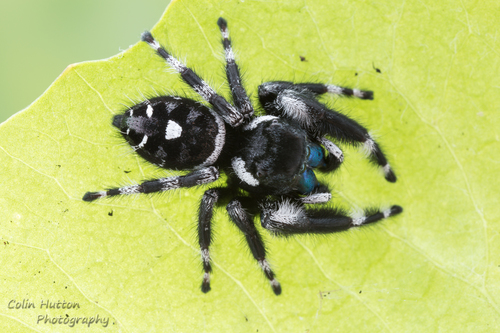
Puedes ver Bold Jumping Spider, Marbled Cellar Spider y Black Phoebe.
Ver guía →
California, US
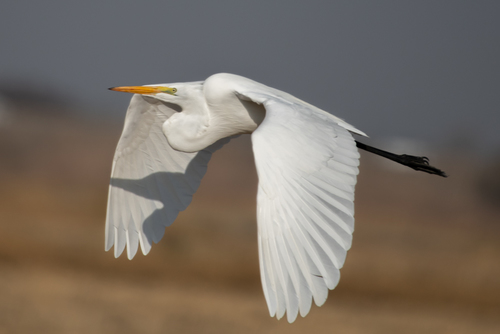
Puedes ver Great Egret, Pato y Garza Azulada.
Ver guía →
California, US
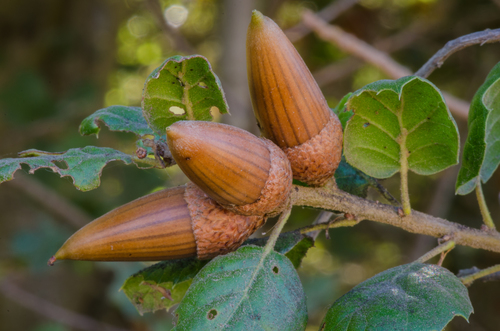
Puedes ver Coast Live Oak, Lesser Goldfinch y California Scrub-Jay.
Ver guía →

California, US
Puedes ver Margarita, Bird's-Eye Speedwell y Southern Masked Chafer.
Ver guía →














