


Arthrophaga Myriapodina
arthrophaga myriapodina
Arthrophaga myriapodina es una especie notable y algo macabra de hongo entomopatógeno. Perteneciente a un grupo especializado de hongos que parasitan artrópodos, esta especie está adaptada de manera única para atacar a los milpiés. Una vez que sus esporas penetran el exoesqueleto del huésped, el hongo comienza una invasión silenciosa, creciendo dentro del milpiés vivo y consumiendo sus tejidos no vitales. Mientras se prepara para reproducirse, el hongo altera drásticamente el comportamiento del huésped, secuestrando su sistema nervioso para inducir la 'enfermedad de la cumbre'. Esto obliga al milpiés moribundo a subir a una posición elevada y expuesta antes de su fallecimiento. Esta fascinante y manipuladora interacción ecológica convierte a Arthrophaga myriapodina en un ejemplo llamativo de un ciclo de vida parasitario, transformando a su huésped en un vehículo dispersor de esporas para asegurar la supervivencia de la próxima generación.
Hábitat: Se encuentra en bosques caducifolios templados y húmedos, particularmente en áreas con abundante hojarasca y madera en descomposición donde los milpiés hospedadores son numerosos.
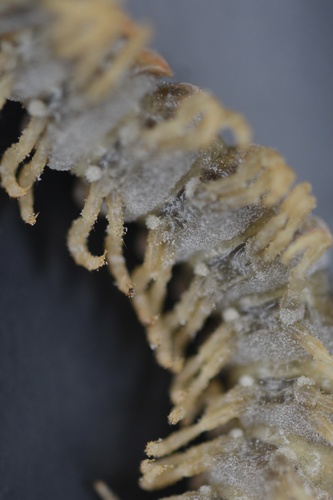
Este hongo rara vez se encuentra solo y casi exclusivamente se identifica por su presencia en un milpiés huésped fallecido. Cuando se reproduce activamente, Arthrophaga myriapodina se manifiesta como mechones de crecimiento fúngico (conidióforos) borrosos, blanquecinos a amarillo pálido que brotan vívidamente de las membranas intersegmentales—las bandas más blandas entre las placas endurecidas y blindadas del milpiés. El huésped infectado se encuentra típicamente aferrado de forma antinatural a una ramita, hoja o roca en una elevación alta, rígido por la extensa red fúngica dentro de su cuerpo.
Categoría
HongosRareza
Común
Peligro
1/5 · Muy bajo
Snaps
¡Sé la primera persona en hacer un snap!
Los milpiés infectados a menudo bloquean sus patas en un 'agarre de muerte' alrededor de la planta que escalaron antes de morir, manteniendo sus cuerpos firmemente anclados durante el proceso de dispersión de esporas.
Pertenece a un grupo especializado de hongos que han evolucionado de forma independiente rasgos de 'creación de zombis', similares a los famosos hongos Ophiocordyceps que infectan a las hormigas.
El nombre del género Arthrophaga se traduce directamente como 'comedor de articulaciones', describiendo perfectamente cómo el hongo emerge de las articulaciones del exoesqueleto del milpiés.
Las esporas son disparadas activamente desde los cuerpos fructíferos, actuando como cañones fúngicos microscópicos para asegurar que aterricen en nuevos huéspedes forrajeando debajo.
El hongo altera la química neural del milpiés infectado, obligándolo a subir a un lugar alto y expuesto antes de morir.
Al posicionar al huésped muerto en lo alto del suelo, el hongo maximiza el área de dispersión al eyectar con fuerza sus esporas sobre la hojarasca de abajo.
El hongo emerge específicamente a través de las membranas más blandas entre las placas endurecidas del exoesqueleto del huésped para formar sus estructuras productoras de esporas.
El hongo deriva todos sus nutrientes digiriendo los tejidos internos y la hemolinfa de milpiés vivos y recientemente fallecidos.
Diferencias por edad: Comienza como un endoparásito consumiendo tejidos no vitales, luego cambia a consumir órganos vitales inmediatamente antes de la muerte del huésped.
Apheloria virginiensis
La especie huésped principal que el hongo manipula y finalmente mata.
Euryurus leachii
Otra especie de milpiés de bosque ocasionalmente atacada y consumida por el hongo.
Los animales solitarios viven solos durante la mayor parte de su vida y solo interactúan con otros para aparearse o cuidar de sus crías.
Los animales excavadores cavan túneles y cámaras en el suelo y utilizan estas estructuras subterráneas para refugiarse, cazar o reproducirse.
Los hábitats boscosos son entornos terrestres dominados por una densa cubierta arbórea, que sustentan una gran diversidad de vida animal y vegetal.
Describe a los organismos que descomponen la materia orgánica muerta, reciclando los nutrientes de vuelta al ecosistema.
Los animales nocturnos están principalmente activos durante la noche, y suelen descansar o dormir durante el día.
Todavía no hay alias listados.
Las colecciones para este objeto aparecerán aquí a medida que se añadan más temas.
Peligro
1/5 · Muy bajo
Todavía no hay notas especiales de seguridad.
Compara la forma del sombrero, la parte inferior, el pie y su base, y si el hongo crece sobre madera o sobre el suelo. Unos tienen láminas, otros poros o aguijones. Un sombrero visto solo desde arriba suele ocultar los rasgos más útiles. Identificador de setas: sube una foto y compara los detalles visibles.
2-5 cm
El hongo deriva todos sus nutrientes digiriendo los tejidos internos y la hemolinfa de milpiés vivos y recientemente fallecidos.
Se encuentra en bosques caducifolios templados y húmedos, particularmente en áreas con abundante hojarasca y madera en descomposición donde los milpiés hospedadores son numerosos.
Contacto Pasivo
7-14 días
Acércate para separar los grupos y explorar dónde se ha fotografiado este objeto.
Los snaps recientes aparecerán aquí a medida que se añadan nuevas observaciones.
Llévate el descubrimiento
Haz una foto con Snappit, identifica la especie y guarda el hallazgo en tu colección.