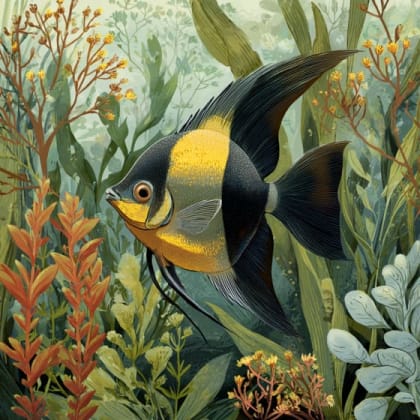
Asian arowana
Scleropages formosus
The Asian arowana is a beautiful fish known for its shiny scales and long fins. It can swim gracefully in the water and is often called the 'dragon fish' because of its shape.
Hábitat: Freshwater rivers and lakes
The Asian arowana has a long, slender body covered in large, metallic scales that shimmer in shades of gold, red, or green. Its large mouth is upturned, and it features prominent barbels near its jaw, giving it a distinctive, ancient look.
Categoría
PecesRareza
Rare
Peligro
1/5 · Muy bajo
Snaps
¡Sé la primera persona en hacer un snap!
Fossils prove arowanas are 'living fossils,' hardly changing for millions of years!
Males protect their young by holding hundreds of eggs inside their mouths for weeks!
Often called 'dragon fish' due to their ancient look and shimmering, large scales!
They have a bony tongue that helps them crush and hold onto their slippery prey!
Asian arowana can leap high out of the water to snatch prey from overhanging branches, helping them catch food.
Asian arowana has reflective, iridescent scales that help them blend into their watery surroundings, avoiding predators.
Asian arowana can guard its eggs and fry in its mouth, protecting them from dangers until they hatch.
They are active hunters that eat insects, fish, and other small animals.
Diferencias por edad: Young eat mostly insects; adults consume larger fish and amphibians.
Tomistoma schlegelii
A large crocodile that preys on fish.
Lutra sumatrana
Otters are clever hunters of fish.
Locusta migratoria
Jumps to snatch these insects from branches.
Rasbora heteromorpha
Preys on smaller fish near surface.
Los animales solitarios viven solos durante la mayor parte de su vida y solo interactúan con otros para aparearse o cuidar de sus crías.
Colorido describe a organismos u objetos que exhiben una amplia variedad de colores brillantes y distintivos.
Los organismos piscívoros son animales que subsisten principalmente de una dieta a base de peces.
Este rasgo indica que los organismos pertenecen a un grupo evolutivo muy antiguo con antepasados que se remontan a millones de años.

Este rasgo caracteriza a los organismos con una esperanza de vida excepcionalmente larga en comparación con otros de su especie.

Los hábitats de agua dulce incluyen entornos acuáticos no salinos como ríos, lagos, estanques y humedales, vitales para numerosas especies.

Los animales diurnos están activos principalmente durante el día y suelen descansar o dormir por la noche.

El estado de peligro de extinción indica que una especie corre un riesgo muy alto de extinguirse en estado silvestre en un futuro próximo.
Peligro
1/5 · Muy bajo
Always watch fish from a distance and never try to touch them in the water.
60-90 cm
2-7 kg
15-20 años
They are active hunters that eat insects, fish, and other small animals.
12 km/h
Freshwater rivers and lakes
Ambush
5 m
Acércate para separar los grupos y explorar dónde se ha fotografiado este objeto.
Los snaps recientes aparecerán aquí a medida que se añadan nuevas observaciones.