

Balm Of Gilead
cedronella canariensis
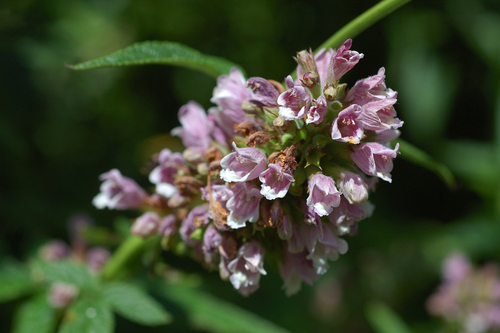
The Balm of Gilead (Cedronella canariensis) is an aromatic, perennial herbaceous shrub native to the Macaronesian islands, including the Canary Islands, Madeira, and the Azores. Belonging to the mint family (Lamiaceae), this plant is highly prized for its incredibly fragrant foliage, which releases a potent and complex aroma of cedar, camphor, lemon, and mint when brushed or crushed. It grows as an upright bush with soft, trifoliate leaves and produces lovely terminal spikes of pale pink, lilac, or white tubular flowers.
Hábitat: Found in damp, shaded ravines, clearing edges of laurel forests, and montane woodlands of Macaronesia.
This bushy perennial typically stands between 100 and 150 centimeters tall, sporting light green, three-parted (trifoliate) leaves with serrated margins. The stems are square, characteristic of the mint family, and are covered in fine, soft hairs. During the summer blooming period, it produces dense, showy, elongated clusters of small, tubular flowers that range in color from pale pink and lavender to near-white, drawing a multitude of beneficial insect pollinators.
Categoría
PlantasRareza
Common
Peligro
1/5 · Muy bajo
Snaps
¡Sé la primera persona en hacer un snap!
Despite being called the 'Balm of Gilead', it is completely unrelated to the historical, biblical Balm of Gilead, which comes from trees in the Burseraceae family.
In traditional Macaronesian herbal medicine, the leaves were dried and brewed into a soothing tea used to alleviate congestion and digestive discomfort.
The generic name 'Cedronella' translates to 'little cedar', a direct nod to the cedar-wood undertones found in its strongly scented leaves.
Produces a high concentration of essential oils in its leaves, emitting a strong camphor and lemon scent that deters grazing herbivores and destructive pests.
Generates copious amounts of nectar in its tubular flowers to specifically attract long-tongued bees and butterflies for highly efficient pollination.
Utilizes a robust woody rootstock to quickly sprout new stems and foliage after physical damage or seasonal droughts.
As an autotrophic plant, it produces its own energy and nutrients through photosynthesis, using sunlight, water, and carbon dioxide.
Bombus canariensis
Provides nectar to this native pollinator in the Canary Islands.
Gonepteryx cleobule
Attracts this butterfly for pollination as it feeds on floral nectar.
Myzus persicae
Sapsucking insects that occasionally feed on the plant juices of its stems.
Aún no hay insignias de rasgos asignadas a este objeto.
Todavía no hay alias listados.
Las colecciones para este objeto aparecerán aquí a medida que se añadan más temas.
Peligro
1/5 · Muy bajo
Todavía no hay notas especiales de seguridad.
La forma más fácil de identificar a Balm Of Gilead es usar la aplicación de identificación de naturaleza Snappit.
100-150 cm
1-5 kg
3-10 años
As an autotrophic plant, it produces its own energy and nutrients through photosynthesis, using sunlight, water, and carbon dioxide.
Found in damp, shaded ravines, clearing edges of laurel forests, and montane woodlands of Macaronesia.
14-30 días
Acércate para separar los grupos y explorar dónde se ha fotografiado este objeto.
Los snaps recientes aparecerán aquí a medida que se añadan nuevas observaciones.