

Beet Armyworm Moth
spodoptera exigua
The Beet Armyworm Moth (Spodoptera exigua) is a small, drab-colored moth with a significant global impact as an agricultural pest. While the adult moths are relatively inconspicuous, their larval stage, known as the beet armyworm, is notorious for its voracious appetite and wide host range, feeding on hundreds of different plant species. This species is highly adaptable and opportunistic, thriving in a variety of environments from agricultural fields to home gardens. Its ability to rapidly reproduce, migrate long distances, and develop resistance to pesticides makes it a formidable challenge for farmers worldwide, leading to substantial economic losses in crops like cotton, tomatoes, and various vegetables. Despite its pest status, it plays a role in the ecosystem as a food source for natural predators and parasitoids.
Hábitat: Found predominantly in agricultural fields, cultivated lands, and gardens, as well as disturbed areas and weedy patches where host plants are abundant.
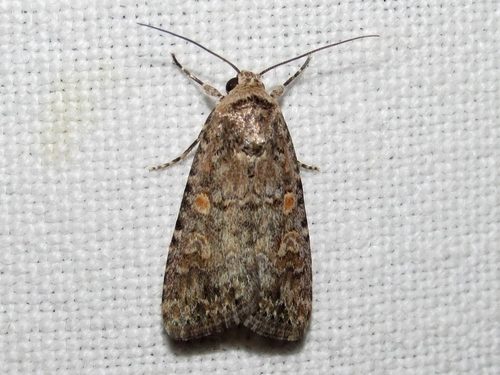
Adult Beet Armyworm Moths are relatively small, with a wingspan typically ranging from 2 to 3 cm. Their forewings are mottled gray-brown, often featuring an obscure kidney-shaped spot near the center and a pale, irregular band towards the outer margin. The hindwings are a translucent pearly white, sometimes with a faint brown border. The larvae, or armyworms, vary considerably in color depending on their diet and age, ranging from pale green to dark gray or nearly black, often with a prominent dark stripe running along each side of their body and a lighter stripe above it. They reach up to 3 cm in length when fully grown.
Categoría
InsectosRareza
Common
Peligro
1/5 · Muy bajo
Snaps
¡Sé la primera persona en hacer un snap!
It has developed resistance to a wide array of insecticides, making its management particularly challenging for farmers.
The Beet Armyworm is considered one of the top 10 most damaging agricultural insect pests worldwide due to its broad host range and rapid reproduction.
The species name 'exigua' means 'small' or 'meager' in Latin, referring to its relatively small size compared to some other moth species.
Unlike many caterpillars, beet armyworm larvae often feed in groups when young, skeletonizing leaves, but become solitary as they mature.
The larval stage has an extremely broad diet, feeding on over 100 different plant species from many botanical families, allowing it to thrive in diverse agricultural settings.
Adult moths are strong fliers and can migrate hundreds or even thousands of kilometers, enabling them to colonize new areas and escape unfavorable conditions.
This species has a short generation time, allowing for multiple generations per year, which contributes to its ability to quickly build large populations and cause significant crop damage.
The larval stage of the beet armyworm moth is polyphagous, feeding on the leaves, fruits, and growing points of a wide variety of plants. Adult moths primarily feed on nectar from various flowering plants.
Diferencias por edad: Larvae are defoliators and fruit feeders, while adults sustain themselves on nectar for energy and reproduction.
Gossypium hirsutum
Larval host plant
Solanum lycopersicum
Larval host plant
Cotesia marginiventris
Parasitizes larvae, regulating populations
Hippodamia convergens
Predates on larvae and eggs
Aún no hay insignias de rasgos asignadas a este objeto.
Todavía no hay alias listados.
Las colecciones para este objeto aparecerán aquí a medida que se añadan más temas.
Peligro
1/5 · Muy bajo
Todavía no hay notas especiales de seguridad.
La forma más fácil de identificar a Beet Armyworm Moth es usar la aplicación de identificación de naturaleza Snappit.
1 cm
2-3 cm
0.00005-0.0001 kg
0 años
The larval stage of the beet armyworm moth is polyphagous, feeding on the leaves, fruits, and growing points of a wide variety of plants. Adult moths primarily feed on nectar from various flowering plants.
Found predominantly in agricultural fields, cultivated lands, and gardens, as well as disturbed areas and weedy patches where host plants are abundant.
Foraging
Acércate para separar los grupos y explorar dónde se ha fotografiado este objeto.
Los snaps recientes aparecerán aquí a medida que se añadan nuevas observaciones.