




Belocephalus
Belocephalus
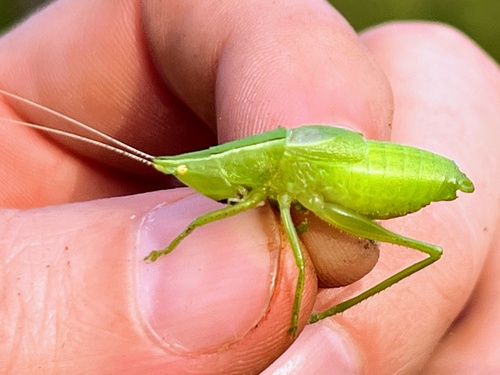
Belocephalus es un insecto fascinante conocido por la forma única de su cabeza y sus colores brillantes. Estas pequeñas criaturas se pueden encontrar en varios hábitats, ¡lo que las hace divertidas de descubrir en la naturaleza!
Hábitat: Jardines y praderas
El Belocephalus es un saltamontes de planta con una estructura de cabeza alargada, a menudo puntiaguda o aquillada, que puede hacer que se asemeje a un brote de planta o una espina. Su cuerpo suele mostrar verdes, marrones y grises moteados, lo que le ayuda a camuflarse perfectamente en su entorno frondoso. Sus alas claras, a menudo con patrones, se pliegan cuidadosamente sobre su espalda.
Categoría
InsectosRareza
Común
Peligro
1/5 · Muy bajo
Snaps
¡Sé la primera persona en hacer un snap!
¡Las ninfas de Belocephalus a veces visten "capas" esponjosas y cerosas para confundir a los depredadores!
¡Incluso con alas, a menudo prefieren desaparecer con un salto increíblemente rápido!
¡Su cabeza única puede parecerse exactamente a una ramita rota o una espina de planta!
¡Se envían mensajes secretos vibrando a través de los tallos de las plantas!
Estos insectos son amantes de las plantas que sorben savia rica en nutrientes directamente de los tallos y hojas de las plantas.
Mangifera indica
Se alimenta de la savia de los mangos en zonas tropicales.

Anolis carolinensis
Pequeños lagartos a menudo depredan a los saltamontes de planta en busca de alimento.
Misumena vatia
Arañas camufladas emboscan saltamontes de planta en las flores.
Los animales sociales viven en grupos organizados, cooperando para obtener beneficios de supervivencia como la búsqueda de alimento, la defensa y la cría de descendencia.
El camuflaje describe a los organismos que poseen colores o patrones que les permiten mezclarse con su entorno.
Colorido describe a organismos u objetos que exhiben una amplia variedad de colores brillantes y distintivos.
Este rasgo caracteriza a los organismos cuya dieta consiste total o principalmente en material vegetal.
Describe plantas que son particularmente atractivas y beneficiosas para una amplia variedad de organismos polinizadores.
Los animales diurnos están activos principalmente durante el día y suelen descansar o dormir por la noche.
Este rasgo identifica a los organismos que exhiben una rapidez excepcional en sus movimientos para cazar, escapar o desplazarse.
Describe organismos que transfieren polen, permitiendo la fertilización y reproducción de las plantas.
Todavía no hay alias listados.
Peligro
1/5 · Muy bajo
Sea cuidadoso y observe dónde pisa para proteger a estos pequeños insectos.
Busca seis patas, antenas, tres secciones en el cuerpo y la forma de las alas. Los escarabajos tienen las alas delanteras endurecidas; las moscas solo tienen un par que funciona. Los insectos diminutos pueden necesitar un primer plano antes de que se vea su grupo. Identificador de insectos: sube una foto y compara los detalles visibles.
10-30 mm
5-15 mm
30-90 días
Estos insectos son amantes de las plantas que sorben savia rica en nutrientes directamente de los tallos y hojas de las plantas.
Jardines y praderas
6
Acércate para separar los grupos y explorar dónde se ha fotografiado este objeto.
Los snaps recientes aparecerán aquí a medida que se añadan nuevas observaciones.
Llévate el descubrimiento
Haz una foto con Snappit, identifica la especie y guarda el hallazgo en tu colección.