



Birch
Betula
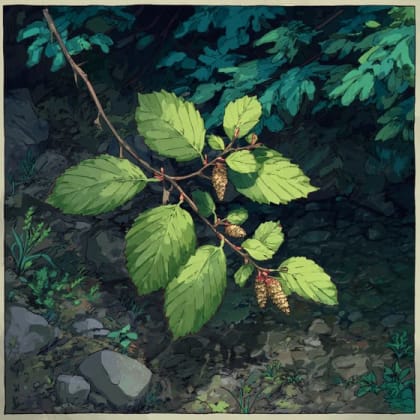
Birch trees have white bark that peels like paper. They grow tall and have small, green leaves that turn yellow in the fall. Birch trees provide homes for birds and insects.
Hábitat: Forests
The Birch is famous for its distinctive peeling bark, often bright white, silver, or sometimes bronze, with horizontal lines called lenticels. Its slender branches hold oval, toothed leaves that turn golden in autumn, making it stand out in any forest.
Categoría
ÁrbolesRareza
Common
Peligro
1/5 · Muy bajo
Snaps
¡Sé la primera persona en hacer un snap!
Ancient people used birch bark as one of the very first paper-like writing materials!
Birch sap can be tapped in spring to make syrup, tasting a bit like maple!
Birch wood is tough, flexible, and has been used to make everything from canoes to furniture!
Its papery bark is famously waterproof and can even light a fire when wet!
Birch has a multi-layered, papery bark that peels off, helping it shed parasites and grow without cracking.
Birch can grow quickly, allowing it to rapidly establish itself in open areas after disturbances like fires.
Birch produces tiny, winged seeds (samaras) that are easily carried by the wind to new locations to reproduce.
Scolytus betulae
larvae burrow into and feed on the inner bark
Cervus elaphus
browses on young twigs, leaves, and bark during winter
Fomes fomentarius
grows on decaying birch wood, helping decomposition
Bombus terrestris
visits birch catkins, collecting pollen in spring
Este rasgo describe una relación simbiótica entre un hongo y las raíces de una planta, beneficiando a ambos organismos.
El atractivo invernal se refiere a las plantas que proporcionan un atractivo estético a través de su follaje, corteza, bayas o estructura durante la temporada de invierno.
Las plantas caducifolias pierden periódicamente todas sus hojas, por lo general durante el otoño o las estaciones secas.
Las plantas resistentes al frío son capaces de soportar bajas temperaturas y condiciones de congelación sin sufrir daños significativos.

Los árboles de hoja ancha son angiospermas caracterizadas por hojas planas y anchas que típicamente se caen anualmente en climas templados.

Los hábitats boscosos son entornos terrestres dominados por una densa cubierta arbórea, que sustentan una gran diversidad de vida animal y vegetal.
Peligro
1/5 · Muy bajo
Enjoy looking at birch trees from a safe distance and avoid climbing them.
15-30 m
5-10 m
Sí
30-60 cm
50-150 años
Forests
Samara
Medio
Acércate para separar los grupos y explorar dónde se ha fotografiado este objeto.
Los snaps recientes aparecerán aquí a medida que se añadan nuevas observaciones.