bird of prey
bird of prey
Birds of prey are amazing hunters with sharp talons and keen eyesight. They soar high in the sky and can spot their food from far away. Some of them are very big and can even carry off small animals!
Hábitat: Forests, Mountains, Grasslands
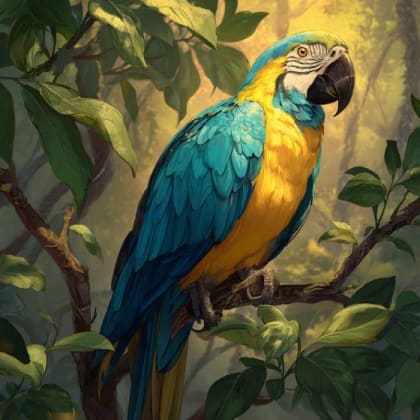
The bird of prey typically has a powerful, hooked beak and strong, sharp talons used for grasping. Their eyes are large and forward-facing, often with intense yellow or brown irises. Plumage varies widely but is commonly shades of brown, grey, or white, providing excellent camouflage.
Categoría
AvesRareza
Common
Peligro
2/5 · Bajo
Snaps
¡Sé la primera persona en hacer un snap!
Baby birds of prey are called nestlings and are very fluffy when they hatch.
Some birds of prey can turn their heads almost all the way around!
The fastest animal is a bird of prey, diving over 300 km/h!
They often build huge nests, called eyries, that can be used for many years.
Bird of prey has incredible eyesight that helps them spot tiny prey from very high in the sky.
Bird of prey can grip prey tightly with powerful talons thanks to strong leg muscles and sharp claws.
Many birds of prey fly almost silently, their specialized feathers muffling wingbeats for surprise attacks.
Bird of prey has a strong, hooked beak to tear meat from prey after a successful hunt.
Birds of prey are mighty hunters that eat other animals to get their energy.
Microtus pennsylvanicus
A common small mammal preyed upon by many raptors.
Oryctolagus cuniculus
A significant food source for larger eagles and hawks.
Thamnophis sirtalis
Many raptors, especially hawks, eat snakes.
Sturnus vulgaris
Small birds are a primary food for falcons and accipiters.
Oncorhynchus mykiss
Fish are key to the diet for osprey and fishing eagles.
Describe a los animales, principalmente aves, que poseen una cubierta de plumas.
Los animales solitarios viven solos durante la mayor parte de su vida y solo interactúan con otros para aparearse o cuidar de sus crías.
Las criaturas aéreas pasan una parte importante de su vida en el aire, utilizando el vuelo para diversas actividades como la caza, la migración o la anidación.
Los hábitats de pastizales son biomas terrestres dominados por pastos y plantas herbáceas, que sustentan a una variedad de animales de pastoreo.

Este rasgo de hábitat identifica a las especies que se encuentran en regiones montañosas, caracterizadas por su gran altitud, pendientes pronunciadas y zonas climáticas variables.

Los hábitats boscosos son entornos terrestres dominados por una densa cubierta arbórea, que sustentan una gran diversidad de vida animal y vegetal.

Un depredador de emboscada caza esperando pacientemente y ocultándose, para luego lanzar un ataque repentino cuando una presa desprevenida se pone a su alcance.

Este rasgo identifica a los organismos cuya dieta consiste total o principalmente en tejido animal.

Los animales diurnos están activos principalmente durante el día y suelen descansar o dormir por la noche.

Describe una especie cuya presencia y papel tienen un efecto desproporcionadamente grande en su entorno.

Este rasgo identifica a los organismos que exhiben una rapidez excepcional en sus movimientos para cazar, escapar o desplazarse.
Peligro
2/5 · Bajo
Always watch birds from a distance and never try to touch them.
15-100 cm
30-300 cm
0.05-15 kg
5-70 años
320 km/h
Birds of prey are mighty hunters that eat other animals to get their energy.
Forests, Mountains, Grasslands
Pursuit
Acércate para separar los grupos y explorar dónde se ha fotografiado este objeto.
Los snaps recientes aparecerán aquí a medida que se añadan nuevas observaciones.
















.jpg&width=800)