
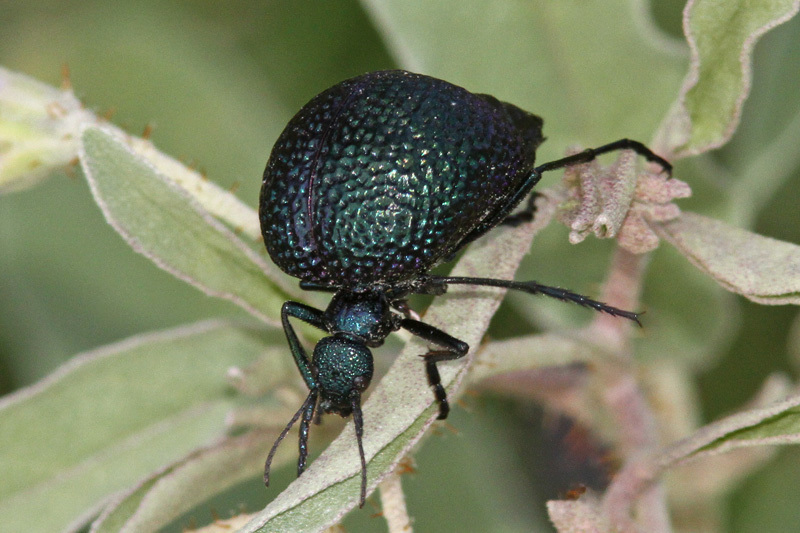





Black Bladder-bodied Meloid
Cysteodemus wislizeni
The Black Bladder-bodied Meloid is a special beetle with a shiny black body. It loves to hide in dry, sunny places and is known for its unique shape and color.
Hábitat: Desert
The Black Bladder-bodied Meloid has a strikingly inflated, shiny black, globular body that resembles a small bladder. Its small head and narrow thorax appear disproportionate to its large, fused wing covers, making it visually distinct from other beetles.
Categoría
InsectosRareza
Common
Peligro
1/5 · Muy bajo
Snaps
¡Sé la primera persona en hacer un snap!
Baby bladder-bodied meloids hunt for grasshopper eggs deep underground!
Its unusual name comes from its body shape, which looks like a tiny black balloon!
They wear a "poison perfume" made of cantharidin, warning predators to stay away!
Unlike most beetles, adults cannot fly, using their tough shell for protection instead!
Black Bladder-bodied Meloid can produce cantharidin, a potent toxin that helps them deter predators with a blistering chemical defense.
Black Bladder-bodied Meloid has tough, fused elytra that help them protect their soft body, making them resilient in harsh desert environments.
Black Bladder-bodied Meloid larvae can secretly parasitize grasshopper eggs, helping them find food and grow into adults.
Adults munch on flowers and pollen, while larvae feast on grasshopper eggs underground!
Diferencias por edad: Larvae are parasitic insectivores, consuming grasshopper eggs; adults are herbivorous, feeding on flowers.
Schistocerca americana
Larvae consume its eggs underground.

Larrea tridentata
Adults feed on its leaves and flowers.
Ambrosia dumosa
Adults also feed on flowers of this desert plant.
Los animales solitarios viven solos durante la mayor parte de su vida y solo interactúan con otros para aparearse o cuidar de sus crías.
Colorido describe a organismos u objetos que exhiben una amplia variedad de colores brillantes y distintivos.
Este rasgo caracteriza a los organismos cuya dieta consiste total o principalmente en material vegetal.
Los hábitats desérticos son regiones áridas caracterizadas por precipitaciones extremadamente bajas y, a menudo, temperaturas extremas, que albergan una flora y fauna especializadas.

Los animales diurnos están activos principalmente durante el día y suelen descansar o dormir por la noche.

Relativo a especies que son significativamente más pequeñas que lo típico o promedio de su tipo.

Describe organismos que transfieren polen, permitiendo la fertilización y reproducción de las plantas.
Todavía no hay alias listados.
Peligro
1/5 · Muy bajo
Always watch where you step in nature to avoid stepping on small insects.
10-25 mm
30-90 días
Adults munch on flowers and pollen, while larvae feast on grasshopper eggs underground!
Desert
Foraging
6
Acércate para separar los grupos y explorar dónde se ha fotografiado este objeto.
Los snaps recientes aparecerán aquí a medida que se añadan nuevas observaciones.




.jpg&width=800)








