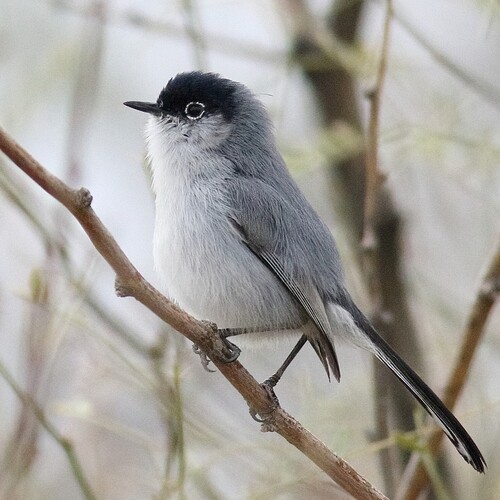


Black-Tailed Gnatcatcher
polioptila melanura
The Black-tailed Gnatcatcher is a tiny, highly active songbird native to the arid desert scrublands of the southwestern United States and northern Mexico. Often found flitting restlessly through creosote and mesquite, this charming bird is known for its cocked tail, buzzy vocalizations, and relentless search for insects. It is a desert specialist, beautifully adapted to life in some of North America's harshest environments. Unlike many other songbirds, it remains in its hot desert territory year-round, braving both the extreme summer heat and chilly winter nights. Its energetic behavior and distinctive harsh, scolding calls make it a delight for birdwatchers exploring dry washes and gravelly slopes.
Hábitat: Typically found in arid desert scrublands, dry washes, and brushy desert slopes dominated by creosote bush, mesquite, and acacia.
Measuring just 11 to 13 centimeters in length, the Black-tailed Gnatcatcher is characterized by its slender build and thin, dark bill. It has a blue-gray back and wings, pale grayish-white underparts, and a long, thin tail that is mostly black underneath with narrow white outer tips. During the breeding season, males sport a striking, glossy black cap that extends from the bill to the nape, which fades to gray in winter, matching the female's year-round plumage.
Categoría
AvesRareza
Common
Peligro
1/5 · Muy bajo
Snaps
¡Sé la primera persona en hacer un snap!
The male's striking black cap is a summer-only fashion statement, molting into a dull gray during the winter months.
Their nests are incredibly sturdy yet flexible, bound together with spider silk that allows the nest to stretch as the growing chicks get larger.
Unlike its close relative, the Blue-gray Gnatcatcher, the Black-tailed Gnatcatcher is a permanent resident of its harsh desert home, rarely migrating.
Vigorously jerks and flares its tail while foraging, a behavior thought to flush out hidden insects from dense foliage.
Obtains almost all its necessary hydration from the insects and spiders it consumes, allowing it to thrive in extremely dry deserts without drinking standing water.
Weaves compact, cup-shaped nests out of plant fibers, spider webs, and bark, camouflaging them perfectly within desert shrubs.
Feeds almost exclusively on small insects, spiders, and insect eggs gleaned from desert vegetation.
Molothrus ater
The Brown-headed Cowbird frequently lays its eggs in the nests of Black-tailed Gnatcatchers, forcing the hosts to raise its larger offspring.
Geococcyx californianus
The Greater Roadrunner is a swift desert predator that opportunistically preys on gnatcatcher nestlings and fledglings.
Circulifer tenellus
Feeds heavily on small desert leafhoppers, helping control their populations on desert shrubs.
Aún no hay insignias de rasgos asignadas a este objeto.
Todavía no hay alias listados.
Las colecciones para este objeto aparecerán aquí a medida que se añadan más temas.
Peligro
1/5 · Muy bajo
Todavía no hay notas especiales de seguridad.
La forma más fácil de identificar a Black-Tailed Gnatcatcher es usar la aplicación de identificación de naturaleza Snappit.
0.0050000000000000044+ kg
Feeds almost exclusively on small insects, spiders, and insect eggs gleaned from desert vegetation.
Typically found in arid desert scrublands, dry washes, and brushy desert slopes dominated by creosote bush, mesquite, and acacia.
Foraging
Acércate para separar los grupos y explorar dónde se ha fotografiado este objeto.
Los snaps recientes aparecerán aquí a medida que se añadan nuevas observaciones.



.jpg&width=800)











.jpg&width=800)
