

Blind Pricklypear
opuntia rufida
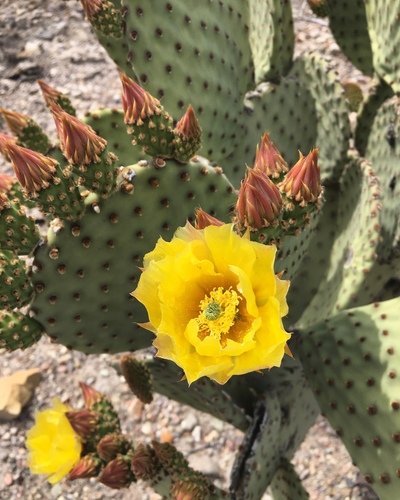
The Blind Pricklypear (Opuntia rufida) is a fascinating, shrubby cactus native to the Chihuahuan Desert. Unlike many of its prickly pear relatives, it is famously known for lacking the long, intimidating spines typical of the Cactaceae family. Instead, it is covered in thousands of dense, reddish-brown micro-spines called glochids. The common name 'blind' comes from the hazard these tiny, detachable glochids pose to cattle and other animals, as they can easily be blown by the wind into the eyes, causing severe irritation or temporary blindness. Despite this defensive nature, it produces gorgeous, vibrant yellow flowers that turn orange-red as they age, adding a splash of brilliant color to the harsh desert landscape.
Hábitat: Found in arid desert environments, typically thriving on dry, rocky limestone slopes, gravelly flats, and desert scrublands.
This sprawling cactus typically grows as a multi-branched shrub up to 1.5 meters tall, composed of fleshy, circular to obovate pads that are grayish-green to blue-green in color. The most striking visual identifier is the neat rows of polka-dot-like areoles filled with fuzzy, reddish-brown or coppery glochids, completely devoid of long spines. In late spring, bright yellow or apricot-colored cup-shaped flowers, measuring about 6 to 7 centimeters across, bloom along the upper edges of the pads, eventually yielding fleshy, globe-shaped red fruits.
Categoría
PlantasRareza
Common
Peligro
1/5 · Muy bajo
Snaps
¡Sé la primera persona en hacer un snap!
Its common name 'Blind Pricklypear' reflects the historical reports of cattle going blind after grazing on or walking past this plant, as wind-blown glochids lodged in their eyes.
The specific epithet 'rufida' is Latin for 'reddish', referring to the distinct reddish-brown color of its glochids.
Unlike many cacti, its flowers change color over the course of a single day, opening yellow and gradually shifting to an orange or reddish-peach hue before wilting.
Instead of long spines, it uses thousands of tiny, barbed bristles called glochids that easily dislodge to irritate the skin and eyes of herbivores.
Utilizes Crassulacean Acid Metabolism to absorb carbon dioxide at night, minimizing water loss through transpiration during the blistering desert days.
Swells its thick, fleshy pads to store large quantities of water during infrequent rains, enabling it to survive prolonged droughts.
As a photosynthetic plant, the Blind Pricklypear produces its own organic nutrients using sunlight, water, and carbon dioxide.
Diadasia rinconis
Pollinates the cactus flowers while gathering nectar and pollen.
Dactylopius coccus
Feeds on the juices of the pads, sometimes forming white waxy colonies.
Campylorhynchus brunneicapillus
Consumes the ripe red fruits and helps disperse the seeds throughout the desert.
Aún no hay insignias de rasgos asignadas a este objeto.
Todavía no hay alias listados.
Las colecciones para este objeto aparecerán aquí a medida que se añadan más temas.
Peligro
1/5 · Muy bajo
Todavía no hay notas especiales de seguridad.
La forma más fácil de identificar a Blind Pricklypear es usar la aplicación de identificación de naturaleza Snappit.
60-150 cm
5-40 kg
20-50 años
As a photosynthetic plant, the Blind Pricklypear produces its own organic nutrients using sunlight, water, and carbon dioxide.
Found in arid desert environments, typically thriving on dry, rocky limestone slopes, gravelly flats, and desert scrublands.
Acércate para separar los grupos y explorar dónde se ha fotografiado este objeto.
Los snaps recientes aparecerán aquí a medida que se añadan nuevas observaciones.









.jpg&width=800)







