_(5005682834).jpg&width=800)





Bobolink
Dolichonyx oryzivorus
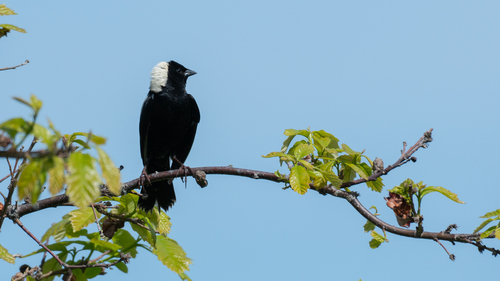
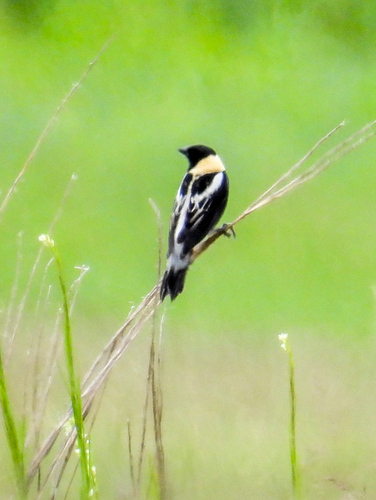
El Bobolink es un pájaro pequeño y colorido conocido por su alegre canto. Tiene la espalda negra y el vientre blanco, lo que lo hace fácil de detectar en campos y praderas durante el verano.
Hábitat: Pastizales
El Bobolink es un pájaro cantor de tamaño mediano, famoso por el llamativo cuerpo negro del macho reproductor, parches blancos en las alas y una nuca de color amarillo brillante. Las hembras y los machos no reproductores son de color marrón estriado, parecidos a gorriones grandes, con una cola puntiaguda distintiva.
Categoría
AvesRareza
Common
Peligro
1/5 · Muy bajo
Snaps
27
¡A los Bobolinks alguna vez se les llamó 'pájaros mofeta' debido a las marcas blancas en sus espaldas negras!
Durante la migración, ¡los Bobolinks pueden reunirse en enormes bandadas, a veces de miles!
¡Los Bobolinks machos cantan tanto que sus músculos de la garganta pueden hincharse durante la temporada de cría!
Su nombre científico 'oryzivorus' significa 'comedor de arroz', refiriéndose a su dieta en invierno.
Los bobolinks comen insectos en verano y cambian a semillas y granos para obtener energía durante la migración.
Diferencias por edad: Las aves jóvenes comen principalmente insectos para un crecimiento rápido, mientras que los adultos consumen más semillas estacionalmente.
Describe a los animales, principalmente aves, que poseen una cubierta de plumas.
Los animales sociales viven en grupos organizados, cooperando para obtener beneficios de supervivencia como la búsqueda de alimento, la defensa y la cría de descendencia.
Los animales cantores producen vocalizaciones complejas, a menudo con el propósito de atraer parejas, defender el territorio o comunicarse dentro de su especie.
Colorido describe a organismos u objetos que exhiben una amplia variedad de colores brillantes y distintivos.

Este rasgo identifica a los organismos cuya dieta consiste principalmente en insectos y otros pequeños invertebrados.

Los hábitats de pastizales son biomas terrestres dominados por pastos y plantas herbáceas, que sustentan a una variedad de animales de pastoreo.

Los animales migratorios emprenden movimientos estacionales de una región a otra, típicamente en respuesta a cambios en el clima o la disponibilidad de alimentos.
Todavía no hay alias listados.
Peligro
1/5 · Muy bajo
Si ve un nido de pájaros, asegúrese de observarlo desde la distancia y no tocarlo.
La forma más fácil de identificar a Bobolink es usar la aplicación de identificación de naturaleza Snappit.
16-18 cm
25-32 cm
0.028-0.056 kg
2-5 años
60 km/h
Los bobolinks comen insectos en verano y cambian a semillas y granos para obtener energía durante la migración.
Pastizales
Acércate para separar los grupos y explorar dónde se ha fotografiado este objeto.
2 jun 2026
Cape Arundel Summer Colony Historic DistrictFuente abierta (iNaturalist) ↗
Créditos de la foto
no rights reserved
Licencia: CC0 1.0 ↗
La imagen puede mostrarse recortada dentro del marco de la carta.
29 may 2026
Jackson Terrace Historic DistrictFuente abierta (iNaturalist) ↗
Créditos de la foto
no rights reserved
Licencia: CC0 1.0 ↗
La imagen puede mostrarse recortada dentro del marco de la carta.

Massachusetts, US
Puedes ver Culantrillo Menor y Trillium Rojo.
Ver guía →

Massachusetts, US
Puedes ver Abejorro Oriental Común y Col Mofeta Oriental.
Ver guía →

Massachusetts, US
Puedes ver Pavo, Culebra De Liga y Rosa Multiflora.
Ver guía →

Pennsylvania, US
Puedes ver Barnacla Canadiense, Petirrojo Americano y Tordo Sargento.
Ver guía →

Maine, US
Puedes ver Rosa Rugosa y Cangrejo Verde Europeo.
Ver guía →

Illinois, US
Puedes ver Naranjo De Osage, Cardencha Laciniada y Trébol Rojo.
Ver guía →
Llévate el descubrimiento
Haz una foto con Snappit, identifica la especie y guarda el hallazgo en tu colección.




.jpg&width=800)








