bonnethead
Sphyrna tiburo
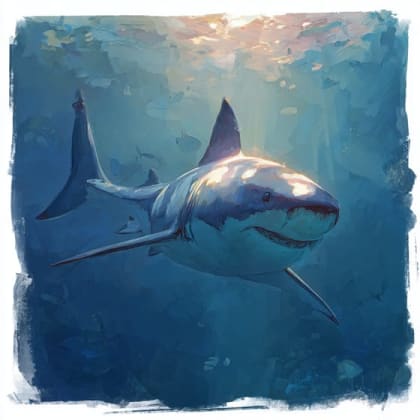
The bonnethead is a small shark that looks like a hammerhead but has a rounder head! They swim in warm waters and are known for their playful nature, often seen gliding gracefully through the ocean.
Hábitat: Coastal areas
The bonnethead has a distinct, shovel-shaped head, much like a wide spade, making it easily identifiable among sharks. Its body is typically grey-brown on top, fading to a lighter underside, providing camouflage in coastal waters. Unlike other hammerheads, its head is smooth and broadly rounded.
Categoría
PecesRareza
Common
Peligro
2/5 · Bajo
Snaps
¡Sé la primera persona en hacer un snap!
Bonnetheads have a surprisingly large brain for their body size, especially for smell and vision!
Female bonnetheads can sometimes have babies all on their own, without a male shark!
Their wide, shovel-like head helps them 'sweep' the ocean floor, flushing out hidden crabs!
These sharks sometimes travel in huge groups, with hundreds of individuals cruising together!
Bonnethead sharks can detect the faint electrical signals of hidden prey thanks to special sensors on their unique head shape.
The bonnethead has widely spaced nostrils that help them pinpoint the direction of smells like food with incredible accuracy.
Bonnetheads have unique enzymes to digest seagrass, helping them get nutrients from plants, which is rare for a shark.
These small sharks primarily eat shellfish, crabs, and some fish, but also surprisingly consume seagrass.
Diferencias por edad: Younger bonnetheads eat more small crustaceans, while adults incorporate more seagrass into their diet.
Callinectes sapidus
A primary food source in coastal waters.
Litopenaeus setiferus
A common prey item found on the seafloor.
Thalassia testudinum
Provides plant matter and nutrients to their diet.
Carcharhinus leucas
Larger predatory shark that can prey on bonnetheads.
Los animales sociales viven en grupos organizados, cooperando para obtener beneficios de supervivencia como la búsqueda de alimento, la defensa y la cría de descendencia.
Este rasgo identifica organismos cuya dieta incluye tanto materia vegetal como animal.
Este rasgo caracteriza a los organismos cuya dieta consiste total o principalmente en material vegetal.
Los organismos piscívoros son animales que subsisten principalmente de una dieta a base de peces.

Los hábitats costeros son entornos dinámicos situados a lo largo de la interfaz entre la tierra y el mar, influenciados por las mareas, las olas y el agua salada.

Este rasgo identifica a los organismos cuya dieta consiste total o principalmente en tejido animal.

Describe una especie cuya presencia y papel tienen un efecto desproporcionadamente grande en su entorno.

Relativo a especies que son significativamente más pequeñas que lo típico o promedio de su tipo.

Los hábitats marinos abarcan todos los entornos de agua salada de los océanos de la Tierra, sustentando una inmensa diversidad de vida acuática.
Peligro
2/5 · Bajo
Always stay close to an adult when swimming in the ocean and watch for sharks from a safe distance.
60-150 cm
2.5-12 kg
5-12 años
These small sharks primarily eat shellfish, crabs, and some fish, but also surprisingly consume seagrass.
15 km/h
Coastal areas
Foraging
80 m
Acércate para separar los grupos y explorar dónde se ha fotografiado este objeto.
Los snaps recientes aparecerán aquí a medida que se añadan nuevas observaciones.