
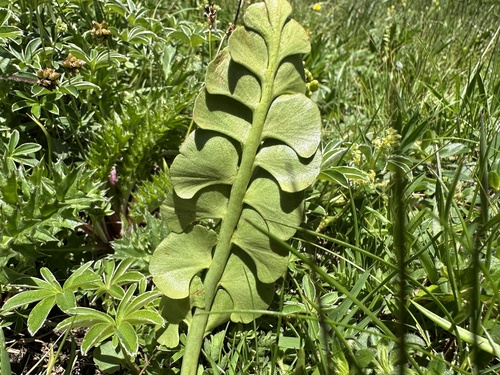


Botrychium Lunaria
botrychium lunaria
El Botrychium Lunaria, conocido también como Helecho Luna, es un helecho primitivo y fascinante con una rica historia arraigada en el folclore medieval. A diferencia de los helechos modernos típicos que muestran frondas grandes y plumosas, esta especie pequeña y discreta desarrolla una sola hoja de color verde pálido, dividida en segmentos en forma de media luna. Junto a esta hoja estéril, produce una espiga separada y erguida que lleva racimos de esporangios de color marrón dorado que imitan pequeños racimos de uvas. Debido a su apariencia inusual y sus hábitos de crecimiento secretos, los antiguos herboristas creían que la planta tenía propiedades mágicas, incluyendo el poder de abrir cerraduras y descalzar a los caballos.
Hábitat: Se encuentra típicamente en pastizales secos y pobres en nutrientes, dunas de arena, brezales y prados montanos abiertos, a menudo en asociación con hongos especializados del suelo.
Esta diminuta planta suele medir entre 5 y 20 centímetros de altura. Se caracteriza por un único tallo carnoso de color verde amarillento que se divide en dos partes: una lámina estéril similar a una hoja y una espiga fértil que porta esporas. La lámina estéril presenta de 4 a 9 pares de folíolos distintivos en forma de abanico o media luna que se superponen ligeramente. La porción fértil es más alta, ramificada, y contiene esporangios globosos que pasan del verde a un rico y cálido marrón dorado a medida que maduran durante los meses de verano.
Categoría
PlantasRareza
Común
Peligro
1/5 · Muy bajo
Snaps
¡Sé la primera persona en hacer un snap!
En el folclore histórico, los alquimistas creían que el helecho luna podía convertir el mercurio en plata, y que caminar sobre él haría que las herraduras de los caballos se cayeran.
Su nombre científico Botrychium se deriva de la palabra griega antigua para un racimo de uvas, haciendo referencia a la apariencia de sus espigas que portan esporas.
La etapa de gametofito subterráneo de este helecho es completamente incolora y ciega, viviendo completamente bajo tierra en total oscuridad durante años antes de producir una hoja verde.
Como planta fotosintética, genera energía a partir de la luz solar, el dióxido de carbono y el agua, con gran ayuda de hongos micorrízicos en el suelo.
Aún no hay insignias de rasgos asignadas a este objeto.
Todavía no hay alias listados.
Las colecciones para este objeto aparecerán aquí a medida que se añadan más temas.
Peligro
1/5 · Muy bajo
Todavía no hay notas especiales de seguridad.
Compara la forma de la fronda, cómo se disponen los foliolos, el pecíolo y los grupos de esporas que se vean. Un solo foliolo suelto suele ocultar el porte general de la planta. Identificador de helechos: sube una foto y compara los detalles visibles.
5-25 cm
0.001-0.01 kg
5-15 años
Como planta fotosintética, genera energía a partir de la luz solar, el dióxido de carbono y el agua, con gran ayuda de hongos micorrízicos en el suelo.
Se encuentra típicamente en pastizales secos y pobres en nutrientes, dunas de arena, brezales y prados montanos abiertos, a menudo en asociación con hongos especializados del suelo.
Fotosíntesis1234567890fdfdfdfdsaasdaffdfsdafsadfasfdasdafsdafsdfasfdfsdfasfdfasdafsdafsadfa
Acércate para separar los grupos y explorar dónde se ha fotografiado este objeto.
Los snaps recientes aparecerán aquí a medida que se añadan nuevas observaciones.
Llévate el descubrimiento
Haz una foto con Snappit, identifica la especie y guarda el hallazgo en tu colección.


















