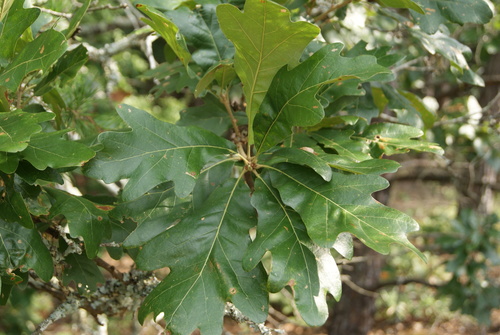


Boynton Oak
quercus boyntonii
The Boynton Oak (Quercus boyntonii) is a critically endangered, dwarf oak species native to a highly restricted range in the southeastern United States, primarily within the state of Alabama. This fascinating plant is a post oak relative that has adapted specifically to survive in harsh, nutrient-poor environments like sandstone glades and rocky pine-oak woodlands. Rather than growing into a towering forest giant, it usually maintains a shrubby, multi-stemmed habit, reaching only a few meters in height. Because of its extremely limited geographic distribution and small wild population, the Boynton Oak is of immense conservation interest. It faces threats from habitat fragmentation, fire suppression, and residential development. Spotting this rare oak in its native sandstone outcrop habitat is a true privilege for botanists and nature enthusiasts alike, representing a unique relic of the region's specialized glade ecology.
Hábitat: Found on dry sandstone glades, rocky outcrops, and open upland pine-oak woodlands.
The Boynton Oak is a low-growing deciduous shrub or small tree, typically standing 1 to 6 meters tall, often growing in clonal clumps. Its leaves are obovate or pear-shaped with 3 to 5 shallow lobes near the tip, strongly resembling a miniature post oak leaf. The upper leaf surface is a dark, leathery green, while the underside is covered in a dense, velvety layer of grayish-yellow star-shaped hairs (trichomes). It produces small, oval acorns about 1 to 1.5 centimeters long, which are seated in a shallow, scaly cup covering the top third of the nut.
Categoría
PlantasRareza
Common
Peligro
1/5 · Muy bajo
Snaps
¡Sé la primera persona en hacer un snap!
The Boynton Oak is one of the rarest native oak species in North America, found almost exclusively in Alabama.
The dense, velvety yellow hairs on its leaf undersides act like a natural sunblock, protecting it from intense heat on exposed rocky glades.
Unlike giant forest oaks, this species is a 'dwarf' oak, frequently looking more like a small shrub than a tree.
Adapted to dry sandstone outcrops, it uses a dense layer of leaf hairs to reduce water loss from transpiration.
It can quickly regenerate and sprout new stems from its underground root crown after wildfires.
It can hybridize with other white oak species, occasionally transferring beneficial genetic traits to survive shifting climates.
As a plant, the Boynton Oak produces its own food through photosynthesis, utilizing sunlight, carbon dioxide, water, and soil nutrients.
Quercus stellata
Competes for space, light, and nutrients in upland pine-oak habitats.
Cyanocitta cristata
Feeds on acorns, assisting in seed dispersal by burying surplus acorns.
Curculio glandium
Larvae feed on and damage developing acorns, limiting successful reproduction.
Aún no hay insignias de rasgos asignadas a este objeto.
Todavía no hay alias listados.
Las colecciones para este objeto aparecerán aquí a medida que se añadan más temas.
Peligro
1/5 · Muy bajo
Todavía no hay notas especiales de seguridad.
La forma más fácil de identificar a Boynton Oak es usar la aplicación de identificación de naturaleza Snappit.
100-600 cm
50-150 años
As a plant, the Boynton Oak produces its own food through photosynthesis, utilizing sunlight, carbon dioxide, water, and soil nutrients.
Found on dry sandstone glades, rocky outcrops, and open upland pine-oak woodlands.
Acércate para separar los grupos y explorar dónde se ha fotografiado este objeto.
Los snaps recientes aparecerán aquí a medida que se añadan nuevas observaciones.

Alabama, US
Puedes ver Sedo Duende, Barnacla Canadiense y Mahonia De Hojas De Cuero.
Ver guía →

Alabama, US
Puedes ver Sedo Duende, Barnacla Canadiense y Garza Azulada.
Ver guía →

Alabama, US
Puedes ver Sedo Duende, Barnacla Canadiense y Mahonia De Hojas De Cuero.
Ver guía →














_BHL23630341.jpg&width=800)






