.jpg&width=800)





Broad-headed Sharpshooter
Oncometopia orbona
The Broad-headed Sharpshooter is a colorful insect known for its bright green body and big head. It loves to hop around and can often be found on plants, where it enjoys sipping on sweet plant juices.
Hábitat: Urban areas
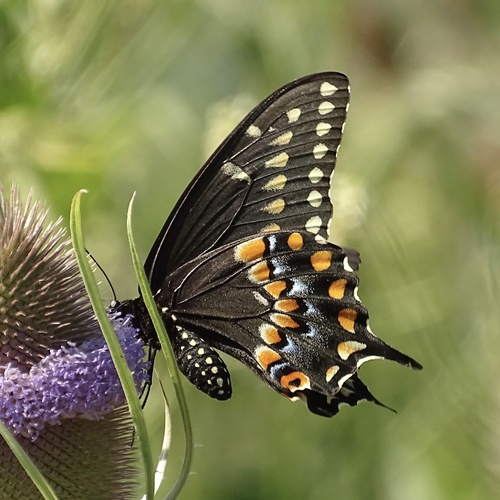
The Broad-headed Sharpshooter is a striking insect, often metallic blue-black with vibrant reddish-orange markings on its broad head and wing veins. Its distinctive broad, flattened head sets it apart from many other leafhoppers, giving it a unique profile.
Categoría
InsectosRareza
Common
Peligro
1/5 · Muy bajo
Snaps
¡Sé la primera persona en hacer un snap!
A single sharpshooter can drink hundreds of times its own weight in plant sap daily!
They are called 'sharpshooters' because of their pointed head and fast, darting movements!
They talk using tiny vibrations that travel through plant stems, a secret language!
This insect drinks so much plant sap it actually 'pees' out tiny water droplets!
Broad-headed Sharpshooter has specialized mouthparts that help them drink watery sap directly from plant xylem, a challenging food source.
Broad-headed Sharpshooter can unleash powerful jumps using strong hind legs, allowing them to escape predators rapidly from plants.
Broad-headed Sharpshooter can excrete excess water as tiny droplets because their diet is mostly watery xylem sap, helping them concentrate nutrients.
Broad-headed Sharpshooter can communicate through substrate vibrations because they use plants as a medium to find mates and warn others.
These tiny insects drink watery plant sap from stems and leaves, like drinking through a straw!
Acer rubrum
A common food source for nymphs and adults.
Quercus alba
Another important host plant, providing essential xylem sap.
Misumena vatia
Often ambushed by this camouflaged predator on flowers.
Turdus migratorius
A common bird that will forage for insects, including sharpshooters.
El camuflaje describe a los organismos que poseen colores o patrones que les permiten mezclarse con su entorno.
Colorido describe a organismos u objetos que exhiben una amplia variedad de colores brillantes y distintivos.
Este rasgo caracteriza a los organismos cuya dieta consiste total o principalmente en material vegetal.
Describe plantas que son particularmente atractivas y beneficiosas para una amplia variedad de organismos polinizadores.

Los animales diurnos están activos principalmente durante el día y suelen descansar o dormir por la noche.

Este rasgo identifica a los organismos que exhiben una rapidez excepcional en sus movimientos para cazar, escapar o desplazarse.

Esta característica de hábitat indica especies que pueden coexistir con los humanos en entornos urbanos y suburbanos, utilizando estructuras artificiales y espacios verdes.

Describe organismos que transfieren polen, permitiendo la fertilización y reproducción de las plantas.
Todavía no hay alias listados.
Peligro
1/5 · Muy bajo
These insects are harmless, but it's best to watch them from a distance.
10-14 mm
30-90 días
These tiny insects drink watery plant sap from stems and leaves, like drinking through a straw!
Urban areas
Foraging
6
Acércate para separar los grupos y explorar dónde se ha fotografiado este objeto.
Los snaps recientes aparecerán aquí a medida que se añadan nuevas observaciones.