broadleaf arrowhead
Sagittaria latifolia
Broadleaf arrowhead is a fun plant that grows in wet areas like ponds and marshes. Its big, arrow-shaped leaves are easy to spot and it produces pretty white flowers that attract butterflies!
Hábitat: Wetlands
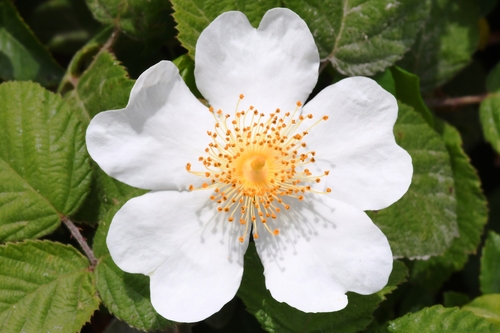
The broadleaf arrowhead has large, distinctively arrow-shaped leaves that can float or emerge upright from the water. Its small, three-petaled white flowers feature a prominent yellow center, blooming in whorls around a central stalk.
Categoría
PlantasRareza
Common
Peligro
1/5 · Muy bajo
Snaps
¡Sé la primera persona en hacer un snap!
Did you know some call its edible tubers 'duck potatoes'?
Indigenous people called its tubers 'wapato,' a crucial starchy food source.
Its tiny, round seeds are covered in ridges, helping them float for long journeys!
Muskrats, beavers, and waterfowl dig up and feast on its energy-rich tubers!
Broadleaf arrowhead can thrive in watery habitats thanks to its ability to grow fully submerged, emergent, or with floating leaves.
Broadleaf arrowhead has starchy tubers that grow underground, storing energy and allowing it to survive harsh conditions and reproduce.
Broadleaf arrowhead can disperse its small, winged seeds by water currents, allowing it to spread to new wetland areas effectively.
Anas platyrhynchos
Ducks love to forage for its nutritious tubers in mud.
Ondatra zibethicus
Muskrats consume its starchy tubers and rhizomes.
Apis mellifera
Honey bees visit its flowers for nectar and pollen.
Bombus impatiens
Bumblebees help pollinate its white summer flowers.
Las plantas caducifolias pierden periódicamente todas sus hojas, por lo general durante el otoño o las estaciones secas.
Las plantas con flores son cualquier planta que produce flores como parte de su ciclo reproductivo.
Las plantas de floración de verano producen sus flores durante la temporada estival, a menudo aportando un color vibrante cuando muchas otras plantas ya han terminado de florecer.
Las plantas comestibles son aquellas partes de una planta que se consideran seguras para el consumo humano.

Describe plantas que son particularmente atractivas y beneficiosas para una amplia variedad de organismos polinizadores.

Este rasgo de hábitat identifica especies que se encuentran en humedales, que son áreas de tierra saturadas de agua, ya sea permanente o estacionalmente, e incluyen marismas, pantanos y ciénagas.

Los hábitats de agua dulce incluyen entornos acuáticos no salinos como ríos, lagos, estanques y humedales, vitales para numerosas especies.

Los hábitats acuáticos abarcan entornos donde los organismos viven principalmente en el agua, incluidos océanos, ríos, lagos y humedales.
Todavía no hay alias listados.
Peligro
1/5 · Muy bajo
Always wash your hands after touching plants, just to be safe!
30-150 cm
30-90 cm
1-3 cm
July-September
Sí
Ninguna
Perenne
Insectos
Acércate para separar los grupos y explorar dónde se ha fotografiado este objeto.
Los snaps recientes aparecerán aquí a medida que se añadan nuevas observaciones.