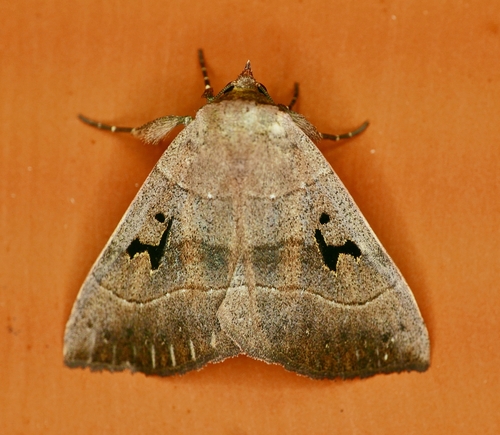


Brown Panopoda Moth
panopoda carneicosta
The Brown Panopoda Moth (Panopoda carneicosta) is a fascinating, yet subtly beautiful species of moth native to the deciduous woodlands of eastern North America. Belonging to the family Erebidae, this nocturnal insect is a classic example of nature's mastery of camouflage. With wing patterns designed to seamlessly blend into dead leaves and bark, the moth perfectly evades predators while resting during daylight hours. What sets this species apart to careful observers is the delicate flush of pink or reddish-brown along the leading edge of its wings, a feature explicitly noted in its scientific name, carneicosta, which translates to 'flesh-colored margin'. Its life cycle is deeply tied to the grand hardwood forests it inhabits, relying primarily on oak and hickory trees to nurture its leaf-eating caterpillar stage. It serves as both an important defoliator in the ecosystem and a vital food source for nocturnal predators like bats and insectivorous birds.
Hábitat: Found primarily in deciduous hardwood forests and mixed woodlands, often resting on tree bark or amidst leaf litter near oak and hickory trees.
The Brown Panopoda is a moderately sized moth with a wingspan ranging from 3 to 5 centimeters. Its forewings are predominantly tan, light brown, or grayish-brown, heavily speckled with fine, darker brown or black dots. The most distinctive identifying feature is the reddish, pinkish, or flesh-toned strip running along the leading edge (costal margin) of the forewings. The wings are also crossed by two faint, thin, dark, and often scalloped or wavy lines (the antemedial and postmedial lines). When resting with its wings laid flat into a broad triangle, the moth perfectly mimics the appearance of a dry, withered leaf.
Categoría
InsectosRareza
Common
Peligro
1/5 · Muy bajo
Snaps
¡Sé la primera persona en hacer un snap!
Because they rely heavily on oak and hickory trees, the health of Brown Panopoda populations is a great indicator of a thriving deciduous hardwood forest ecosystem.
The species name 'carneicosta' translates to 'flesh-colored margin,' referring directly to the unique pinkish-red stripe along the top edge of its wings.
To evade bats, these moths rely on a specialized 'ear' located on their thorax that is highly sensitive to ultrasonic frequencies.
When resting, the Brown Panopoda folds its wings flat to resemble a dead oak leaf, a brilliant example of cryptic camouflage.
The moth's resting posture and speckled, brownish-tan wing patterns make it incredibly difficult for predators to distinguish it from dead leaves or tree bark.
Like many Erebidae moths, they possess tympanal organs (simple 'ears' on their thorax) that allow them to hear the ultrasonic echolocation clicks of hunting bats and take evasive maneuvers.
The caterpillar stage possesses specialized gut enzymes allowing it to safely digest the tough, tannin-rich leaves of oak and hickory trees without being poisoned.
Caterpillars are folivores that consume the leaves of hardwood trees, while adult moths may sip nectar or tree sap.
Diferencias por edad: Larvae exclusively eat tree foliage, whereas the short-lived adults shift to liquid diets like nectar, or in some cases, do not feed at all.
Quercus alba
Primary larval host plant providing food and shelter.
Eptesicus fuscus
A common nocturnal predator that hunts flying adult moths.
Polistes spp.
Predatory insects that hunt the caterpillar stage of the moth.
Aún no hay insignias de rasgos asignadas a este objeto.
Todavía no hay alias listados.
Las colecciones para este objeto aparecerán aquí a medida que se añadan más temas.
Peligro
1/5 · Muy bajo
Todavía no hay notas especiales de seguridad.
La forma más fácil de identificar a Brown Panopoda Moth es usar la aplicación de identificación de naturaleza Snappit.
1-3 cm
3-5 cm
0.0001-0.0005 kg
0-1 años
Caterpillars are folivores that consume the leaves of hardwood trees, while adult moths may sip nectar or tree sap.
Found primarily in deciduous hardwood forests and mixed woodlands, often resting on tree bark or amidst leaf litter near oak and hickory trees.
Foraging
Acércate para separar los grupos y explorar dónde se ha fotografiado este objeto.
Los snaps recientes aparecerán aquí a medida que se añadan nuevas observaciones.










_Male_(19416867136).png&width=800)




