

Buren'S Pyramid Ant
dorymyrmex bureni
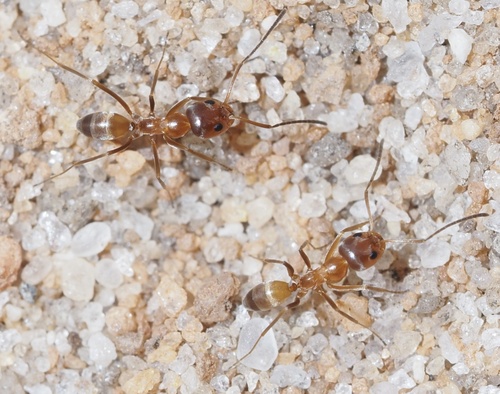
Buren's pyramid ant (Dorymyrmex bureni) is a fascinating, fast-moving ant species native to the sandy regions of the southern United States. Highly active during the heat of the day, these industrious insects are famous for constructing neat, volcano- or pyramid-shaped mounds of sand around their nest entrances. They play a vital role in their ecosystems by aerating sandy soils and keeping populations of small herbivorous insects in check. Unlike many aggressive stinging ants, pyramid ants are relatively docile to humans and are excellent natural pest control agents in gardens and sandy yards.
Hábitat: Typically found in open, sunny environments with dry, sandy soil, such as coastal dunes, pine flatwoods, pastures, and suburban lawns.
These small ants measure between 2 to 4 millimeters in length and are characterized by their striking golden-yellow to orange-brown coloration. Under magnification, they display a distinct, cone-shaped projection on their propodeum (the back of the thorax), resembling a tiny pyramid. They have relatively long legs and antennae, which they use to navigate sandy terrain with remarkable speed.
Categoría
InsectosRareza
Common
Peligro
1/5 · Muy bajo
Snaps
¡Sé la primera persona en hacer un snap!
Their nest cones are built entirely of excavated sand grains carried one by one by the industrious worker ants.
They are known to aggressively defend their nests against invasive fire ants, sometimes throwing sand to block rival nest entrances.
When crushed, Buren's pyramid ants release an odor that many compare to rotten coconuts or blue cheese.
Constructs unique cone-shaped mounds that prevent sand collapse and help regulate nesting temperatures.
Highly thermophilic, allowing them to forage on scorching hot sand when predators and competitors seek shade.
Produces a distinctive, pungent chemical compound that smells like rotten coconuts to alert the colony to danger.
Feeds primarily on live and dead insects, while also maintaining mutualistic relationships with aphids to harvest sweet honeydew.
Aphis gossypii
Tends and protects this insect to harvest sweet honeydew droplets.
Solenopsis invicta
Competes directly for nesting spaces and resources in the same sandy environments.
Aún no hay insignias de rasgos asignadas a este objeto.
Todavía no hay alias listados.
Las colecciones para este objeto aparecerán aquí a medida que se añadan más temas.
Peligro
1/5 · Muy bajo
Todavía no hay notas especiales de seguridad.
La forma más fácil de identificar a Buren'S Pyramid Ant es usar la aplicación de identificación de naturaleza Snappit.
0+ cm
0.000001+ kg
Feeds primarily on live and dead insects, while also maintaining mutualistic relationships with aphids to harvest sweet honeydew.
Typically found in open, sunny environments with dry, sandy soil, such as coastal dunes, pine flatwoods, pastures, and suburban lawns.
Foraging
Acércate para separar los grupos y explorar dónde se ha fotografiado este objeto.
Los snaps recientes aparecerán aquí a medida que se añadan nuevas observaciones.












.jpg&width=800)
