

California Snowdrop Bush
styrax redivivus
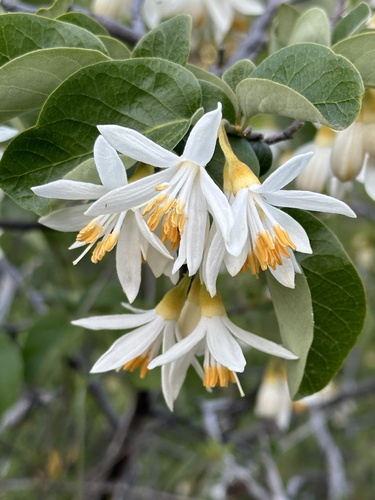
The California Snowdrop Bush (Styrax redivivus) is a captivating deciduous shrub native to the dry foothills, chaparral, and montane forests of California and southwestern Oregon. Renowned for its stunning spring display, this plant produces elegant, drooping clusters of fragrant white blossoms that resemble snowdrops. Its sweet-scented flowers serve as an essential nectar source for local pollinators during the transition from spring to the hot, dry summer. Beyond its ornamental appeal, the California Snowdrop Bush is an incredibly resilient survivor. It has adapted beautifully to the fire-prone Mediterranean climate of its native range. When wildfires sweep through the chaparral, destroying its above-ground branches, the shrub relies on its deep, woody root crown to resprout vigorously, earning its species name redivivus, which means 'living again'.
Hábitat: Typically found on dry, rocky slopes, canyon walls, and sandy washes within chaparral, oak woodland, and mixed coniferous forest ecosystems.
This deciduous shrub typically grows between 100 and 400 centimeters tall, forming a rounded, multi-branched shape. Its leaves are simple, broadly oval to circular, measuring 2 to 7 centimeters long, featuring smooth or slightly wavy margins with a bright green upper surface and a paler, finely fuzzy underside. In late spring, it produces hanging clusters of 2 to 5 bell-shaped white flowers, each with 5 to 8 recurved petals and a central cluster of bright yellow stamens. The flowers give way to small, hard, egg-shaped, brownish dry drupes about 1 centimeter wide.
Categoría
PlantasRareza
Common
Peligro
1/5 · Muy bajo
Snaps
¡Sé la primera persona en hacer un snap!
Indigenous Californian tribes traditionally used the strong, flexible shoots of this shrub to construct baskets, arrow shafts, and baby cradles.
The species name 'redivivus' means 'revived' or 'living again,' which celebrates the plant's remarkable ability to regenerate from its root crown after devastating wildfires.
Unlike many other species in the Styrax genus which are tropical, the California Snowdrop Bush has evolved specifically to thrive in dry, Mediterranean-style climates.
Following a wildfire, the shrub can regenerate quickly by sending up vigorous new shoots from its underground root crown.
In response to severe seasonal drought, the shrub can drop its leaves early to conserve water and prevent dehydration.
The flowers release a sweet, heavy fragrance that travels far on the wind to guide native bees and butterflies over long distances.
As a photosynthetic plant, it manufactures its own sugars using sunlight, carbon dioxide, and water while absorbing essential minerals from the soil.
Bombus vosnesenskii
Feeds on the nectar of the fragrant flowers and acts as a primary pollinator.
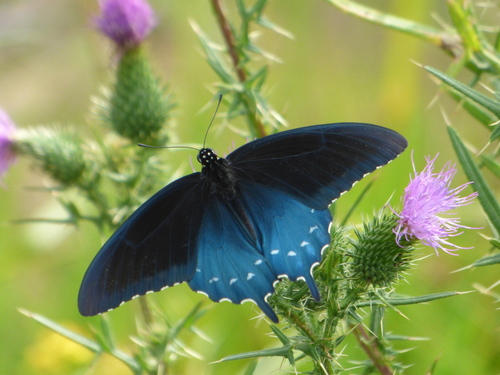
Papilio rutulus
Nectars on the blossoms during late spring and early summer.
Odocoileus hemionus
Browses on the leaves, young twigs, and shoots, especially when other forage is scarce.
Aún no hay insignias de rasgos asignadas a este objeto.
Todavía no hay alias listados.
Las colecciones para este objeto aparecerán aquí a medida que se añadan más temas.
Peligro
1/5 · Muy bajo
Todavía no hay notas especiales de seguridad.
La forma más fácil de identificar a California Snowdrop Bush es usar la aplicación de identificación de naturaleza Snappit.
100-400 cm
20-80 años
As a photosynthetic plant, it manufactures its own sugars using sunlight, carbon dioxide, and water while absorbing essential minerals from the soil.
Typically found on dry, rocky slopes, canyon walls, and sandy washes within chaparral, oak woodland, and mixed coniferous forest ecosystems.
Acércate para separar los grupos y explorar dónde se ha fotografiado este objeto.
Los snaps recientes aparecerán aquí a medida que se añadan nuevas observaciones.