California Tree Frog
Pseudacris cadaverina
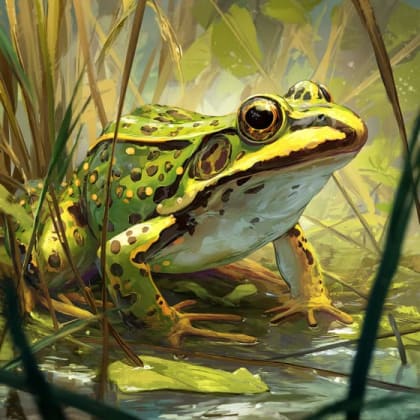
The California Tree Frog is a small, green frog that loves to hop around in wet places. They are great at climbing and can often be found resting on leaves or branches.
Hábitat: Wetlands
The California Tree Frog has warty, grey-brown to olive skin, often mottled with darker blotches, which helps it blend perfectly with its rocky surroundings. A distinct dark mask extends from its snout through its eye, making it visually different from many smoother-skinned tree frogs.
Categoría
AnfibiosRareza
Common
Peligro
1/5 · Muy bajo
Snaps
¡Sé la primera persona en hacer un snap!
Baby California Tree Frogs, called tadpoles, munch on algae before transforming into bug-eating adults.
Their unique call sounds like a 'wrah-wrah-wrah,' a bit like sandpaper, not a typical frog 'ribbit'!
These tiny frogs can leap over 2 meters (6 feet) in a single bound, an incredible distance for their size!
Unlike many frogs, the California Tree Frog has bumpy, warty skin that helps it mimic the texture of stones.
California Tree Frogs have special adhesive toe pads that help them climb smooth rocks and plants, allowing them to escape predators and find high perches.
California Tree Frog can change its color and uses its warty skin to blend into rocks and bark, making it nearly invisible to hungry animals.
California Tree Frog can absorb water directly through its skin from damp surfaces, which helps them stay hydrated without needing to drink.
These frogs are expert hunters, using their sticky tongues to snatch up small insects and spiders.
Diferencias por edad: Young tadpoles eat algae and plant matter in the water, while adult frogs eat insects and small invertebrates.
Thamnophis hammondii
A common native snake that hunts small amphibians.
Ardea herodias
Large wading bird that preys on frogs in shallow waters.
Rana catesbeiana
Invasive frog that preys on smaller native amphibians.
Musca domestica
Catches flies and other flying insects with its sticky tongue.
Gryllus domesticus
Actively ambushes crickets and other terrestrial invertebrates.
Los animales arborícolas viven principalmente en los árboles, utilizándolos como refugio, alimento y protección contra los depredadores.
El camuflaje describe a los organismos que poseen colores o patrones que les permiten mezclarse con su entorno.
Colorido describe a organismos u objetos que exhiben una amplia variedad de colores brillantes y distintivos.
Este rasgo identifica a los organismos cuya dieta consiste principalmente en insectos y otros pequeños invertebrados.

Este rasgo de hábitat identifica especies que se encuentran en humedales, que son áreas de tierra saturadas de agua, ya sea permanente o estacionalmente, e incluyen marismas, pantanos y ciénagas.

Los animales nocturnos están principalmente activos durante la noche, y suelen descansar o dormir durante el día.

Describe organismos que transfieren polen, permitiendo la fertilización y reproducción de las plantas.

El estado de peligro de extinción indica que una especie corre un riesgo muy alto de extinguirse en estado silvestre en un futuro próximo.
Todavía no hay alias listados.
Peligro
1/5 · Muy bajo
Always watch frogs from a distance and don't touch them, as they can be delicate.
2.5-5 cm
0.002-0.01 kg
5-9 años
3.6 km/h
These frogs are expert hunters, using their sticky tongues to snatch up small insects and spiders.
Wetlands
Ambush
200-2000
Acércate para separar los grupos y explorar dónde se ha fotografiado este objeto.
Los snaps recientes aparecerán aquí a medida que se añadan nuevas observaciones.