

Canarian Lizards
gallotia
Canarian Lizards, belonging to the endemic genus Gallotia, are a fascinating group of lacertid lizards native to the Canary Islands. These resilient reptiles are famous for their unique evolutionary path, having adapted to diverse island ecosystems ranging from arid coastal scrublands to lush pine forests and high-altitude volcanic peaks. They are remarkable among lacertids for their shift toward a herbivorous diet as they mature, playing a vital role as seed dispersers for several native plant species. Over millions of years, they have evolved into distinct species on different islands, including several giant species that were once thought to be extinct but have been rediscovered in remote, sheer cliffs.
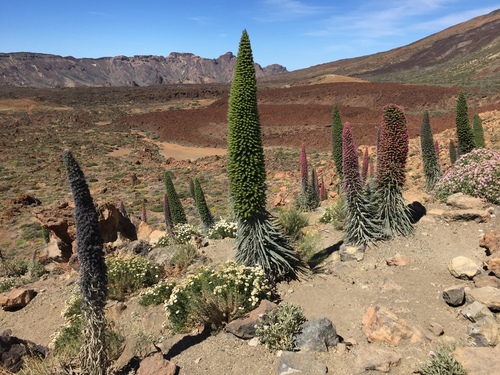
Hábitat: They are found across the Canary Islands in diverse environments, ranging from rocky volcanic coastlines and scrublands to ancient pine forests and dry stonewalls near agricultural areas.
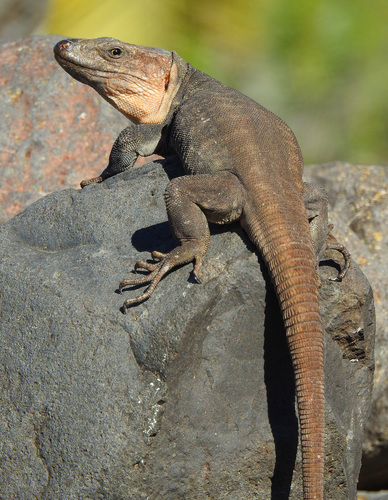
These lizards display a sturdy, robust build with strong limbs and highly textured, beaded scales. Coloration varies significantly by species and age, but mature males often showcase stunning, vibrant blue or green patches on their flanks or cheeks, contrasting with a dark gray, brown, or black body. Females and juveniles generally feature more cryptic patterns, adorned with longitudinal light stripes and dark brown mottling along their backs. Sizes range dramatically from the smaller, common West Canarian lizard to the critically endangered giant lizards.
Categoría
ReptilesRareza
Common
Peligro
1/5 · Muy bajo
Snaps
¡Sé la primera persona en hacer un snap!
Canarian Lizards are vital seed dispersers in the Canary Islands, helping maintain the distribution of several endemic plant species through their droppings.
Some species exhibit striking sexual dimorphism, with males possessing brilliant, electric-blue cheek patches that they flash during territorial displays.
The giant species of Gallotia, once thought to have gone extinct hundreds of years ago, were miraculously rediscovered clinging to life on sheer, inaccessible sea cliffs.
They can shed their tails when grabbed by a predator to distract the attacker while they escape, eventually regrowing a new tail.
They utilize basking on black volcanic rocks to quickly raise their body temperatures, optimizing their metabolism.
Unlike most other lacertid lizards, some Canarian Lizards can produce squeaking sounds when threatened or during social interactions.
While juveniles feed heavily on insects to support their rapid growth, adult Canarian Lizards are primarily herbivorous, consuming fruits, flowers, and leaves.
Diferencias por edad: Juveniles are predominantly insectivorous, transitioning to a highly herbivorous diet as they reach adulthood.
Falco tinnunculus
Preys on the lizard, especially young or smaller individuals.
Euphorbia balsamifera
Consumes the sweet fruits of this shrub and acts as a key seed disperser.
Felis catus
Preys on all life stages of these endemic lizards, causing severe population declines.
Aún no hay insignias de rasgos asignadas a este objeto.
Las colecciones para este objeto aparecerán aquí a medida que se añadan más temas.
Peligro
1/5 · Muy bajo
Todavía no hay notas especiales de seguridad.
La forma más fácil de identificar a Canarian Lizards es usar la aplicación de identificación de naturaleza Snappit.
15-65 cm
0.05-1.5 kg
5-20 años
15 km/h
While juveniles feed heavily on insects to support their rapid growth, adult Canarian Lizards are primarily herbivorous, consuming fruits, flowers, and leaves.
They are found across the Canary Islands in diverse environments, ranging from rocky volcanic coastlines and scrublands to ancient pine forests and dry stonewalls near agricultural areas.
Foraging
Acércate para separar los grupos y explorar dónde se ha fotografiado este objeto.
Los snaps recientes aparecerán aquí a medida que se añadan nuevas observaciones.