
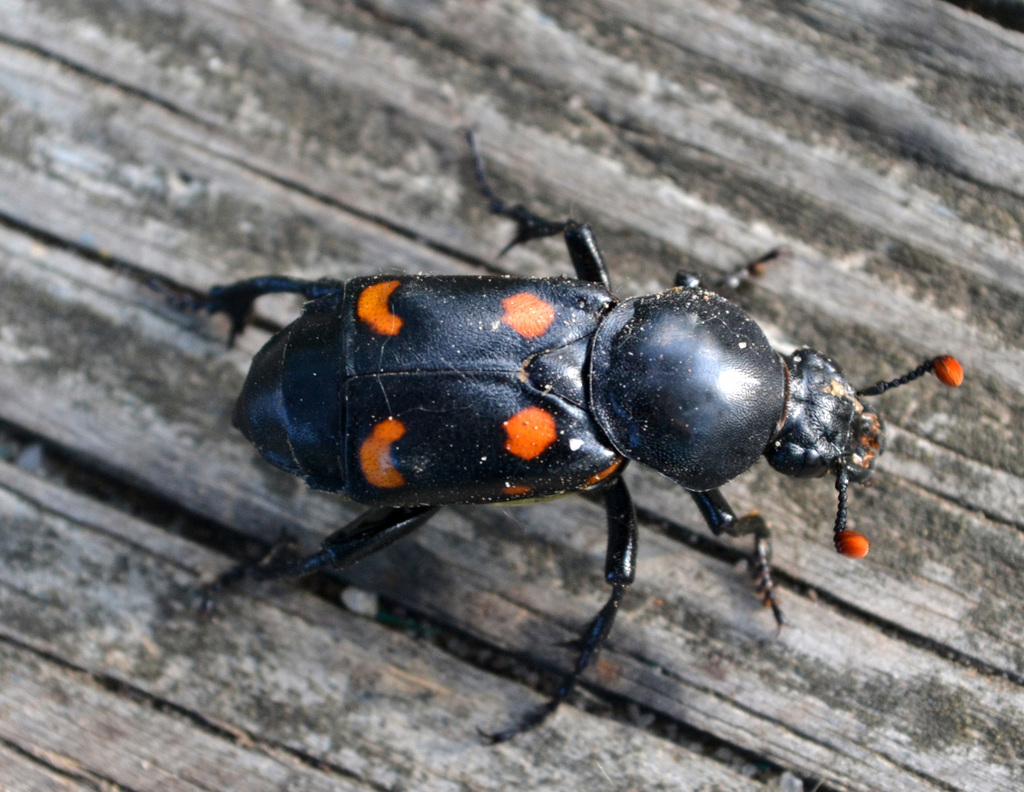





Carolina Burying Beetle
nicrophorus carolina
The Carolina Burying Beetle is a little bug that helps clean up the environment by burying dead animals! It's like a superhero for nature, turning waste into food for their babies.
Hábitat: They live in forests, fields, and gardens, often near decaying animals.
The Carolina Burying Beetle has a striking black body adorned with two prominent, irregular orange bands across its wing covers (elytra). Its antennae feature bright orange clubs, and its head is mostly black. This coloration makes it easily distinguishable from other dark beetles.
Categoría
InsectosRareza
Common
Peligro
0/5 · Sin peligro conocido
Snaps
¡Sé la primera persona en hacer un snap!
Mama and papa beetles work together to care for their hungry grubs!
Sometimes they will fight other beetles for the perfect burial site!
These beetles are known as the "undertakers" of the insect world!
They actually hum or squeak by rubbing body parts to communicate!
Carolina Burying Beetle has an incredible sense of smell that helps them locate dead animals from afar.
Carolina Burying Beetle can work with a partner to quickly bury carcasses, providing a safe nursery and food source.
Carolina Burying Beetle can remove fur or feathers and coat carrion with secretions that help preserve it for their larvae.
Carolina Burying Beetle has unique parental care, staying with their young to feed and protect them until they are grown.
These beetles eat dead animals, recycling nutrients back into the ecosystem.
Diferencias por edad: Larvae are fed pre-digested carrion by their parents.

Peromyscus leucopus
Feeds on their deceased carcasses.
Didelphis virginiana
A generalist predator of insects.
Calliphora vicina
Also relies on carrion as a food source.
Los animales solitarios viven solos durante la mayor parte de su vida y solo interactúan con otros para aparearse o cuidar de sus crías.
Los animales excavadores cavan túneles y cámaras en el suelo y utilizan estas estructuras subterráneas para refugiarse, cazar o reproducirse.
Describe a los organismos que descomponen la materia orgánica muerta, reciclando los nutrientes de vuelta al ecosistema.
Este rasgo identifica a los organismos cuya dieta consiste total o principalmente en tejido animal.

Los animales nocturnos están principalmente activos durante la noche, y suelen descansar o dormir durante el día.
Peligro
0/5 · Sin peligro conocido
Todavía no hay notas especiales de seguridad.
40-70 mm
20-35 mm
60-180 días
18 km/h
These beetles eat dead animals, recycling nutrients back into the ecosystem.
They live in forests, fields, and gardens, often near decaying animals.
Scavenging
6
Acércate para separar los grupos y explorar dónde se ha fotografiado este objeto.
Los snaps recientes aparecerán aquí a medida que se añadan nuevas observaciones.










.jpg&width=800)



