

Cascade Calicoflower
downingia yina
The Cascade Calicoflower is a charming, delicate annual herb native to the wetland habitats of western North America, particularly the Pacific Northwest. Thriving in the ephemeral muddy margins of vernal pools, wet meadows, and ditches, this plant paints the landscape in brilliant shades of blue and violet during the late spring and early summer. It plays a crucial ecological role in its specialized wetland communities, providing pollen and nectar for native insects when seasonal waters recede. As a member of the bellflower family, the Cascade Calicoflower is celebrated for its intricate floral architecture and its rapid life cycle that perfectly adapts to the wet-to-dry transition of its native habitats. This makes it a captivating subject for botanists and nature enthusiasts alike.
Hábitat: Found in seasonal wetlands, vernal pools, muddy shores, and damp mountain meadows.
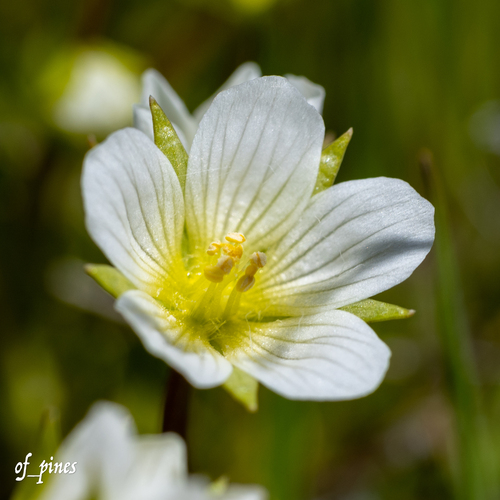
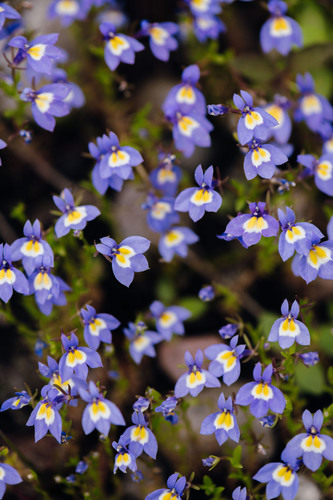
Cascade Calicoflower stems are typically erect or decumbent, growing between 10 to 40 cm tall. The flowers are small, around 1 to 1.5 cm wide, featuring a striking bilateral symmetry with a bright blue or violet corolla. The lower lip of the flower is broad and divided into three rounded lobes, prominently marked with a central patch of white and a bright yellow throat. The upper lip consists of two smaller, narrower lobes that curve gracefully upward. Narrow, lance-shaped leaves line the delicate stems, which can sometimes exhibit a reddish tint.
Categoría
PlantasRareza
Common
Peligro
1/5 · Muy bajo
Snaps
¡Sé la primera persona en hacer un snap!
Its seeds can remain dormant in dry soil for multiple years, waiting for the perfect hydrological conditions to trigger germination.
The dazzling blue displays created by masses of Downingia flowers are often visible from a distance, resembling patches of water reflecting the sky.
The genus Downingia was named in honor of Andrew Jackson Downing, a prominent 19th-century American horticulturalist and landscape architect.
Successfully times its germination and rapid growth cycle to coincide with the drying phase of seasonal vernal pools.
Features contrasting white and yellow nectar guides on its lower lip to direct native bees directly to its reproductive organs.
Produces tiny, lightweight seeds that are easily dispersed by seasonal water flow to find new moist colonizing sites.
As a photosynthetic plant, the Cascade Calicoflower produces its own energy using sunlight, carbon dioxide, and water, while absorbing essential minerals from wet soils.
Andrena lupinorum
Pollinated by solitary bees seeking nectar and pollen.
Taeniatherum caput-medusae
Competes for space and moisture in vernal pool margins.
Anas platyrhynchos
Foraged upon by native grazing ducks in drying wetland basins.
Aún no hay insignias de rasgos asignadas a este objeto.
Todavía no hay alias listados.
Las colecciones para este objeto aparecerán aquí a medida que se añadan más temas.
Peligro
1/5 · Muy bajo
Todavía no hay notas especiales de seguridad.
La forma más fácil de identificar a Cascade Calicoflower es usar la aplicación de identificación de naturaleza Snappit.
10-40 cm
0.001-0.01 kg
0-1 años
As a photosynthetic plant, the Cascade Calicoflower produces its own energy using sunlight, carbon dioxide, and water, while absorbing essential minerals from wet soils.
Found in seasonal wetlands, vernal pools, muddy shores, and damp mountain meadows.
Acércate para separar los grupos y explorar dónde se ha fotografiado este objeto.
Los snaps recientes aparecerán aquí a medida que se añadan nuevas observaciones.