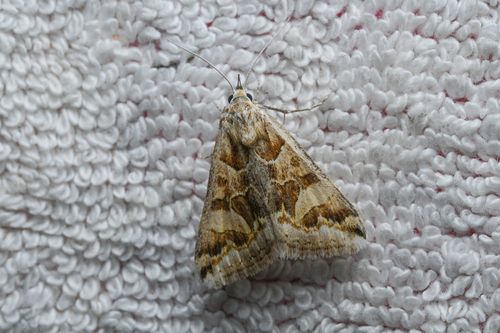


Cerocala Scapulosa
cerocala scapulosa
La Cerocala scapulosa es una intrigante especie de polilla perteneciente a la familia Erebidae, encontrada principalmente en las regiones áridas y semiáridas de África. Bien adaptada a la vida en matorrales secos, sabanas y desiertos, esta resistente lepidóptera nocturna juega un papel vital en su ecosistema local. Como adulta, sirve como polinizador, visitando la flora desértica que florece de noche, mientras que su etapa larval se alimenta de arbustos silvestres resistentes. Para los entusiastas de la naturaleza, avistar una es un desafío gratificante debido a su excepcional camuflaje que imita la corteza. Sigue siendo un tema de estudio fascinante para los entomólogos interesados en la adaptación al desierto, los mecanismos de supervivencia de los insectos y la rica, a menudo pasada por alto, biodiversidad de los paisajes áridos. Su presencia es un indicador de hábitats de matorral seco sanos e inalterados donde prosperan sus plantas huésped larvales.
Hábitat: Se encuentra típicamente en sabanas áridas, matorrales secos y bordes de desierto con vegetación escasa en toda África.
Esta polilla de tamaño mediano presenta alas delanteras exquisitamente estampadas con tonos moteados de gris, marrón y crema, imitando la corteza seca de un árbol o líquenes. La envergadura de las alas mide típicamente entre 3 y 5 centímetros. Cuando está en reposo, sus alas forman un techo plano y triangular sobre su cuerpo, ocultando completamente las alas traseras. Sin embargo, si se le molesta, revela alas traseras marcadas con bandas contrastantes de color marrón oscuro y blanco amarillento, creando un destello visual sorprendente. Su tórax está densamente cubierto de escamas grisáceas, y sus antenas son finas y filiformes, típicas de las polillas hembras, o moderadamente plumosas en los machos.
Categoría
InsectosRareza
Común
Peligro
1/5 · Muy bajo
Snaps
¡Sé la primera persona en hacer un snap!
Su coloración críptica es tan efectiva que puede esconderse a plena vista en la corteza de los árboles de acacia, coincidiendo tanto con el color como con la textura de los líquenes locales.
Como muchas polillas de la familia Erebidae, la Cerocala scapulosa tiene oídos en su metatórax que están finamente sintonizados para escuchar las llamadas de ecolocalización de los murciélagos cazadores.
El nombre del género 'Cerocala' proviene de raíces griegas, aludiendo a 'cera' y 'hermoso', probablemente refiriéndose a la apariencia elegante y cerosa de las marcas de algunas especies.
Las larvas se alimentan de las hojas de arbustos leñosos y leguminosas, mientras que los adultos se alimentan del néctar floral de plantas que florecen de noche.
Diferencias por edad: Las orugas poseen piezas bucales masticadoras para consumir hojas duras, mientras que los adultos tienen una probóscide enrollada especializada en sorber néctar líquido.
Aún no hay insignias de rasgos asignadas a este objeto.
Todavía no hay alias listados.
Las colecciones para este objeto aparecerán aquí a medida que se añadan más temas.
Peligro
1/5 · Muy bajo
Todavía no hay notas especiales de seguridad.
Compara la forma de las alas en reposo, las marcas de las alas anteriores, las antenas y la complexión del cuerpo. En las polillas pequeñas y marrones, todo puede depender de detalles finos que una foto de móvil no siempre capta. Identificador de polillas: sube una foto y compara los detalles visibles.
1+ cm
3+ cm
0.0001+ kg
0+ años
15 km/h
Las larvas se alimentan de las hojas de arbustos leñosos y leguminosas, mientras que los adultos se alimentan del néctar floral de plantas que florecen de noche.
Se encuentra típicamente en sabanas áridas, matorrales secos y bordes de desierto con vegetación escasa en toda África.
Acércate para separar los grupos y explorar dónde se ha fotografiado este objeto.
Los snaps recientes aparecerán aquí a medida que se añadan nuevas observaciones.
Llévate el descubrimiento
Haz una foto con Snappit, identifica la especie y guarda el hallazgo en tu colección.