Chacoan Peccary
Catagonus wagneri
The Chacoan Peccary is a special pig-like animal that lives in the dry forests of South America. They have thick fur and love to dig in the ground for tasty roots and fruits.
Hábitat: Dry forests
The Chacoan Peccary has coarse, bristly grayish-brown fur and a distinctive white collar stripe around its neck. Its head is proportionally larger than other peccaries, ending in a flexible, pig-like snout. They possess longer legs and smaller, erect ears, uniquely adapted for dry scrublands.
Categoría
MamíferosRareza
Rare
Peligro
2/5 · Bajo
Snaps
¡Sé la primera persona en hacer un snap!
Baby peccaries are strong, running with their group just hours after birth!
For decades, scientists thought the Chacoan Peccary was extinct, until it was rediscovered!
Their long tusks point down, unlike pigs whose tusks curve up!
These peccaries rub their scent glands on each other to form a unique, shared group smell!
Chacoan Peccary can rub scent glands on objects to mark its territory, which helps them communicate with other peccaries.
Chacoan Peccary has powerful teeth and jaws that help them chew tough, thorny desert plants like cacti.
Chacoan Peccary can sniff out underground water sources using its amazing sense of smell, helping them survive dry times.
Chacoan Peccary has a coarse, bristly coat that protects its skin from sharp thorns in its scrubland home.
They mainly munch on tough desert plants, especially cacti, using their strong jaws and teeth.
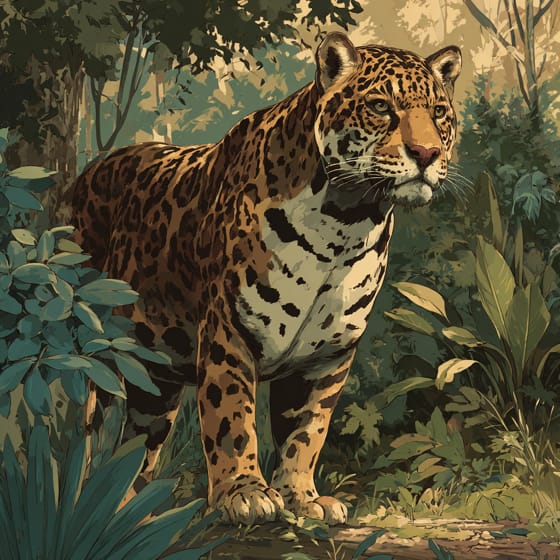
Panthera onca
Adult peccaries can be hunted by this apex predator.
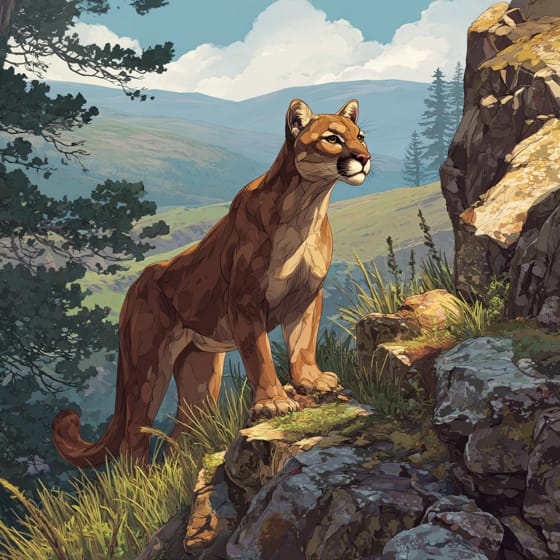
Puma concolor
Pumas are known to prey on Chacoan Peccaries in their range.
Opuntia ficus-indica
A primary food source, providing both food and water.
Aspidosperma quebracho-blanco
Provides shade and shelter in the harsh Chaco environment.
Peludo describe a los animales que poseen una cubierta densa de pelo o pelaje suave.
Los animales sociales viven en grupos organizados, cooperando para obtener beneficios de supervivencia como la búsqueda de alimento, la defensa y la cría de descendencia.
Este rasgo caracteriza a los organismos cuya dieta consiste total o principalmente en material vegetal.
Los hábitats boscosos son entornos terrestres dominados por una densa cubierta arbórea, que sustentan una gran diversidad de vida animal y vegetal.

Describe una especie cuya presencia y papel tienen un efecto desproporcionadamente grande en su entorno.

Este rasgo identifica a los organismos que exhiben una rapidez excepcional en sus movimientos para cazar, escapar o desplazarse.

El estado de peligro de extinción indica que una especie corre un riesgo muy alto de extinguirse en estado silvestre en un futuro próximo.
Todavía no hay alias listados.
Peligro
2/5 · Bajo
Always watch from a distance and do not try to touch wild animals.
90-110 cm
29-42 kg
9-14 años
48 km/h
They mainly munch on tough desert plants, especially cacti, using their strong jaws and teeth.
Dry forests
Foraging
1-4
Acércate para separar los grupos y explorar dónde se ha fotografiado este objeto.
Los snaps recientes aparecerán aquí a medida que se añadan nuevas observaciones.

Pennsylvania, US
Puedes ver Zorro Rojo, Western Barn Owl y Jaguar.
Ver guía →

California, US
Puedes ver Four-Toed Hedgehog, Military Macaw y Pitón Verde.
Ver guía →

Tennessee, US
Puedes ver León Africano, Jirafas y White Stork.
Ver guía →
New York, US
Puedes ver Gorrión Común, Paulownia y Paloma Bravía.
Ver guía →