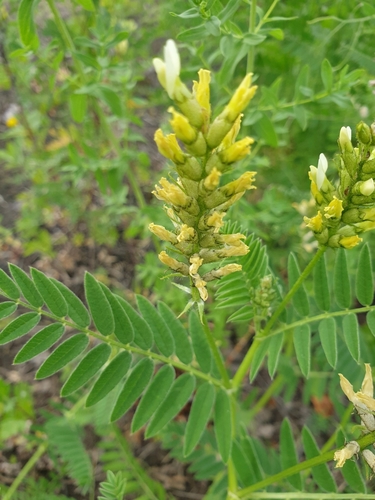


Chickpea Milkvetch
astragalus cicer
Chickpea milkvetch (Astragalus cicer), also known as cicer milkvetch, is a hardy, long-lived perennial legume native to Europe and temperate Asia. Widely introduced to other regions including North America, it is highly valued for its robust growth, exceptional forage quality, and utility in soil conservation. Unlike many other species of the Astragalus genus, chickpea milkvetch is completely non-toxic to livestock, lacking the harmful selenium accumulation or nitro-toxins found in its wild relatives. It establishes a dense cover through a vigorous network of underground rhizomes, making it highly effective at stabilizing soils and preventing erosion on slopes and disturbed lands.
Hábitat: Thrives in open grasslands, river valleys, forest edges, pastures, and disturbed roadsides within cool, semi-arid climates.
This sprawling herb features prostrate to ascending, ribbed stems that grow up to 100 centimeters long, forming lush, low-lying mats. The leaves are pinnately compound, each consisting of 15 to 30 light green, oval leaflets that are smooth on top and lightly hairy underneath. Its pale yellow to creamy white pea-like flowers are closely packed into dense, upright spikes arising from the leaf joints. Upon successful pollination, these flowers give way to distinctive, inflated, bladder-like pods that turn a dark, brownish-black color when ripe and rattle softly in the wind.
Categoría
PlantasRareza
Common
Peligro
1/5 · Muy bajo
Snaps
¡Sé la primera persona en hacer un snap!
Its highly competitive, creeping root system makes it an elite choice for reclaiming heavily polluted or compacted soils left behind by open-pit mining operations.
The dried, hollow seed pods swell up like small leather bags and make a distinct rattling maraca-like sound when shaken by the wind or passing animals.
Unlike alfalfa and most clovers, chickpea milkvetch is completely 'bloat-safe' for livestock, allowing animals to graze freely without dangerous gas buildup.
Collaborates with Rhizobium bacteria in its root system to convert atmospheric nitrogen into organic compounds, enriching the surrounding soil.
Spreads aggressively underground via tough rhizomes, allowing it to recover quickly from heavy grazing and hold loose soil together.
Utilizes a deep taproot combined with lateral roots to pull moisture from deep underground, remaining green when other grasses dry out.
Produces its own energy through photosynthesis, converting sunlight, water, and carbon dioxide into sugars while absorbing vital minerals from the soil.
Bombus impatiens
Provides rich nectar and pollen, heavily attracting bumblebees for pollination.
Rhizobium leguminosarum
Hosts specialized nitrogen-fixing bacteria within its root nodules to convert atmospheric nitrogen.
Ovis aries
Graze heavily on the highly nutritious and safe foliage in pastures.
Aún no hay insignias de rasgos asignadas a este objeto.
Todavía no hay alias listados.
Las colecciones para este objeto aparecerán aquí a medida que se añadan más temas.
Peligro
1/5 · Muy bajo
Todavía no hay notas especiales de seguridad.
La forma más fácil de identificar a Chickpea Milkvetch es usar la aplicación de identificación de naturaleza Snappit.
30-100 cm
0.05-0.4 kg
5-20 años
Produces its own energy through photosynthesis, converting sunlight, water, and carbon dioxide into sugars while absorbing vital minerals from the soil.
Thrives in open grasslands, river valleys, forest edges, pastures, and disturbed roadsides within cool, semi-arid climates.
Acércate para separar los grupos y explorar dónde se ha fotografiado este objeto.
Los snaps recientes aparecerán aquí a medida que se añadan nuevas observaciones.