

Chickweeds
stellaria
Chickweeds, belonging to the genus Stellaria, are delicate and highly adaptable herbaceous plants that carpet the ground with lush, green foliage. Recognized by their dainty, star-shaped white blossoms, these resilient plants thrive in a variety of environments, from untamed meadows to cracks in urban sidewalks. Despite often being classified as garden weeds, chickweeds play a vital role in local ecosystems by providing dense ground cover that prevents soil erosion and offers sustenance to local wildlife. Highly valued in traditional herbalism and wild foraging, they are packed with vitamins and minerals, making them a nutritious snack for birds and humans alike.
Hábitat: Typically found in damp, shady areas, cultivated gardens, agricultural fields, and disturbed urban soils worldwide.
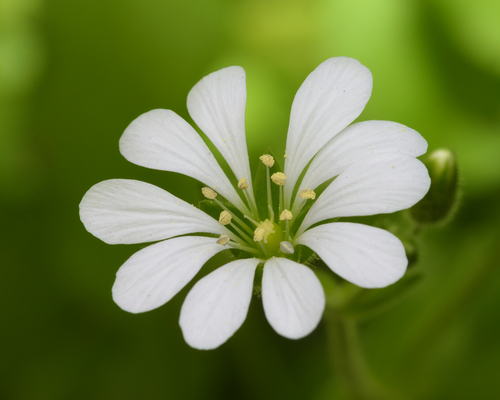
Chickweeds are characterized by their small, oval, pointed leaves arranged in opposite pairs along thin, trailing stems. A signature identification feature is a single line of tiny, fine hairs running up one side of the stem, which shifts position at each leaf node. They produce minuscule white flowers with five petals; however, each petal is so deeply divided in two that it gives the illusion of ten petals, resembling tiny stars nested in green foliage.
Categoría
PlantasRareza
Common
Peligro
1/5 · Muy bajo
Snaps
¡Sé la primera persona en hacer un snap!
Chickweed flowers act as natural barometers; they remain closed if rain is imminent and open wide in clear sunlight.
The common name 'chickweed' comes from the historic practice of feeding this plant to caged birds and chickens, who love its seeds.
Though it appears to have ten petals, each flower actually has only five, each so deeply cleft that it looks like two.
At night or during rainy weather, the leaves of chickweeds fold over their tender growing tips and developing flower buds to protect them from cold and physical damage.
Chickweeds possess a fast-track life cycle, germinating, flowering, and setting thousands of seeds in a matter of weeks to quickly claim open soil.
Their shallow but incredibly dense, fibrous root systems form tight mats that stabilize loose soil and prevent erosion from wind and rain.
As photosynthetic plants, chickweeds synthesize their own food using chlorophyll to convert sunlight, water, carbon dioxide, and soil minerals into vital sugars.
Sturnus vulgaris
The seeds and tender green foliage are a highly favored food source for the common starling.
Episyrphus balteatus
Adult hoverflies visit the small white flowers to feed on nectar and pollen, acting as key pollinators.
Oryctolagus cuniculus
Wild rabbits frequently graze on the lush mats of chickweed for moisture and easy nutrients.
Aún no hay insignias de rasgos asignadas a este objeto.
Todavía no hay alias listados.
Las colecciones para este objeto aparecerán aquí a medida que se añadan más temas.
Peligro
1/5 · Muy bajo
Todavía no hay notas especiales de seguridad.
La forma más fácil de identificar a Chickweeds es usar la aplicación de identificación de naturaleza Snappit.
10-40 cm
0.005-0.05 kg
1-2 años
As photosynthetic plants, chickweeds synthesize their own food using chlorophyll to convert sunlight, water, carbon dioxide, and soil minerals into vital sugars.
Typically found in damp, shady areas, cultivated gardens, agricultural fields, and disturbed urban soils worldwide.
Foraging
Acércate para separar los grupos y explorar dónde se ha fotografiado este objeto.
Los snaps recientes aparecerán aquí a medida que se añadan nuevas observaciones.



.jpg)














