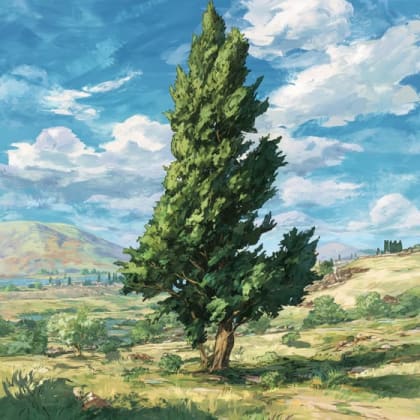
Chinese arborvitae
Platycladus orientalis
The Chinese arborvitae is a tall, evergreen tree that stays green all year round! It has soft, flat leaves and can grow very tall, making it a great tree for parks and gardens.
Hábitat: Urban areas
The Chinese arborvitae has distinctive flattened sprays of bright green, scale-like leaves that often turn bronze in winter. Its bark is reddish-brown, peeling in strips, and the tree typically grows into an elegant, dense pyramidal or conical shape.
Categoría
PlantasRareza
Common
Peligro
1/5 · Muy bajo
Snaps
¡Sé la primera persona en hacer un snap!
Chinese arborvitae wood is so durable, it was once used to build sturdy bridges.
Its tiny cones look like wooden roses when they open to release seeds!
Rubbing its leaves can release a surprising, pleasant, resinous scent!
This amazing tree has been planted in ancient Chinese temples for thousands of years.
Chinese arborvitae can withstand dirty city air, helping them thrive where other trees struggle to grow.
Its special scale-like leaves help Chinese arborvitae save water, keeping it green even when dry.
This tree keeps its green foliage all winter long, providing color when other plants are bare.

Passer montanus
Feeds on the tree's small, nutritious seeds
Cinara tujafilina
Sucks sap from the tree's new growth
.jpg&width=800)
Aegithalos caudatus
Builds nests in its dense, protective foliage
Las plantas aromáticas producen y emiten compuestos orgánicos volátiles fragantes, a menudo como defensa o para atraer a los polinizadores.
Las plantas de hoja perenne conservan su follaje durante todo el año, sin perder nunca todas sus hojas a la vez.
Las flores fragantes emiten un aroma agradable, a menudo para atraer polinizadores o como defensa.
Los árboles de hoja ancha son angiospermas caracterizadas por hojas planas y anchas que típicamente se caen anualmente en climas templados.

Se refiere a la madera que ha sido preparada para su uso en la construcción y la carpintería.

Este rasgo caracteriza a los organismos con una esperanza de vida excepcionalmente larga en comparación con otros de su especie.

Esta característica de hábitat indica especies que pueden coexistir con los humanos en entornos urbanos y suburbanos, utilizando estructuras artificiales y espacios verdes.
Todavía no hay alias listados.
Peligro
1/5 · Muy bajo
Always stay on paths when exploring near trees and be careful not to climb too high.
500-2000 cm
200-800 cm
Early spring (pollen cones)
No
Leve
Perenne
Viento
Urban areas
Acércate para separar los grupos y explorar dónde se ha fotografiado este objeto.
Los snaps recientes aparecerán aquí a medida que se añadan nuevas observaciones.