

Chironomus Atroviridis
chironomus atroviridis
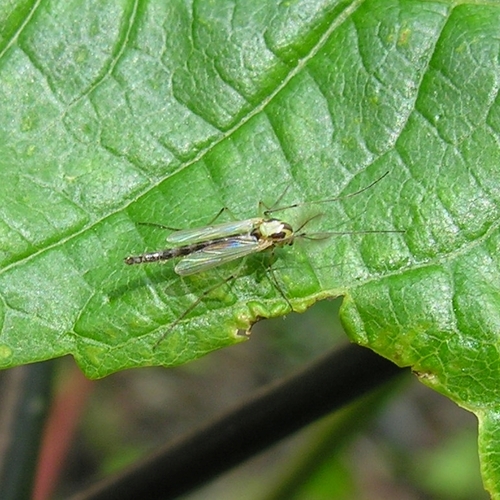
Chironomus atroviridis es un insecto fascinante que a menudo se parece a un pequeño mosquito. Desempeñan un papel importante en el ecosistema al servir de alimento para muchos animales acuáticos.
Hábitat: Ambientes de agua dulce, como estanques, lagos y marismas.
Chironomus atroviridis es un insecto esbelto, parecido a un mosquito, con un distintivo cuerpo de color verde oscuro. Tiene alas claras y delicadas, y los machos poseen antenas prominentes y plumosas, lo que los distingue fácilmente de los mosquitos que pican.
Categoría
InsectosRareza
Común
Peligro
0/5 · Sin peligro conocido
Snaps
¡Sé la primera persona en hacer un snap!
¡Los mosquitos adultos no tienen piezas bucales funcionales, así que nunca comen nada!
¡Los mosquitos machos usan sus antenas plumosas para 'escuchar' el batir de alas de las hembras!
Los científicos usan estos mosquitos para estudiar y monitorear los niveles de contaminación en el agua dulce.
¡Sus larvas de color rojo brillante se llaman 'gusanos de sangre' porque tienen hemoglobina!
Las larvas de Chironomus atroviridis pueden sobrevivir en agua con muy poco oxígeno porque producen hemoglobina.
Sus larvas se alimentan por filtración de materia orgánica y bacterias, limpiando los ambientes de agua dulce a medida que crecen.
Los mosquitos machos forman grandes enjambres al anochecer para atraer a las hembras, asegurando una reproducción exitosa.
Como larvas, filtran pequeñas partículas de alimento del agua; los adultos no se alimentan en absoluto.
Diferencias por edad: Los adultos de Chironomus atroviridis no se alimentan, mientras que las larvas son alimentadores por filtración activos.
Perca fluviatilis
come larvas de mosquitos
Hirundo rustica
come mosquitos adultos
Anax imperator
caza mosquitos adultos
Chlamydomonas reinhardtii
las larvas comen algas
Los animales sociales viven en grupos organizados, cooperando para obtener beneficios de supervivencia como la búsqueda de alimento, la defensa y la cría de descendencia.
Describe a los organismos que descomponen la materia orgánica muerta, reciclando los nutrientes de vuelta al ecosistema.
Este rasgo identifica a los organismos cuya dieta consiste total o principalmente en tejido animal.
Los hábitats acuáticos abarcan entornos donde los organismos viven principalmente en el agua, incluidos océanos, ríos, lagos y humedales.
Los animales nocturnos están principalmente activos durante la noche, y suelen descansar o dormir durante el día.
Peligro
0/5 · Sin peligro conocido
Todavía no hay notas especiales de seguridad.
Busca seis patas, antenas, tres secciones en el cuerpo y la forma de las alas. Los escarabajos tienen las alas delanteras endurecidas; las moscas solo tienen un par que funciona. Los insectos diminutos pueden necesitar un primer plano antes de que se vea su grupo. Identificador de insectos: sube una foto y compara los detalles visibles.
8-12 mm
6-10 mm
1-10 días
Como larvas, filtran pequeñas partículas de alimento del agua; los adultos no se alimentan en absoluto.
Ambientes de agua dulce, como estanques, lagos y marismas.
Alimentación Por Filtración
6
Acércate para separar los grupos y explorar dónde se ha fotografiado este objeto.
Los snaps recientes aparecerán aquí a medida que se añadan nuevas observaciones.
Llévate el descubrimiento
Haz una foto con Snappit, identifica la especie y guarda el hallazgo en tu colección.