




Chlorosplenium Chlora
chlorosplenium chlora
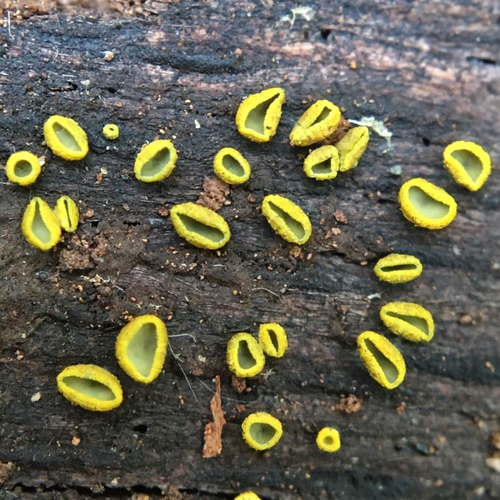
El Chlorosplenium Chlora es un cautivador hongo en forma de copa que aporta un brillante toque de color a los bosques húmedos y en descomposición. Creciendo en la madera en descomposición sin corteza de árboles caducifolios, este diminuto hongo en forma de copa desempeña un papel vital como descomponedor, desintegrando materiales orgánicos complejos y reciclando nutrientes de vuelta al suelo del bosque. Aunque es fácil de pasar por alto debido a su tamaño diminuto, una inspección cercana revela copas de color amarillo azufre a verde amarillento brillante que parecen pequeñas gemas esparcidas sobre troncos podridos. Su capacidad para teñir la madera subyacente con sus vibrantes pigmentos lo convierte en un tema fascinante tanto para los entusiastas de las setas como para los ecólogos forestales.
Hábitat: Típicamente encontrado en bosques caducifolios húmedos, creciendo en troncos y ramas en descomposición y sin corteza de árboles de madera dura.
Este hongo produce diminutos cuerpos fructíferos en forma de copa o platillo que miden entre 1 y 5 milímetros de diámetro. La superficie interior fértil de la copa es de un llamativo color amarillo brillante, amarillo azufre o verde amarillento, mientras que la superficie exterior es ligeramente más pálida o pulverulenta. Estas copas pueden ser sésiles (unidas directamente) o presentar un tallo muy corto, a menudo apareciendo agrupadas en grandes cantidades sobre madera dura húmeda y en descomposición.
Categoría
HongosRareza
Común
Peligro
1/5 · Muy bajo
Snaps
¡Sé la primera persona en hacer un snap!
Al igual que su pariente cercano, la copa verde de los duendes, la madera teñida por este género ha sido históricamente valorada por los ebanistas para incrustaciones intrincadas y trabajos de marquetería.
Las copas son extremadamente sensibles a la humedad y se marchitarán cuando estén secas, solo para rehidratarse y volver a hincharse cuando regrese la lluvia.
El vibrante pigmento amarillo-verde producido por este hongo puede teñir profundamente la madera que coloniza, durando mucho después de que el propio hongo se haya marchitado.
Como hongo saprófito, obtiene nutrientes al descomponer madera dura muerta, desintegrando celulosa y lignina.
Los animales solitarios viven solos durante la mayor parte de su vida y solo interactúan con otros para aparearse o cuidar de sus crías.
Colorido describe a organismos u objetos que exhiben una amplia variedad de colores brillantes y distintivos.
Este rasgo caracteriza a los organismos cuya dieta consiste total o principalmente en material vegetal.
Los hábitats boscosos son entornos terrestres dominados por una densa cubierta arbórea, que sustentan una gran diversidad de vida animal y vegetal.
Los hábitats acuáticos abarcan entornos donde los organismos viven principalmente en el agua, incluidos océanos, ríos, lagos y humedales.
Todavía no hay alias listados.
Las colecciones para este objeto aparecerán aquí a medida que se añadan más temas.
Peligro
1/5 · Muy bajo
Todavía no hay notas especiales de seguridad.
Compara la forma del sombrero, la parte inferior, el pie y su base, y si el hongo crece sobre madera o sobre el suelo. Unos tienen láminas, otros poros o aguijones. Un sombrero visto solo desde arriba suele ocultar los rasgos más útiles. Identificador de setas: sube una foto y compara los detalles visibles.
0 cm
0 kg
1-5 años
Como hongo saprófito, obtiene nutrientes al descomponer madera dura muerta, desintegrando celulosa y lignina.
Típicamente encontrado en bosques caducifolios húmedos, creciendo en troncos y ramas en descomposición y sin corteza de árboles de madera dura.
Absorción
10-30 días
Acércate para separar los grupos y explorar dónde se ha fotografiado este objeto.
Los snaps recientes aparecerán aquí a medida que se añadan nuevas observaciones.
Llévate el descubrimiento
Haz una foto con Snappit, identifica la especie y guarda el hallazgo en tu colección.