





Choristoneura
Choristoneura
Choristoneura es un tipo de polilla que se puede encontrar en muchos lugares. Tienen hermosas alas y son importantes para la naturaleza porque ayudan a polinizar las flores.
Hábitat: Bosques
La polilla Choristoneura tiene alas moteadas, típicamente de color gris-marrón con manchas o bandas más oscuras, que forman una forma de campana cuando está en reposo. Su cuerpo es robusto y cubierto de finos pelos. Este camuflaje le ayuda a mezclarse perfectamente con la corteza de los árboles.
Categoría
InsectosRareza
Common
Peligro
1/5 · Muy bajo
Snaps
¡Sé la primera persona en hacer un snap!
¡Un solo brote puede dejar millones de acres de bosque despojados!
Algunas especies de polillas imitan perfectamente el fondo de la corteza para camuflarse.
Sus poblaciones explotan cada pocas décadas, causando enormes cambios en los bosques.
Pasan casi un año como pequeñas orugas, escondidas y creciendo.
Las larvas de Choristoneura pueden devorar las agujas de las coníferas, causando daños extensos a los árboles y alterando los ecosistemas forestales.
Las larvas recién eclosionadas producen finos hilos de seda para atrapar el viento, lo que les permite dispersarse a nuevos árboles.
Las larvas jóvenes hibernan en pequeños refugios de seda (hibernáculos) en los árboles, sobreviviendo el frío intenso hasta la primavera.
Las poblaciones de Choristoneura pueden explotar, a veces despojando millones de acres de bosque.
Las orugas jóvenes comen las agujas de los árboles coníferos.
Diferencias por edad: Los adultos no se alimentan; las larvas son defoliadoras voraces de las agujas de los árboles.
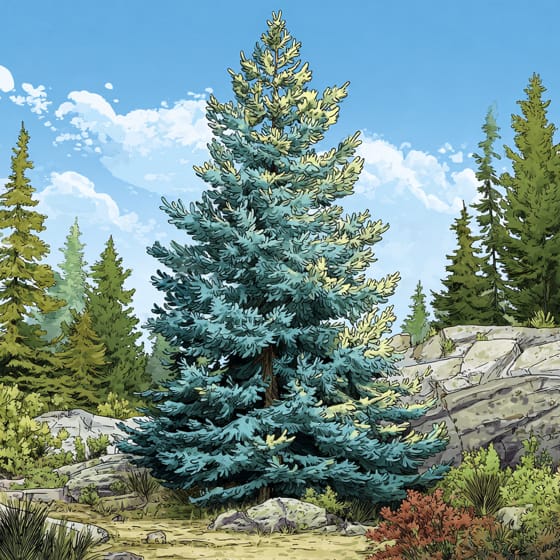
Picea glauca
Las larvas defolian las agujas, causando estrés y mortalidad a los árboles.
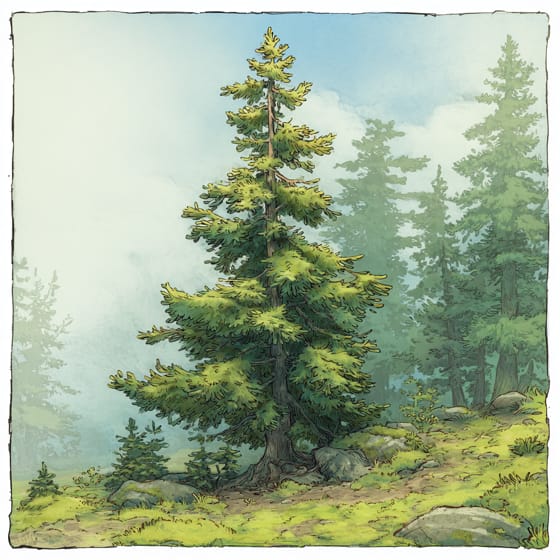
Abies balsamea
Hospedador altamente preferido, experimentando una defoliación severa durante los brotes.

Dendroica tigrina
Las poblaciones de aves aumentan durante los brotes de gusanos de cogollo, alimentándose de las larvas.
Glypta fumiferanae
Una avispa parasitoide que pone sus huevos dentro de las larvas del gusano de cogollo.
Picoides arcticus
Se alimenta de larvas y pupas dentro de la corteza de los árboles infestados.
Los animales solitarios viven solos durante la mayor parte de su vida y solo interactúan con otros para aparearse o cuidar de sus crías.
El camuflaje describe a los organismos que poseen colores o patrones que les permiten mezclarse con su entorno.
Colorido describe a organismos u objetos que exhiben una amplia variedad de colores brillantes y distintivos.
Este rasgo caracteriza a los organismos cuya dieta consiste total o principalmente en material vegetal.

Describe plantas que son particularmente atractivas y beneficiosas para una amplia variedad de organismos polinizadores.

Los hábitats boscosos son entornos terrestres dominados por una densa cubierta arbórea, que sustentan una gran diversidad de vida animal y vegetal.

Los animales nocturnos están principalmente activos durante la noche, y suelen descansar o dormir durante el día.

Describe organismos que transfieren polen, permitiendo la fertilización y reproducción de las plantas.
Todavía no hay alias listados.
Peligro
1/5 · Muy bajo
Las polillas suelen ser inofensivas, pero es mejor observarlas a distancia.
La forma más fácil de identificar a Choristoneura es usar la aplicación de identificación de naturaleza Snappit.
20-30 mm
10-15 mm
10-14 días
Las orugas jóvenes comen las agujas de los árboles coníferos.
Bosques
Forrajeo
6
Acércate para separar los grupos y explorar dónde se ha fotografiado este objeto.
Los snaps recientes aparecerán aquí a medida que se añadan nuevas observaciones.
Llévate el descubrimiento
Haz una foto con Snappit, identifica la especie y guarda el hallazgo en tu colección.








.jpg&width=800)


