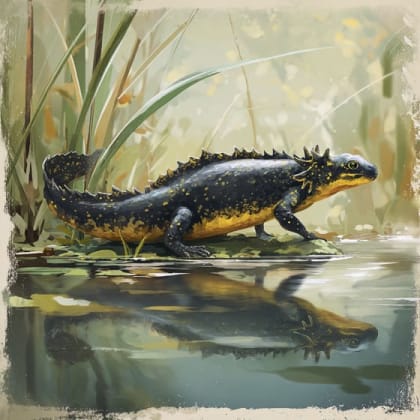




Columbia Spotted Frog
Rana luteiventris
The Columbia Spotted Frog is a small, lively frog with beautiful spots on its skin. It loves to hop around in wetlands and is great at swimming in water!
Hábitat: Wetlands
The Columbia Spotted Frog is a medium-sized frog, typically green, brown, or gray with irregular dark spots, often with a lighter center. It has smooth skin and a distinct cream-colored stripe along its upper jaw, which helps distinguish it from other similar frogs.
Categoría
AnfibiosRareza
Common
Peligro
1/5 · Muy bajo
Snaps
¡Sé la primera persona en hacer un snap!
Columbia Spotted Frogs hibernate underwater, sometimes buried in mud, to survive freezing winters!
Female frogs gather to lay their thousands of eggs together in huge communal masses!
Some tadpoles live as long as two years before finally becoming adult frogs!
These frogs have eyes on top of their heads, perfect for peeking out of the water!
Columbia Spotted Frogs can stay submerged for over 15 minutes, helping them hide from predators and ambush aquatic prey.
Columbia Spotted Frogs have uniquely patterned skin with dark, light-centered spots that help them disappear against riverbeds and pond bottoms.
Columbia Spotted Frogs can rapidly extend their sticky tongue to snatch insects and other small prey with incredible speed.
Columbia Spotted Frogs have a special metabolism that helps them thrive in very cold, high-elevation mountain streams.
These frogs munch on insects and other small invertebrates they find in the water or on land.
Diferencias por edad: Tadpoles eat algae and detritus; adults become carnivores, preying on insects and other invertebrates.
Thamnophis sirtalis
A common predator of frogs and their tadpoles.
Oncorhynchus clarkii
Larger fish prey on tadpoles and small frogs in aquatic habitats.
Buteo jamaicensis
These raptors hunt adult frogs in open wetland areas.
Procyon lotor
Opportunistic predators, raccoons will catch frogs near water bodies.
Marcado con manchas o parches de un color diferente.
Los animales solitarios viven solos durante la mayor parte de su vida y solo interactúan con otros para aparearse o cuidar de sus crías.
Colorido describe a organismos u objetos que exhiben una amplia variedad de colores brillantes y distintivos.
Este rasgo identifica a los organismos cuya dieta consiste principalmente en insectos y otros pequeños invertebrados.

Este rasgo de hábitat identifica especies que se encuentran en humedales, que son áreas de tierra saturadas de agua, ya sea permanente o estacionalmente, e incluyen marismas, pantanos y ciénagas.

Los animales diurnos están activos principalmente durante el día y suelen descansar o dormir por la noche.

Describe una especie cuya presencia y papel tienen un efecto desproporcionadamente grande en su entorno.

Los hábitats acuáticos abarcan entornos donde los organismos viven principalmente en el agua, incluidos océanos, ríos, lagos y humedales.

Describe organismos que transfieren polen, permitiendo la fertilización y reproducción de las plantas.

El estado de peligro de extinción indica que una especie corre un riesgo muy alto de extinguirse en estado silvestre en un futuro próximo.
Todavía no hay alias listados.
Peligro
1/5 · Muy bajo
Always watch frogs from a distance and never try to catch them, as they can be delicate.
4-10 cm
0.01-0.03 kg
5-10 años
1.5 km/h
These frogs munch on insects and other small invertebrates they find in the water or on land.
Wetlands
Ambush
500-2000
Acércate para separar los grupos y explorar dónde se ha fotografiado este objeto.
Los snaps recientes aparecerán aquí a medida que se añadan nuevas observaciones.
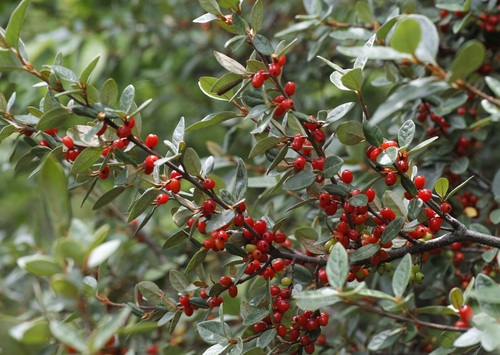
British Columbia, CA
Puedes ver Canadian Buffalo-Berry, Oregon Boxwood y Pacific Trillium.
Ver guía →
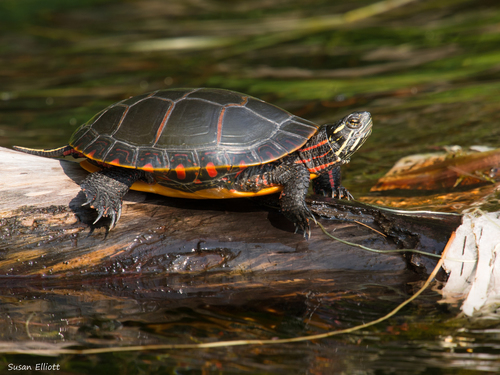
British Columbia, CA
Puedes ver Tortuga Pintada, Solomon's Plume y Saskatoon.
Ver guía →

British Columbia, CA
Puedes ver Thimbleberry, Canadian Buffalo-Berry y Oregon Grape.
Ver guía →
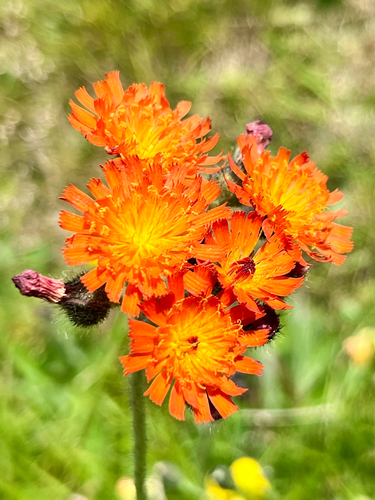
British Columbia, CA
Puedes ver Orange Hawkweed, Shinyleaf Meadowsweet y Columbia Lily.
Ver guía →
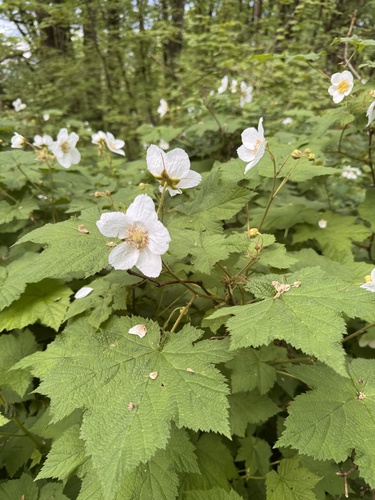
British Columbia, CA
Puedes ver Thimbleberry, Western Redcedar y Red Osier Dogwood.
Ver guía →
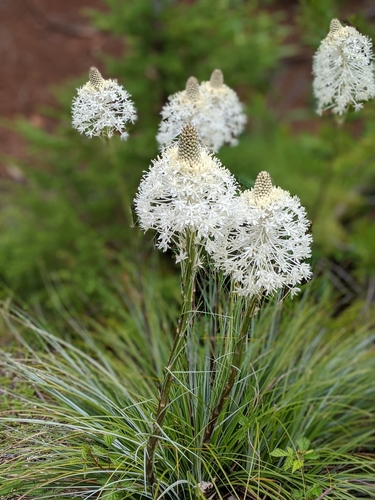
British Columbia, CA
Puedes ver Common Beargrass, White-Flowered Rhododendron y Glacier Lily.
Ver guía →