






common comfrey
Symphytum officinale
Common comfrey is a leafy plant with beautiful purple flowers. It grows in gardens and fields and is loved by bees and butterflies for its sweet nectar.
Hábitat: Urban areas, Gardens
The common comfrey has large, dark green leaves covered in coarse hairs, giving them a rough, bristly feel. Its bell-shaped flowers, often purple, blue, or white, hang downwards in charming clusters.
Categoría
PlantasRareza
Common
Peligro
2/5 · Bajo
Snaps
¡Sé la primera persona en hacer un snap!
Ancient Romans called comfrey 'knitbone' because they used its leaves to help heal broken bones!
Comfrey is a super plant, pulling up minerals like calcium and potassium from deep in the ground!
Gardeners often grow comfrey as a 'green manure' plant to naturally fertilize their vegetable patches!
Its bell-shaped flowers are perfect for long-tongued bumblebees to reach their sweet nectar.
Common comfrey can send its roots incredibly deep to draw up water and nutrients from the soil that other plants can't reach.
Common comfrey has lush foliage that, when it dies back, returns valuable minerals to the soil, enriching it for other plants.
Common comfrey has stiff hairs covering its leaves and stems, which can deter hungry insects from taking a bite.
Bombus terrestris
Visits flowers for nectar
Apis mellifera
Collects pollen and nectar

Helix aspersa
Feeds on young leaves
Las plantas caducifolias pierden periódicamente todas sus hojas, por lo general durante el otoño o las estaciones secas.
Las plantas con flores son cualquier planta que produce flores como parte de su ciclo reproductivo.
Las flores fragantes emiten un aroma agradable, a menudo para atraer polinizadores o como defensa.
Las plantas medicinales poseen compuestos químicos que pueden utilizarse con fines terapéuticos para tratar enfermedades o mantener la salud.

Los árboles de hoja ancha son angiospermas caracterizadas por hojas planas y anchas que típicamente se caen anualmente en climas templados.

Colorido describe a organismos u objetos que exhiben una amplia variedad de colores brillantes y distintivos.

Las plantas de crecimiento rápido exhiben tasas de crecimiento aceleradas, aumentando rápidamente de tamaño y biomasa en un corto período de tiempo.

Describe plantas que son particularmente atractivas y beneficiosas para una amplia variedad de organismos polinizadores.

Esta característica de hábitat indica especies que pueden coexistir con los humanos en entornos urbanos y suburbanos, utilizando estructuras artificiales y espacios verdes.
Todavía no hay alias listados.
Peligro
2/5 · Bajo
Do not eat any part of the comfrey plant without asking an adult first.
30-120 cm
30-60 cm
1-2 cm
Late spring to mid-summer
No
Moderada
Perenne
Insectos
Acércate para separar los grupos y explorar dónde se ha fotografiado este objeto.
Los snaps recientes aparecerán aquí a medida que se añadan nuevas observaciones.

South Moravian Region, CZ
Puedes ver Pinzón Vulgar, Nine-Spotted Moth y Greater Stitchwort.
Ver guía →
Wisconsin, US
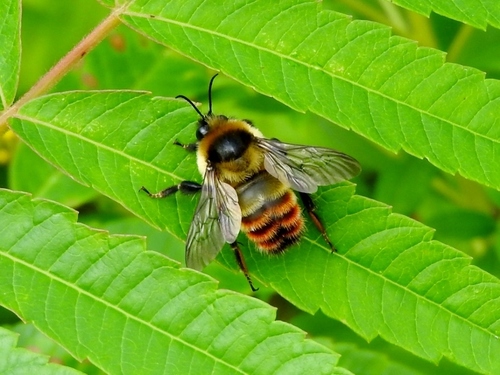
Puedes ver Red-Belted Bumble Bee, Red-Breasted Merganser y Pato.
Ver guía →

Québec, CA
Puedes ver Common Eastern Bumble Bee y Mariquita Asiática.
Ver guía →












.jpg&width=800)
