_(49391225442).jpg&width=800)





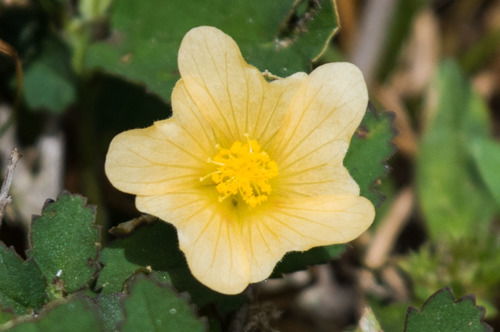
Common Fanpetals
Sida ulmifolia
Common Fanpetals are cheerful little plants with bright yellow flowers. They grow in warm places and are loved by butterflies and bees!
Hábitat: Urban areas
The Common Fanpetals is a medium-sized shrub with slender, branched stems and oval to lance-shaped leaves that resemble elm leaves. It produces small, pale yellow to cream-colored flowers with five distinct petals, often appearing slightly crinkled, blooming singly in leaf axils.
Categoría
PlantasRareza
Common
Peligro
1/5 · Muy bajo
Snaps
¡Sé la primera persona en hacer un snap!
Ancient cultures used its tough fibers to weave ropes and baskets for daily life!
It's super tough, growing even in disturbed soils where other plants struggle!
Its name 'Fanpetals' comes from how its small, crinkled petals look like tiny handheld fans!
Many traditional medicines use parts of this plant for various remedies!
Common Fanpetals has incredibly strong, fibrous stems that help it stand tall and resist breaking in windy conditions.
Common Fanpetals can grow long, deep roots that help it find water during dry spells, allowing it to survive when other plants wilt.
Common Fanpetals has tiny seeds covered in hooks or sticky hairs, which helps them hitch a ride on animals to spread to new places.
Apis mellifera
collects nectar and pollen
Danaus plexippus
visits flowers for nectar
Helicoverpa armigera
larvae feed on leaves and stems
Las plantas ornamentales se cultivan principalmente por su atractivo estético, embelleciendo paisajes y jardines con su atractivo follaje, flores o forma.
Un arbusto es una planta leñosa más pequeña que un árbol, típicamente con múltiples tallos que se ramifican desde o cerca del suelo.
Las plantas siempre en flor producen flores de forma continua o en repetidas floraciones durante un largo período.
Colorido describe a organismos u objetos que exhiben una amplia variedad de colores brillantes y distintivos.

Describe plantas que son particularmente atractivas y beneficiosas para una amplia variedad de organismos polinizadores.

Esta característica de hábitat indica especies que pueden coexistir con los humanos en entornos urbanos y suburbanos, utilizando estructuras artificiales y espacios verdes.
Todavía no hay alias listados.
Peligro
1/5 · Muy bajo
Always look but don't touch plants without asking an adult first.
50-200 cm
1-2 cm
Year-round in warm climates; summer to fall elsewhere
Sí
Ninguna
Perenne
Insectos
Urban areas
Acércate para separar los grupos y explorar dónde se ha fotografiado este objeto.
Los snaps recientes aparecerán aquí a medida que se añadan nuevas observaciones.