Common Green June Beetle
Cotinis nitida
The Common Green June Beetle is a shiny green insect that loves warm weather. It can often be seen flying around gardens and fields, where it munches on fruits and flowers.
Hábitat: Urban areas
The Common Green June Beetle is a large, sturdy insect with a vibrant, metallic green body that shines in the sun, often featuring bronze or yellowish-tan edges on its wing covers. It has a broad, flattened shape and a fuzzy, golden-orange underside, distinguishing it from other scarab beetles.
Categoría
InsectosRareza
Common
Peligro
1/5 · Muy bajo
Snaps
¡Sé la primera persona en hacer un snap!
Before flying, they often lie on their back and spin around to get enough momentum to launch into the air!
Their grubs, or larvae, are unique because they crawl on their backs, not their bellies, to move faster!
When startled, they sometimes play dead by flipping over and staying perfectly still until the danger passes!
Wow! Unlike most beetles, they fly with their hardened wing covers *closed*, making them super aerodynamic!
Common Green June Beetle can perform unique low-altitude flights because of their fast-beating wings that allow them to fly without lifting their wing covers.
Common Green June Beetle has a tough, iridescent green exoskeleton that helps protect them from predators and accidental impacts.
Common Green June Beetle larvae can efficiently break down decaying organic matter because of their strong mandibles that help enrich soil.
These beetles feast on sweet ripe fruits and plant sap as adults, while their larvae munch on decaying organic matter and roots.
Diferencias por edad: Yes, larvae consume decaying organic matter and roots underground, while adults primarily feed on ripe fruits and plant sap.
Prunus persica
Adult beetles feed on ripe peach fruits, causing damage.
Cyanocitta cristata
Blue Jays are common avian predators that hunt these beetles.
Solenopsis invicta
Fire ants prey on the larvae and pupae within the soil.
Didelphis virginiana
Opossums dig up and consume the nutritious grubs and adult beetles.
Colorido describe a organismos u objetos que exhiben una amplia variedad de colores brillantes y distintivos.
Este rasgo caracteriza a los organismos cuya dieta consiste total o principalmente en material vegetal.
Describe plantas que son particularmente atractivas y beneficiosas para una amplia variedad de organismos polinizadores.
Los animales diurnos están activos principalmente durante el día y suelen descansar o dormir por la noche.

Este rasgo identifica a los organismos que exhiben una rapidez excepcional en sus movimientos para cazar, escapar o desplazarse.

Esta característica de hábitat indica especies que pueden coexistir con los humanos en entornos urbanos y suburbanos, utilizando estructuras artificiales y espacios verdes.

Relativo a los organismos que emiten luz a través de la bioluminiscencia o la fluorescencia.

Describe organismos que transfieren polen, permitiendo la fertilización y reproducción de las plantas.
Todavía no hay alias listados.
Peligro
1/5 · Muy bajo
These beetles are harmless, but it's best to watch them from a distance.
30-50 mm
15-25 mm
30-60 días
12 km/h
These beetles feast on sweet ripe fruits and plant sap as adults, while their larvae munch on decaying organic matter and roots.
Urban areas
Foraging
6
Acércate para separar los grupos y explorar dónde se ha fotografiado este objeto.
Los snaps recientes aparecerán aquí a medida que se añadan nuevas observaciones.

District of Columbia, US
Puedes ver Ardilla Gris Oriental, Abeja y Purpletop Vervain.
Ver guía →

Virginia, US
Puedes ver Conifers, Virginia Creeper y Nogal Negro.
Ver guía →
Florida, US
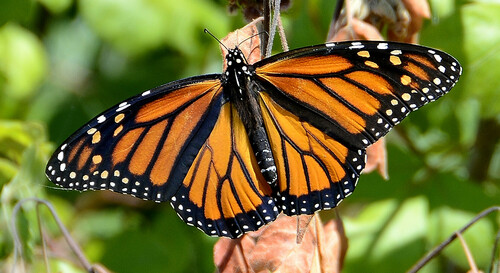
Puedes ver Monarch, Pin-Tailed Pondhawk y Polydamas Swallowtail.
Ver guía →




_Lycaena_dispar_-_Ka%C5%A1%C4%97tos_-_Lithuania_-_male.jpg&width=800)