
.jpg&width=800)





Common Squirrel Monkey
Saimiri sciureus
Common Squirrel Monkeys are playful little monkeys with bright yellow fur and long tails! They love to jump around in trees and are very social, often seen playing with their friends.
Hábitat: Forests
The Common Squirrel Monkey has olive-green fur on its back and limbs, with striking white fur around its eyes forming a distinctive mask and a dark muzzle. Its underparts are often yellowish-orange, and it possesses a long, non-prehensile tail with a black tip.
Categoría
MamíferosRareza
Common
Peligro
2/5 · Bajo
Snaps
¡Sé la primera persona en hacer un snap!
Female squirrel monkeys gather together to raise their babies in a 'nursery' group!
Males can puff up their chests to look bigger, especially during mating season!
These clever monkeys sometimes follow larger capuchin monkeys to snatch leftovers!
They often form massive groups of up to 100 monkeys to forage and stay safe!
Common Squirrel Monkey can leap impressive distances between branches because of strong leg muscles and incredible agility.
Common Squirrel Monkey has a unique habit of 'urine washing' to scent-mark trails and communicate with its group.
Common Squirrel Monkey can use a complex repertoire of over 25 different calls to warn, greet, and locate others.
Common Squirrel Monkey has excellent vision and quick reflexes that help them spot tiny insects and ripe fruits.
This omnivore loves to eat a delicious mix of juicy fruits, crunchy insects, and even some flowers!
Harpia harpyja
A powerful raptor that preys on arboreal monkeys.
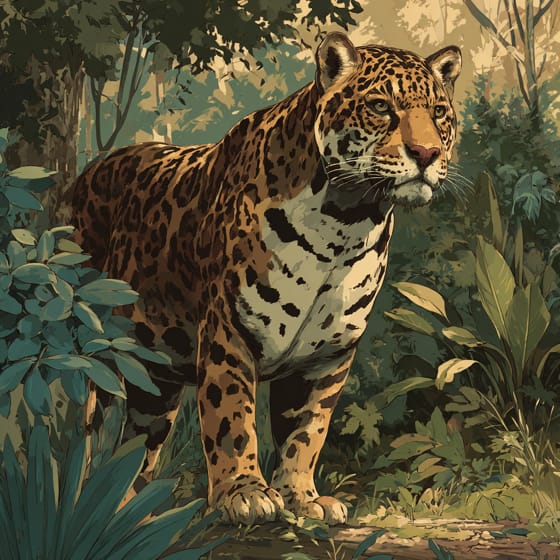
Panthera onca
A large cat that hunts them from the forest floor.
Ficus insipida
Consumes the sweet fruits of this common fig tree.
Gryllus assimilis
Forages for various insects, including crickets.
Peludo describe a los animales que poseen una cubierta densa de pelo o pelaje suave.
Los animales sociales viven en grupos organizados, cooperando para obtener beneficios de supervivencia como la búsqueda de alimento, la defensa y la cría de descendencia.
Este rasgo identifica organismos cuya dieta incluye tanto materia vegetal como animal.
Los animales arborícolas viven principalmente en los árboles, utilizándolos como refugio, alimento y protección contra los depredadores.

Colorido describe a organismos u objetos que exhiben una amplia variedad de colores brillantes y distintivos.

Los hábitats boscosos son entornos terrestres dominados por una densa cubierta arbórea, que sustentan una gran diversidad de vida animal y vegetal.

Los animales diurnos están activos principalmente durante el día y suelen descansar o dormir por la noche.
Todavía no hay alias listados.
Peligro
2/5 · Bajo
Always watch from a distance and never try to touch wild animals.
25-35 cm
0.7-1.1 kg
15-20 años
25 km/h
This omnivore loves to eat a delicious mix of juicy fruits, crunchy insects, and even some flowers!
Forests
Foraging
1
Acércate para separar los grupos y explorar dónde se ha fotografiado este objeto.
Los snaps recientes aparecerán aquí a medida que se añadan nuevas observaciones.















