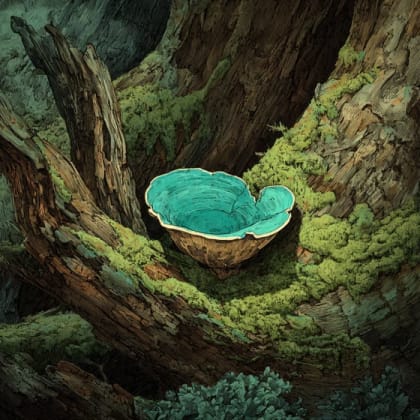
Common Sunburst Lichen
xanthoria parietina
The Common Sunburst Lichen is a bright yellow-orange lichen that looks like tiny sunbursts on rocks and trees! It helps clean the air by absorbing pollutants and is a great indicator of healthy environments.
Hábitat: You can find it on rocks, tree bark, and walls in both urban and natural settings.
The Common Sunburst Lichen is a bright, often brilliant orange-yellow to greenish-yellow lichen forming flat, leafy rosettes. Its vibrant, almost glowing color makes it easily identifiable, especially when dry and exposed to sunlight. The lobes are distinct and somewhat overlapping.
Categoría
HongosRareza
Common
Peligro
0/5 · Sin peligro conocido
Snaps
¡Sé la primera persona en hacer un snap!
Common Sunburst Lichen can help break down rocks, paving the way for other plants to grow!
Its amazing orange color gets brighter when it gets more sunshine, like a natural tan!
This lichen is actually a perfect team of a fungus and algae working together!
You might spot tiny animals, like mites and snails, munching on this colorful lichen!
Common Sunburst Lichen can dry out completely and then rehydrate, helping it survive extreme temperatures and drought.
Common Sunburst Lichen has special yellow pigments that act like sunscreen, protecting it from strong sunlight.
Common Sunburst Lichen can grow on many surfaces like rocks, tree bark, and man-made structures, colonizing diverse places.
Trebouxia arboricola
provides food for the fungus through photosynthesis
Cepaea nemoralis
grazes on the lichen's thallus, especially when damp
Milnesium tardigradum
tiny invertebrates live within the lichen for protection
Los animales solitarios viven solos durante la mayor parte de su vida y solo interactúan con otros para aparearse o cuidar de sus crías.
Colorido describe a organismos u objetos que exhiben una amplia variedad de colores brillantes y distintivos.
Los hábitats boscosos son entornos terrestres dominados por una densa cubierta arbórea, que sustentan una gran diversidad de vida animal y vegetal.
Describe a los organismos que descomponen la materia orgánica muerta, reciclando los nutrientes de vuelta al ecosistema.

Esta característica de hábitat indica especies que pueden coexistir con los humanos en entornos urbanos y suburbanos, utilizando estructuras artificiales y espacios verdes.
Peligro
0/5 · Sin peligro conocido
Todavía no hay notas especiales de seguridad.
0.1-0.5 cm
5-20 cm
No
Ninguna
Perenne
You can find it on rocks, tree bark, and walls in both urban and natural settings.
Acércate para separar los grupos y explorar dónde se ha fotografiado este objeto.
Los snaps recientes aparecerán aquí a medida que se añadan nuevas observaciones.