





Coontie
Zamia integrifolia
Coontie es una planta especial que parece una pequeña palmera. Tiene hojas verdes brillantes y crece en lugares cálidos. Esta planta es muy importante para algunos animales y ayuda a mantener la naturaleza saludable.
Hábitat: Áreas costeras
La Coontie tiene hojas rígidas, de color verde oscuro, parecidas a helechos, que crecen en una corona circular desde un tallo corto, a menudo subterráneo. Produce estructuras distintivas en forma de cono, con los conos femeninos que tienen semillas de color naranja-rojo brillante cuando maduran.
Categoría
PlantasRareza
Common
Peligro
2/5 · Bajo
Snaps
2
¡Coontie es la única cícada nativa de Florida, un grupo de plantas más antiguas que los dinosaurios!
Los conos femeninos de Coontie producen semillas de color naranja-rojo brillante que parecen bayas, ¡pero son venenosas!
Su nombre proviene de una palabra nativa americana que significa 'harina' o 'pan' debido a cómo se preparaba.
¡Algunos pequeños escarabajos son los únicos insectos que pueden polinizar la planta Coontie!
Coontie es un fósil viviente, una planta de un grupo antiguo que ha cambiado poco a lo largo de millones de años, lo que ayuda a los científicos a aprender sobre la Tierra prehistórica.
Coontie tiene compuestos tóxicos en sus hojas y raíces que la protegen de la mayoría de los animales hambrientos, lo que la convierte en una planta bien defendida.
Coontie puede almacenar agua en su tallo grueso, a menudo subterráneo, lo que le ayuda a sobrevivir largos períodos secos en ambientes arenosos y soleados.
Coontie tiene pequeñas bacterias viviendo en sus raíces que pueden extraer nitrógeno del aire, actuando como fertilizante natural para la planta.
Eumaeus atala
Sus orugas se alimentan exclusivamente de hojas de Coontie.
Rhopalotria slossoni
Este pequeño escarabajo es un polinizador principal de los conos de Coontie.

Homo sapiens
Históricamente, los pueblos indígenas procesaban su raíz para obtener harina.
Azotobacter chroococcum
Ayuda a Coontie a obtener nutrientes del suelo a través de sus raíces.
Las plantas de hoja perenne conservan su follaje durante todo el año, sin perder nunca todas sus hojas a la vez.
Los árboles de hoja ancha son angiospermas caracterizadas por hojas planas y anchas que típicamente se caen anualmente en climas templados.
Las plantas comestibles son aquellas partes de una planta que se consideran seguras para el consumo humano.
Este rasgo indica que los organismos pertenecen a un grupo evolutivo muy antiguo con antepasados que se remontan a millones de años.

Este rasgo caracteriza a los organismos con una esperanza de vida excepcionalmente larga en comparación con otros de su especie.

Los hábitats costeros son entornos dinámicos situados a lo largo de la interfaz entre la tierra y el mar, influenciados por las mareas, las olas y el agua salada.

Describe una especie cuya presencia y papel tienen un efecto desproporcionadamente grande en su entorno.

El estado de amenazado indica que es probable que una especie pase a estar en peligro de extinción en el futuro cercano si no se toman medidas efectivas de conservación.
Todavía no hay alias listados.
Peligro
2/5 · Bajo
No comas ninguna parte de la planta sin antes preguntar a un adulto.
La forma más fácil de identificar a Coontie es usar la aplicación de identificación de naturaleza Snappit.
50-100 cm
50-100 cm
Spring to summer
No
Alta
Perenne
Insectos
Acércate para separar los grupos y explorar dónde se ha fotografiado este objeto.

US
Puedes ver Anolis Castaño, Agama De Roca De Peters y Iguana Verde.
Ver guía →

Florida, US
Puedes ver Agama De Roca De Peters, Iguana Verde y Anolis Castaño.
Ver guía →
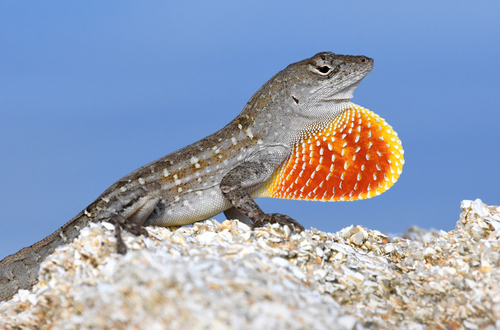
Florida, US
Puedes ver Anolis Castaño y Correlimos Tridáctilo.
Ver guía →

Florida, US
Puedes ver Tortuga Gopher, Anolis Castaño y Coontie.
Ver guía →

Florida, US
Puedes ver Anolis Castaño, Anolis Crestado y Agama De Roca De Peters.
Ver guía →

US
Puedes ver Delfín Nariz De Botella, Orca y León Marino.
Ver guía →
Llévate el descubrimiento
Haz una foto con Snappit, identifica la especie y guarda el hallazgo en tu colección.









.jpg&width=800)


_001.jpg&width=800)

