




Corythucha immaculata
Corythucha immaculata
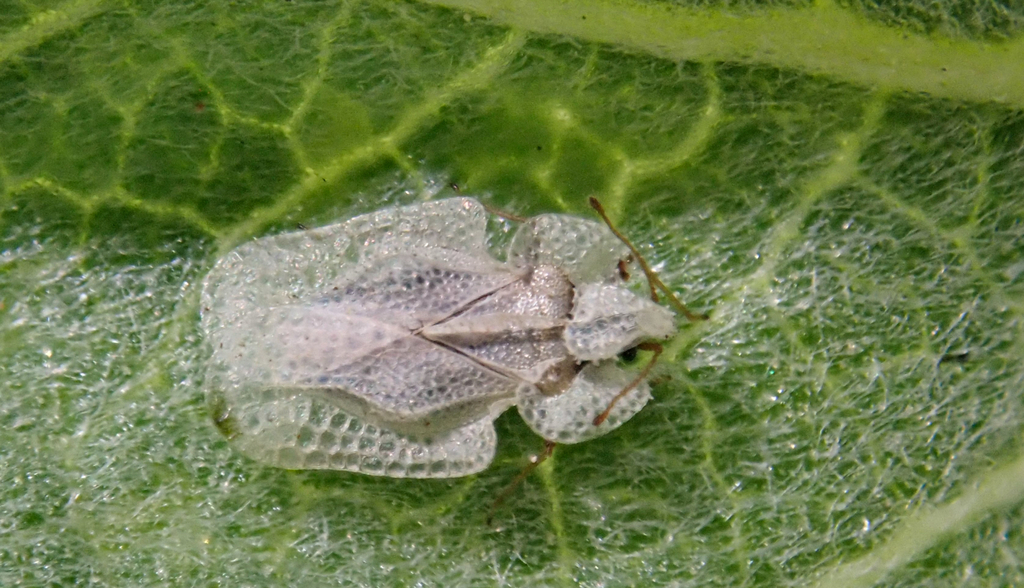
La Corythucha immaculata, también conocida como chinche de encaje blanco, es un pequeño insecto al que le encanta masticar plantas. ¡Tiene un patrón único similar al encaje en sus alas que lo hace especial!
Hábitat: Zonas urbanas
La Corythucha immaculata es un insecto diminuto y pálido con alas delicadas, aplanadas y en forma de encaje que se extienden más allá de su cuerpo. Sus alas transparentes a menudo tienen tenues e irregulares marcas más oscuras, pareciendo vidrio esmerilado. Esta apariencia única de 'encaje' le ayuda a mimetizarse con las texturas de las plantas.
Categoría
InsectosRareza
Común
Peligro
1/5 · Muy bajo
Snaps
¡Sé la primera persona en hacer un snap!
¡Guau! ¡Las chinches de encaje dejan diminutas 'manchas de alquitrán' negras en las hojas de sus excrementos!
¡Guau! ¡Algunas chinches de encaje 'golpean' las hojas para comunicarse entre sí!
¡Guau! ¡Sus alas son tan transparentes que casi se puede leer a través de ellas!
¡Guau! ¡Pueden vivir toda su vida en una sola hoja de planta!
Corythucha immaculata puede beber savia de plantas utilizando sus piezas bucales en forma de pajita gracias a su rostro especializado que les ayuda a acceder a los nutrientes.
Corythucha immaculata tiene alas únicas en forma de encaje que les ayudan a mimetizarse perfectamente con el envés de las hojas, evitando a los depredadores hambrientos.
Corythucha immaculata puede pegar sus huevos a la superficie de las hojas gracias a un adhesivo especial que les ayuda a permanecer ocultos y seguros.
Estos pequeños insectos son conocedores de la savia de las plantas, festejando los jugos nutritivos que se encuentran en las hojas.
Hippodamia convergens
Depredadores de ninfas y adultos de chinches de encaje.
Chrysoperla carnea
Las larvas de crisopa consumen vorazmente chinches de encaje.
Platanus occidentalis
Se alimenta de la savia de sus hojas.

Tilia americana
Obtiene nutrientes alimentándose de este árbol.
Anagrus atomus
Diminutas avispas ponen huevos dentro de los huevos de la chinche de encaje.
Los animales solitarios viven solos durante la mayor parte de su vida y solo interactúan con otros para aparearse o cuidar de sus crías.
Colorido describe a organismos u objetos que exhiben una amplia variedad de colores brillantes y distintivos.
Este rasgo caracteriza a los organismos cuya dieta consiste total o principalmente en material vegetal.
Los animales diurnos están activos principalmente durante el día y suelen descansar o dormir por la noche.
Relativo a especies que son significativamente más pequeñas que lo típico o promedio de su tipo.
Esta característica de hábitat indica especies que pueden coexistir con los humanos en entornos urbanos y suburbanos, utilizando estructuras artificiales y espacios verdes.
Describe organismos que transfieren polen, permitiendo la fertilización y reproducción de las plantas.
Peligro
1/5 · Muy bajo
Estos bichos son inofensivos, pero es mejor mirarlos y no tocarlos.
Busca seis patas, antenas, tres secciones en el cuerpo y la forma de las alas. Los escarabajos tienen las alas delanteras endurecidas; las moscas solo tienen un par que funciona. Los insectos diminutos pueden necesitar un primer plano antes de que se vea su grupo. Identificador de insectos: sube una foto y compara los detalles visibles.
3-4 mm
30-60 días
Estos pequeños insectos son conocedores de la savia de las plantas, festejando los jugos nutritivos que se encuentran en las hojas.
Zonas urbanas
Forrajeo
6
Acércate para separar los grupos y explorar dónde se ha fotografiado este objeto.
Los snaps recientes aparecerán aquí a medida que se añadan nuevas observaciones.
Llévate el descubrimiento
Haz una foto con Snappit, identifica la especie y guarda el hallazgo en tu colección.