_repens_(3621876909).jpg&width=800)





creeping mahonia
Berberis repens
Creeping mahonia is a small, evergreen shrub with shiny leaves and bright yellow flowers. It grows close to the ground and can spread out like a carpet, making it a lovely addition to gardens.
Hábitat: Forests
The creeping mahonia is a low-growing, evergreen shrub with distinctive holly-like, spiny, green leaves that often turn reddish-purple in cold weather. It boasts clusters of small, bright yellow flowers, followed by powdery blue-black berries.
Categoría
PlantasRareza
Common
Peligro
2/5 · Bajo
Snaps
¡Sé la primera persona en hacer un snap!
Even though its leaves look like holly, this plant is not related to true holly at all!
In autumn, its tough green leaves can magically change to surprising purple-red hues!
Its roots were once used by Native Americans to make a bright yellow dye!
The tart blue berries are perfect for making delicious jellies and sauces!
Creeping mahonia has tough, evergreen leaves that help it stay green and make food all year, even when other plants lose their leaves.
Creeping mahonia has sharp, spiny edges on its leaves that help defend it from hungry animals that might want a snack.
Creeping mahonia can spread with special underground stems (rhizomes) to colonize new areas and find more water.
Creeping mahonia produces tart, blue-black berries that attract birds and other animals, helping the plant spread its seeds far and wide.
Apis mellifera
Gathers nectar from its yellow flowers.
Bombus mixtus
Visits flowers for pollen and nectar.
Turdus migratorius
Feeds on its nutritious blue-black berries.
Ursus americanus
Forages for its berries as a food source.
Las plantas con flores son cualquier planta que produce flores como parte de su ciclo reproductivo.
Las plantas ornamentales se cultivan principalmente por su atractivo estético, embelleciendo paisajes y jardines con su atractivo follaje, flores o forma.
Un arbusto es una planta leñosa más pequeña que un árbol, típicamente con múltiples tallos que se ramifican desde o cerca del suelo.
Las plantas de floración primaveral producen sus flores durante la temporada de primavera, lo que a menudo significa el final del invierno y el comienzo de un nuevo crecimiento.

Las plantas de hoja perenne conservan su follaje durante todo el año, sin perder nunca todas sus hojas a la vez.

Las plantas frutales producen frutos, que son los ovarios maduros de las plantas con flores que contienen semillas.

Las plantas comestibles son aquellas partes de una planta que se consideran seguras para el consumo humano.

Describe plantas que son particularmente atractivas y beneficiosas para una amplia variedad de organismos polinizadores.

Los hábitats boscosos son entornos terrestres dominados por una densa cubierta arbórea, que sustentan una gran diversidad de vida animal y vegetal.
Todavía no hay alias listados.
Peligro
2/5 · Bajo
Always ask an adult before touching plants, as some can be prickly.
15-30 cm
30-90 cm
0.5-1 cm
Spring to early summer
Sí
Leve
Perenne
Insectos
Acércate para separar los grupos y explorar dónde se ha fotografiado este objeto.
Los snaps recientes aparecerán aquí a medida que se añadan nuevas observaciones.
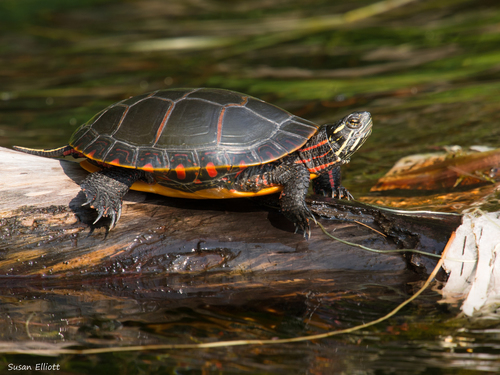
British Columbia, CA
Puedes ver Tortuga Pintada, Antelope Bitterbrush y Western Tiger Beetle.
Ver guía →
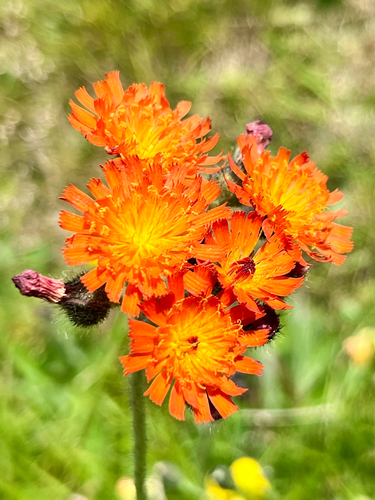
British Columbia, CA
Puedes ver Orange Hawkweed, Shinyleaf Meadowsweet y Columbia Lily.
Ver guía →

Wyoming, US
Puedes ver Perrito De Las Praderas y Bur Oak.
Ver guía →