






Deertongue
dichanthelium clandestinum
Deertongue is a soft, grassy plant that can be found in many forests and meadows! Its leaves are shaped like tongues, and they dance in the breeze, making it fun to watch!
Hábitat: Deertongue grows in forests, meadows, and grasslands, often in shaded areas.
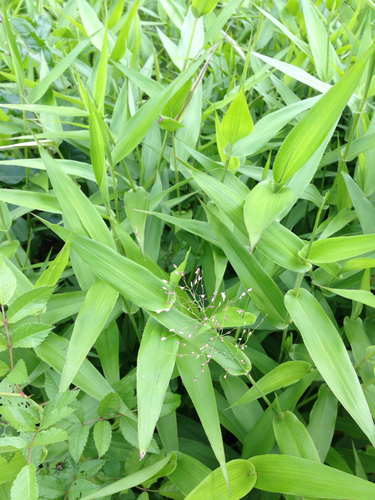
The Deertongue has broad, flat, tongue-shaped leaves, often quite hairy and rough to the touch. Its sturdy, upright stems can reach up to three feet tall. The flowers are tiny, green spikelets, often hidden among the leaves or along the stem.
Categoría
PlantasRareza
Common
Peligro
0/5 · Sin peligro conocido
Snaps
¡Sé la primera persona en hacer un snap!
Deertongue can prevent soil erosion on hillsides by forming a dense mat with its roots!
Find it often near wetlands or shady woods, where it loves the moist, rich soil!
Its scientific name 'clandestinum' means 'hidden,' referring to its tiny, often unseen flowers!
This grass is a super snack for deer and other grazers, helping them stay full and healthy.
Deertongue can grow well in low light, helping it thrive in the shadowy understory of forests where other plants struggle.
Deertongue has rhizomes, underground stems that help it spread efficiently and form dense, stable colonies.
Deertongue's hairy leaves can help collect dew and moisture from the air, assisting its survival in drier spells.
Odocoileus virginianus
A common browser of its leaves and stems

Peromyscus leucopus
Feeds on its small seeds and plant parts

Melanoplus differentialis
Chews on its leaves and tender shoots
Cardinalis cardinalis
Uses dense clumps for cover and nesting
Colorido describe a organismos u objetos que exhiben una amplia variedad de colores brillantes y distintivos.
Este rasgo caracteriza a los organismos cuya dieta consiste total o principalmente en material vegetal.
Los hábitats de pastizales son biomas terrestres dominados por pastos y plantas herbáceas, que sustentan a una variedad de animales de pastoreo.
Los hábitats boscosos son entornos terrestres dominados por una densa cubierta arbórea, que sustentan una gran diversidad de vida animal y vegetal.

Los animales diurnos están activos principalmente durante el día y suelen descansar o dormir por la noche.
Peligro
0/5 · Sin peligro conocido
Todavía no hay notas especiales de seguridad.
30-90 cm
30-60 cm
0.3-0.4 cm
Late spring to summer
No
Ninguna
Perenne
Viento
Acércate para separar los grupos y explorar dónde se ha fotografiado este objeto.
Los snaps recientes aparecerán aquí a medida que se añadan nuevas observaciones.








.jpg&width=800)






