




Denisia haydenella
Denisia haydenella
La Denisia haydenella es una pequeña y colorida polilla a la que le encanta revolotear alrededor de las flores. Tiene hermosos patrones en sus alas que se pueden ver en jardines y praderas.
Hábitat: Praderas
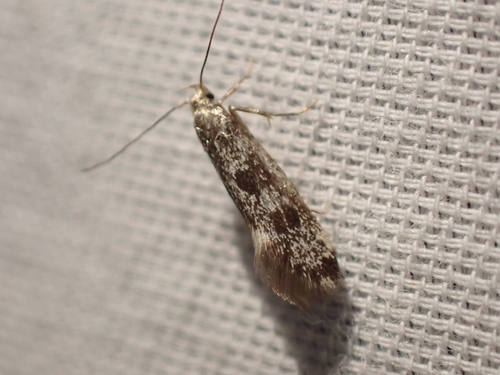
La Denisia haydenella es una pequeña polilla con un cuerpo algo aplanado. Sus alas delanteras están moteadas en tonos de marrón amarillento y marrón más oscuro, a menudo con sutiles toques purpúreos, mientras que las alas traseras son de un gris más pálido. Tiene una cabeza distintiva y ancha en relación con su cuerpo.
Categoría
InsectosRareza
Común
Peligro
1/5 · Muy bajo
Snaps
¡Sé la primera persona en hacer un snap!
¡Sus orugas se alimentan de hojas muertas y hongos, siendo los pequeños descomponedores de la naturaleza!
¡Algunas polillas de su familia pueden tener un brillo púrpura en sus alas!
¡El cuerpo aplanado de esta polilla le permite meterse en pequeñas grietas para esconderse!
¡Cuando descansa, pliega sus alas firmemente, pareciendo una ramita rota!
¡La Denisia haydenella adulta sorbe néctar, mientras que sus larvas son los pequeños descomponedores de la naturaleza!
Diferencias por edad: Las larvas se alimentan de hojas muertas, madera en descomposición y hongos, mientras que las polillas adultas beben néctar de las flores.

Quercus alba
Las larvas se alimentan de sus hojas en descomposición.

Acer rubrum
Proporciona hojas en descomposición para las larvas.
Myotis lucifugus
Los adultos nocturnos son presa.
Erigeron annuus
Los adultos beben néctar de sus flores.
Trametes versicolor
Las larvas pueden consumir este hongo.
Marcado con manchas o parches de un color diferente.
Las criaturas aéreas pasan una parte importante de su vida en el aire, utilizando el vuelo para diversas actividades como la caza, la migración o la anidación.
Colorido describe a organismos u objetos que exhiben una amplia variedad de colores brillantes y distintivos.
Este rasgo caracteriza a los organismos cuya dieta consiste total o principalmente en material vegetal.
Describe plantas que son particularmente atractivas y beneficiosas para una amplia variedad de organismos polinizadores.
Los hábitats de pastizales son biomas terrestres dominados por pastos y plantas herbáceas, que sustentan a una variedad de animales de pastoreo.
Los animales diurnos están activos principalmente durante el día y suelen descansar o dormir por la noche.
Describe organismos que transfieren polen, permitiendo la fertilización y reproducción de las plantas.
Todavía no hay alias listados.
Peligro
1/5 · Muy bajo
Las polillas son criaturas delicadas, pero es mejor observarlas desde la distancia.
Compara la forma de las alas en reposo, las marcas de las alas anteriores, las antenas y la complexión del cuerpo. En las polillas pequeñas y marrones, todo puede depender de detalles finos que una foto de móvil no siempre capta. Identificador de polillas: sube una foto y compara los detalles visibles.
15-25 mm
8-12 mm
7-14 días
8 km/h
¡La Denisia haydenella adulta sorbe néctar, mientras que sus larvas son los pequeños descomponedores de la naturaleza!
Praderas
Forrajeo
Acércate para separar los grupos y explorar dónde se ha fotografiado este objeto.
Los snaps recientes aparecerán aquí a medida que se añadan nuevas observaciones.
Llévate el descubrimiento
Haz una foto con Snappit, identifica la especie y guarda el hallazgo en tu colección.