

Descurainia Bourgaeana
descurainia bourgaeana
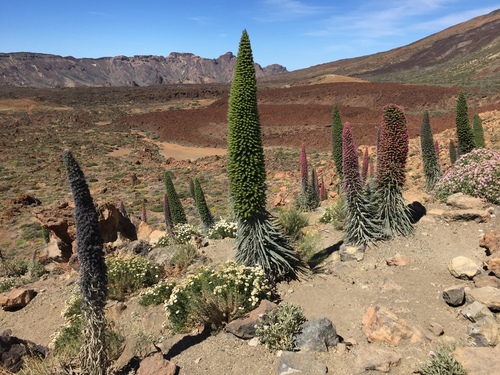
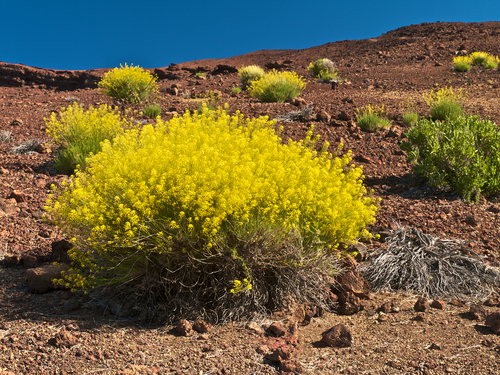
La Descurainia bourgaeana, conocida localmente como "hierba pajonera", es un notable arbusto de alta altitud endémico de las Islas Canarias, que prospera principalmente en las llanuras volcánicas subalpinas del Teide en Tenerife y en las altas elevaciones de La Palma. Esta planta resiliente forma densos cojines en forma de cúpula que soportan condiciones ambientales extremas, incluyendo temperaturas invernales bajo cero, el calor abrasador del verano y suelos volcánicos secos y pobres en nutrientes. A finales de primavera, experimenta una transformación espectacular, estallando en una vibrante masa de brillantes flores amarillas que cubren los suelos de las calderas y las laderas rocosas. Desempeña un papel ecológico crítico como especie pionera, ayudando a estabilizar la ceniza volcánica suelta y proporcionando una fuente vital de néctar para los polinizadores alpinos.
Hábitat: Se encuentra en matorrales subalpinos de alta altitud sobre piedra pómez volcánica seca, coladas de lava y laderas rocosas, principalmente en elevaciones entre 2.000 y 2.500 metros.
Esta especie crece como un arbusto muy ramificado, denso y hemisférico que alcanza alturas de 40 a 100 centímetros. Presenta hojas de color verde grisáceo, profundamente divididas y lobuladas, cubiertas de finos pelos en forma de estrella que le dan al follaje una apariencia aterciopelada y ayudan a reflejar el exceso de radiación. Durante su temporada de floración, de mayo a junio, la planta está completamente cubierta de densos racimos erguidos de pequeñas flores amarillas de cuatro pétalos. Después de la floración, produce vainas de semillas estrechas y erguidas (silicuas) que finalmente se secan, dejando un esqueleto parecido a la paja que persiste durante el invierno.
Categoría
PlantasRareza
Común
Peligro
1/5 · Muy bajo
Snaps
¡Sé la primera persona en hacer un snap!
Es una superviviente resiliente al choque térmico, soportando temperaturas bajo cero por la noche y más de 35 grados Celsius durante los días de verano.
Su nombre común 'hierba pajonera' se refiere al esqueleto seco, parecido a la paja, en el que se convierte la planta durante los meses secos de verano.
Las vibrantes floraciones amarillas en forma de cúpula de la planta son tan densas y numerosas que pueden verse fácilmente en imágenes satelitales del Parque Nacional del Teide durante la primavera en su apogeo.
Como planta fotosintética, sintetiza sus propios compuestos orgánicos utilizando luz solar, dióxido de carbono, agua y minerales absorbidos del suelo.
Aún no hay insignias de rasgos asignadas a este objeto.
Todavía no hay alias listados.
Las colecciones para este objeto aparecerán aquí a medida que se añadan más temas.
Peligro
1/5 · Muy bajo
Todavía no hay notas especiales de seguridad.
Empieza por la planta entera y luego compara la disposición de las hojas, sus bordes, los tallos y las flores o frutos, si los hay. Las hojas opuestas crecen en parejas; las alternas salen de una en una a lo largo del tallo. Juntos, estos detalles dicen mucho más que una sola hoja verde. Identificador de plantas: sube una foto y compara los detalles visibles.
40-100 cm
5-15 años
Como planta fotosintética, sintetiza sus propios compuestos orgánicos utilizando luz solar, dióxido de carbono, agua y minerales absorbidos del suelo.
Se encuentra en matorrales subalpinos de alta altitud sobre piedra pómez volcánica seca, coladas de lava y laderas rocosas, principalmente en elevaciones entre 2.000 y 2.500 metros.
Fotosíntesis
Acércate para separar los grupos y explorar dónde se ha fotografiado este objeto.
Los snaps recientes aparecerán aquí a medida que se añadan nuevas observaciones.
Llévate el descubrimiento
Haz una foto con Snappit, identifica la especie y guarda el hallazgo en tu colección.