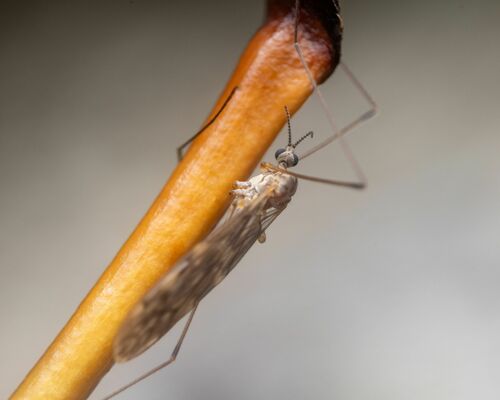





Dicranomyia marmorata
Dicranomyia marmorata
Dicranomyia marmorata es un tipo especial de mosca que tiene hermosos patrones en sus alas. A estos pequeños insectos les encanta vivir en lugares húmedos y a menudo se les ve cerca del agua, ¡lo que los hace divertidos de avistar!
Hábitat: Humedales
La Dicranomyia marmorata es una mosca grulla pequeña y delgada caracterizada por sus alas bellamente moteadas, con un patrón similar al mármol, lo que le da su nombre. Tiene un cuerpo parduzco o grisáceo y patas notablemente largas y delicadas que se rompen fácilmente. Esta mosca carece de las piezas bucales perforadoras de los mosquitos.
Categoría
InsectosRareza
Común
Peligro
1/5 · Muy bajo
Snaps
¡Sé la primera persona en hacer un snap!
Aunque tienen patas muy largas y delgadas, ¡estas moscas son voladoras bastante lentas y torpes!
¡Muchas larvas de mosca grulla pueden vivir bajo el agua durante meses, respirando a través de tubos especiales!
¡El 'marmorata' en su nombre significa 'marmolado', describiendo perfectamente sus alas únicas y estampadas!
¡A veces se confunden con mosquitos gigantes, pero estos insectos inofensivos nunca pican a los humanos!
Las larvas son recicladoras de la naturaleza, comiendo plantas en descomposición; los adultos pueden sorber néctar o solo agua.
Diferencias por edad: Las larvas son detritívoras, los adultos pueden alimentarse de néctar o solo agua.
Marcado con manchas o parches de un color diferente.
Los animales solitarios viven solos durante la mayor parte de su vida y solo interactúan con otros para aparearse o cuidar de sus crías.
Las criaturas aéreas pasan una parte importante de su vida en el aire, utilizando el vuelo para diversas actividades como la caza, la migración o la anidación.
Este rasgo identifica organismos cuya dieta incluye tanto materia vegetal como animal.
Colorido describe a organismos u objetos que exhiben una amplia variedad de colores brillantes y distintivos.
Este rasgo de hábitat identifica especies que se encuentran en humedales, que son áreas de tierra saturadas de agua, ya sea permanente o estacionalmente, e incluyen marismas, pantanos y ciénagas.
Los hábitats de agua dulce incluyen entornos acuáticos no salinos como ríos, lagos, estanques y humedales, vitales para numerosas especies.
Los animales diurnos están activos principalmente durante el día y suelen descansar o dormir por la noche.
Describe una especie cuya presencia y papel tienen un efecto desproporcionadamente grande en su entorno.
Describe organismos que transfieren polen, permitiendo la fertilización y reproducción de las plantas.
Todavía no hay alias listados.
Peligro
1/5 · Muy bajo
Estas moscas son inofensivas, pero siempre es bueno observar a los insectos desde la distancia.
Busca seis patas, antenas, tres secciones en el cuerpo y la forma de las alas. Los escarabajos tienen las alas delanteras endurecidas; las moscas solo tienen un par que funciona. Los insectos diminutos pueden necesitar un primer plano antes de que se vea su grupo. Identificador de insectos: sube una foto y compara los detalles visibles.
8-15 mm
4-7 mm
7-14 días
5 km/h
Las larvas son recicladoras de la naturaleza, comiendo plantas en descomposición; los adultos pueden sorber néctar o solo agua.
Humedales
Forrajeo
Acércate para separar los grupos y explorar dónde se ha fotografiado este objeto.
Los snaps recientes aparecerán aquí a medida que se añadan nuevas observaciones.
Llévate el descubrimiento
Haz una foto con Snappit, identifica la especie y guarda el hallazgo en tu colección.